
Last updated September 23, 2026
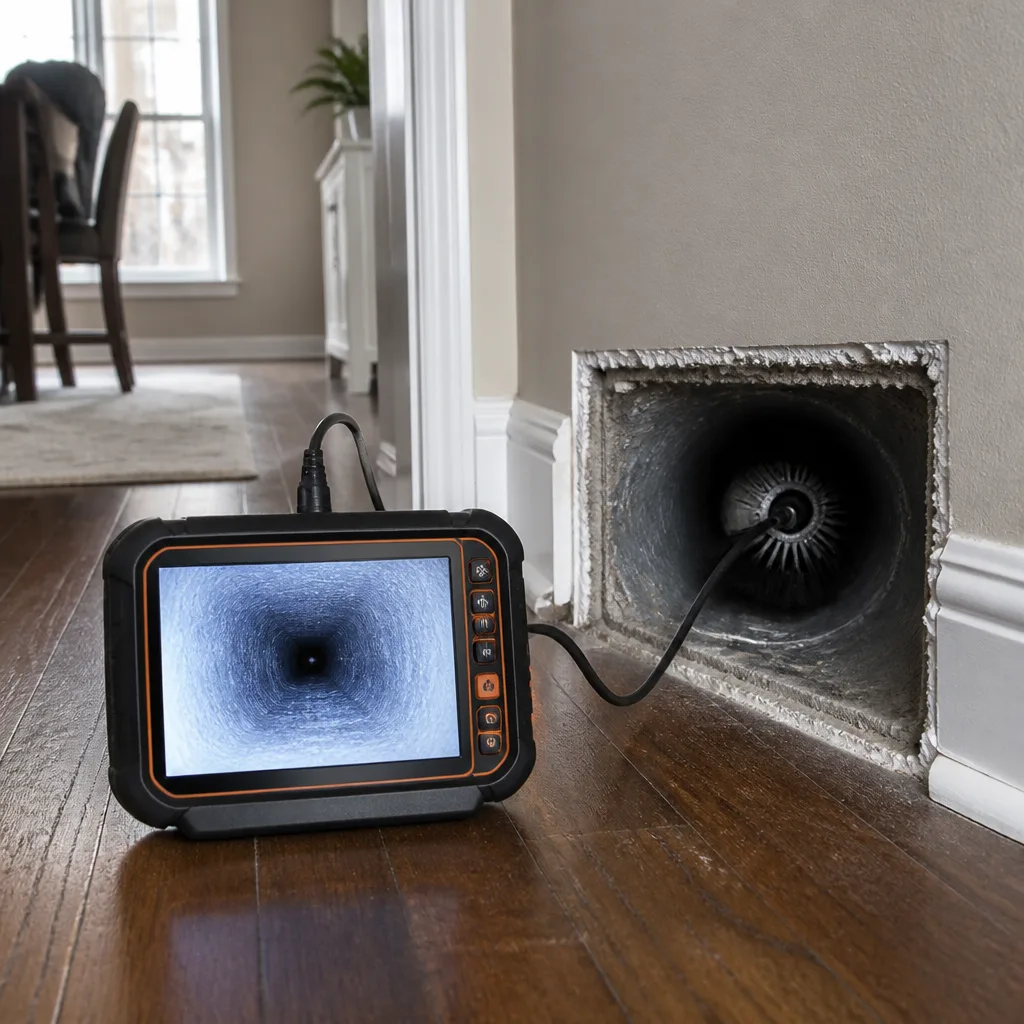
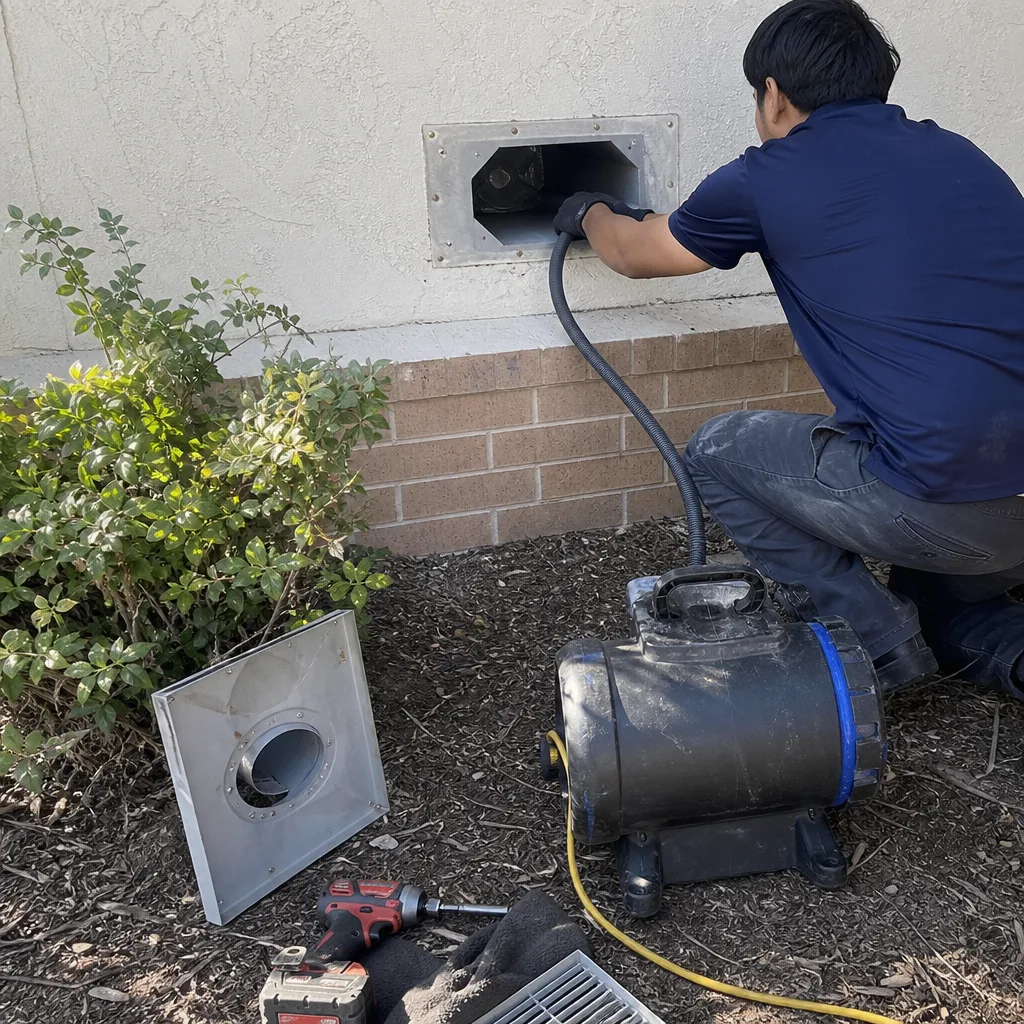
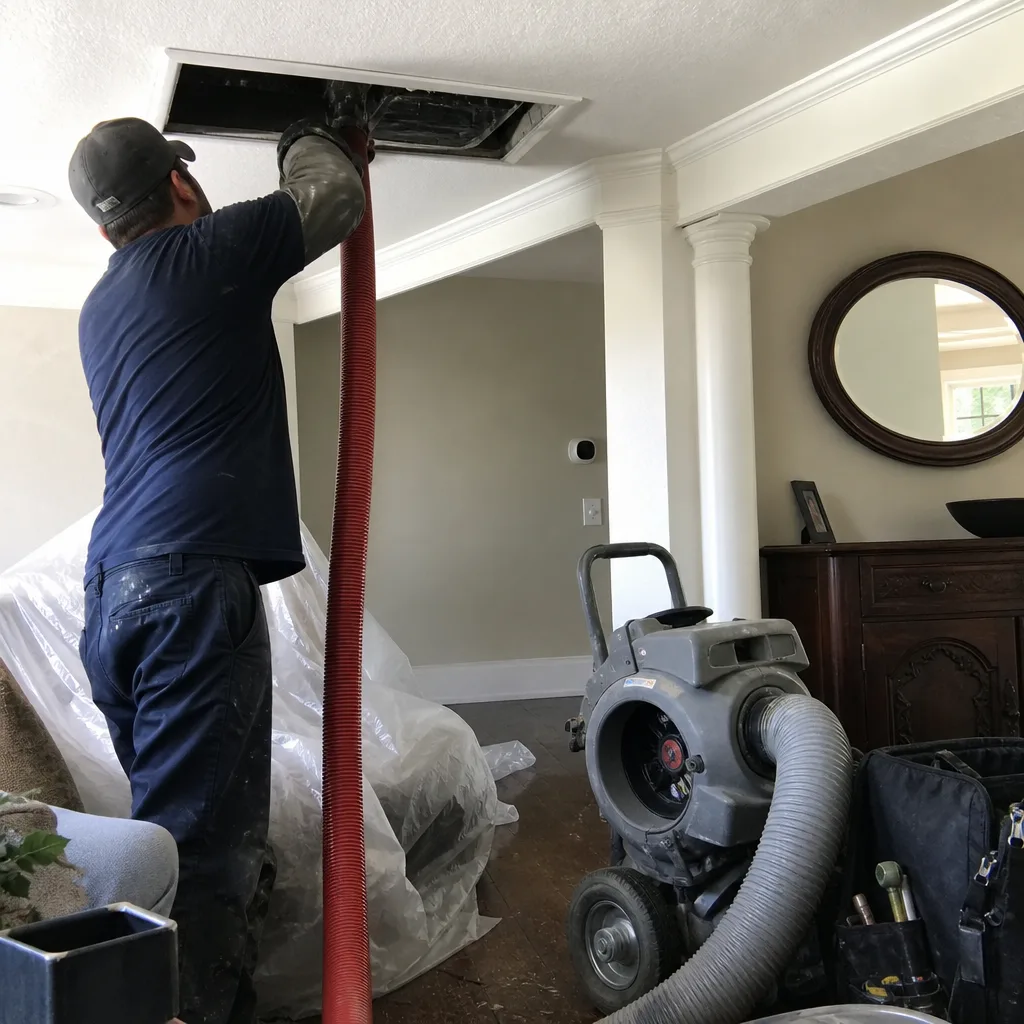
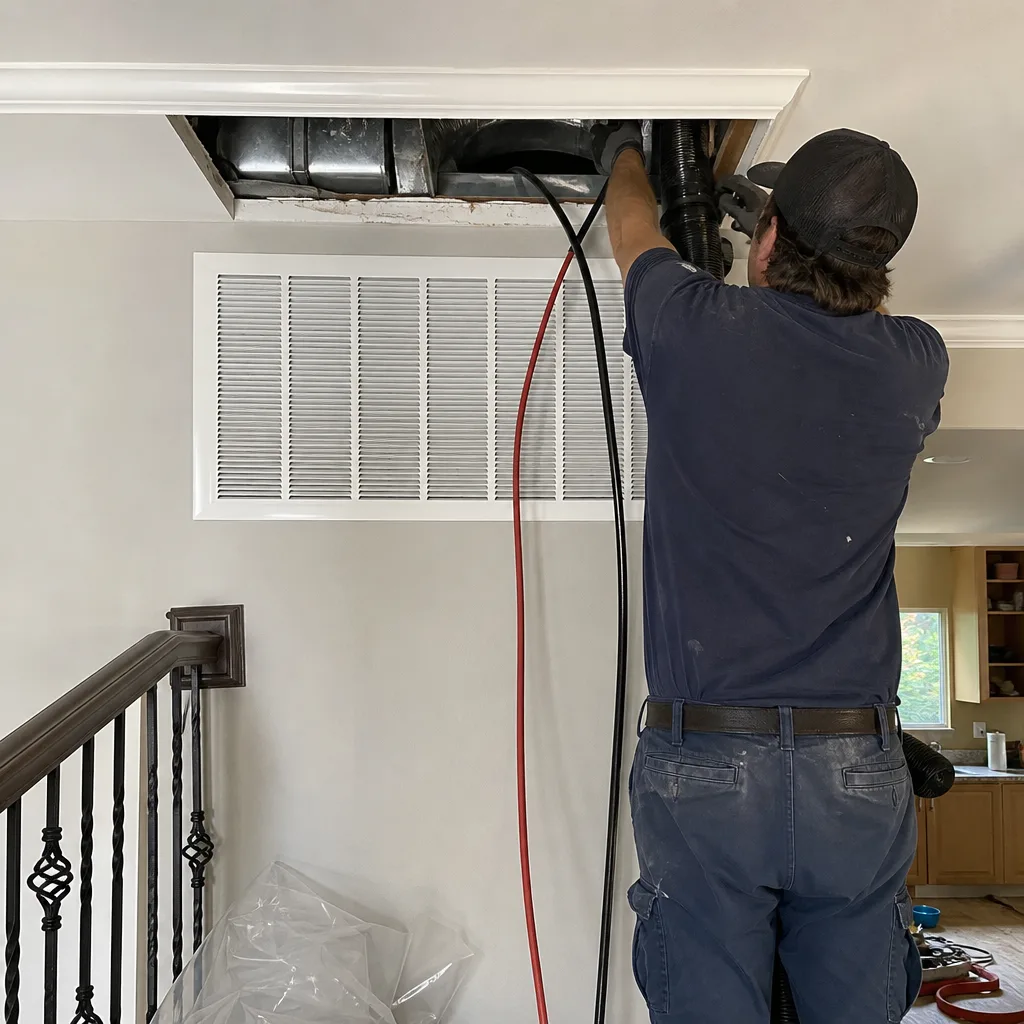
Whole-system duct and dryer vent check with before-and-after photos - you see exactly what came out of your vents
That "$99 whole-house special" is a bait ad - the real number appears once they are in your hallway, or the "clean" is a shop-vac at the register. We photograph the inside of your ducts before and after instead.

 Before
 After
After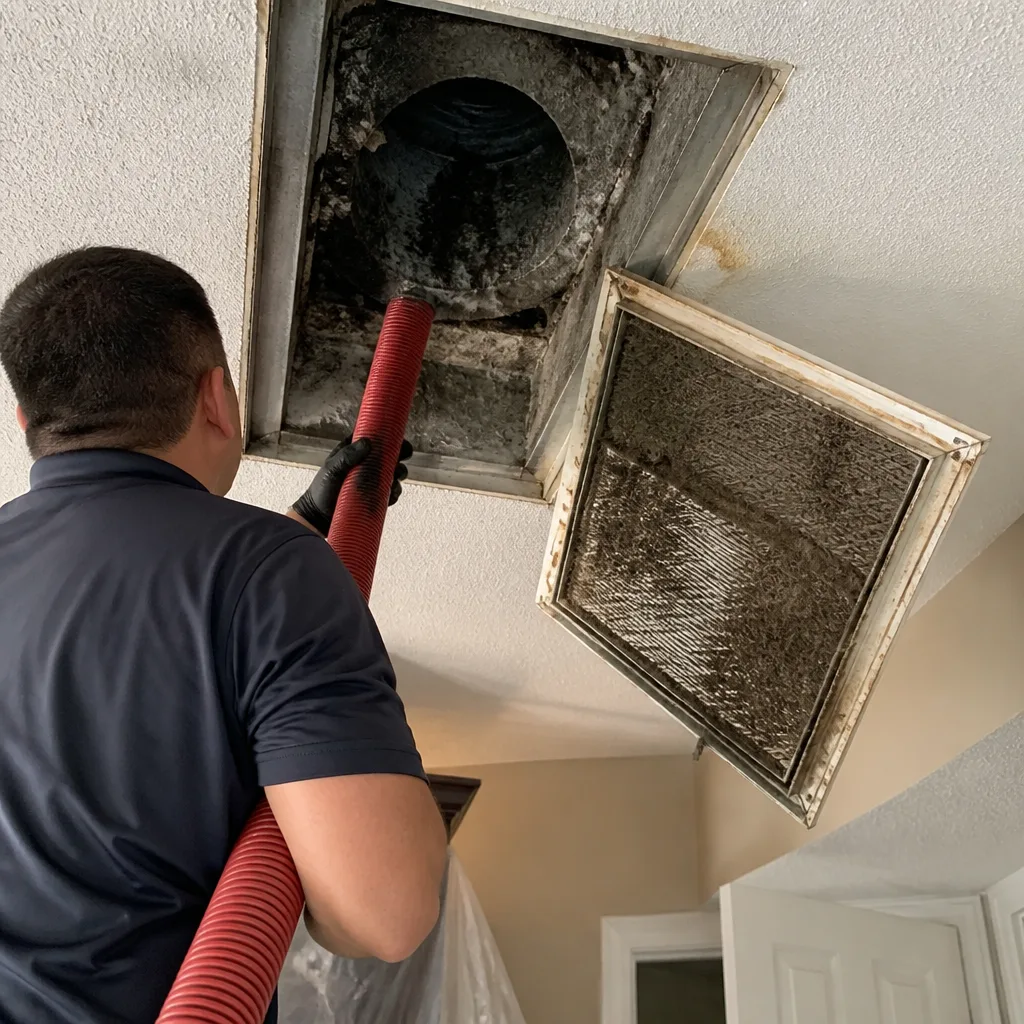 Before
 After
After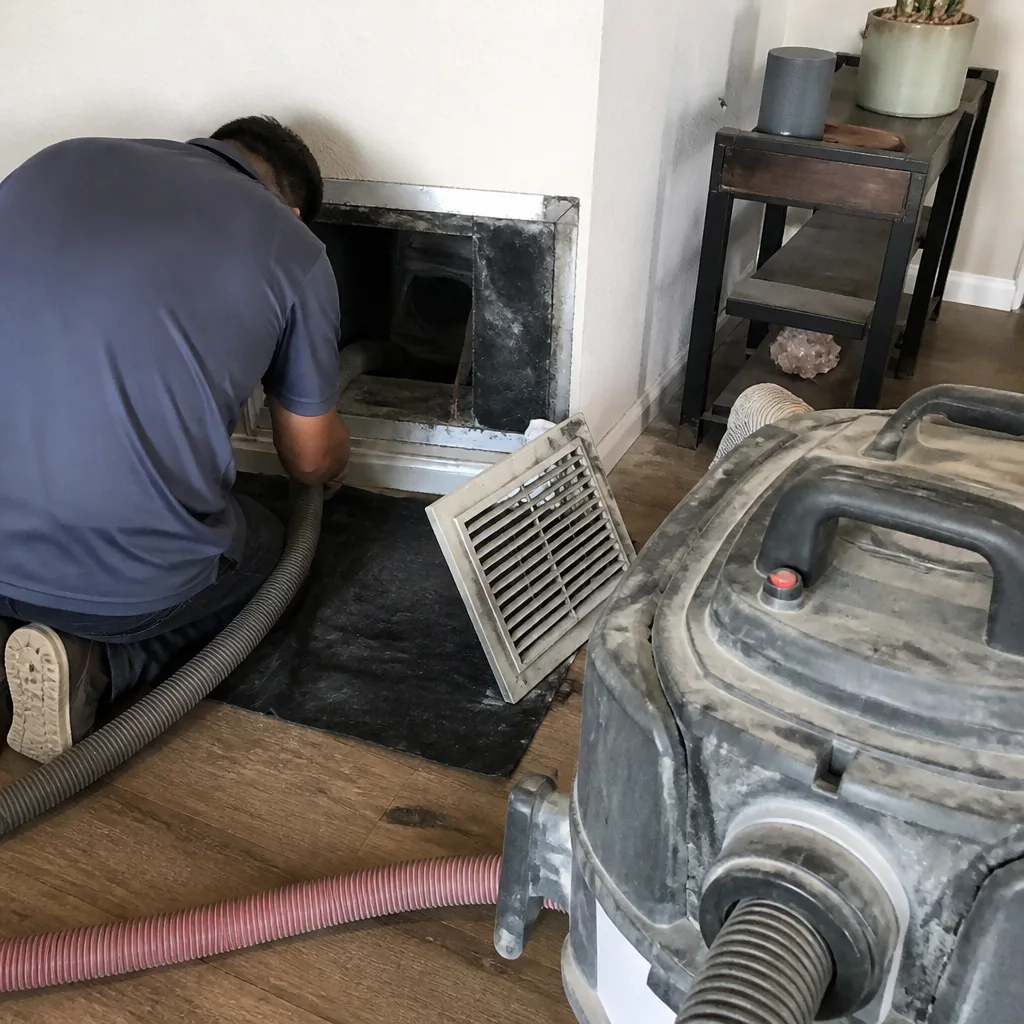 Before
 After
AfterAir Duct Cleaning Maintenance Checklist for Plano Homeowners
Changing your filter every 30 days while your supply plenum holds two inches of compacted debris is the duct-cleaning equivalent of polishing a car with a cracked engine block. The filter is not the system. In Plano, where spring pollen counts regularly exceed 8,000 grains per cubic meter and summer humidity pushes indoor condensation through every unsealed joint, a filter swap without duct inspection is maintenance theater. This guide gives you a repeatable, photographable inspection framework tied to what you can actually see at each register, return grille, and accessible duct section, and points you to Air Duct Cleaning Warning Signs: A Plano Homeowner’s Reference Guide for deeper context. You’ll learn five physical checkpoints that require no tools, how to build a timestamped photo record that makes year-over-year comparisons meaningful, and the seasonal triggers specific to North Texas that should prompt an immediate check.
Quick Answer
A proper air duct maintenance checklist for Plano homeowners includes five physical inspections per quarter: register airflow and debris, return grille filter fit and plenum debris, visible duct runs for gaps or moisture stains, thermostat-to-vent temperature differential, and outdoor condenser intake clearance. Log each checkpoint with dated photos to establish a baseline; without this record, you cannot distinguish normal accumulation from a problem that needs our Air Duct Cleaning services or repair.
Table of Contents
- Why a Baseline Record Beats Calendar Reminders
- The Five Physical Checkpoints (No Tools Required)
- How to Log and Photograph Each Inspection
- Plano-Specific Seasonal Triggers
- Filter MERV Ratings: What Plano Homeowners Should Know
- The Most Skipped Checkpoint: Your Return Air Plenum
- Maintaining Your Equipment Between Professional Visits
- Common Mistakes to Avoid
- When to Call a Professional
- Frequently Asked Questions
BeforeAfterWhy a Baseline Record Beats Calendar Reminders
Every generic duct maintenance guide tells you to “change your filter every 90 days” and “schedule cleaning every 3-5 years.” These calendar rules ignore what we have documented across 52,000 homes since 2013: two houses built side by side in Plano can have radically different duct conditions after identical time periods.
The difference is almost never time. It’s construction debris left by the builder, the quality of the original duct sealing, whether the homeowner runs the fan continuously or in auto mode, and how many pets shed into the returns. A house in Willow Bend with three golden retrievers and a builder-grade flex-duct system will accumulate debris faster than a identical floor plan in Kings Ridge with no pets and hard-piped metal ducts.
Without a dated photo showing what “normal” looks like in your specific system, you have no reference for when accumulation crosses into problem territory. Our crews have shown homeowners photos of their own supply plenum from three years prior, and the reaction is always the same: “I had no idea it looked like that before.” That realization only happens because someone took a picture and kept it.
The framework below is designed to create that record. Each checkpoint produces an observable, photographable condition. Over time, your log becomes a diagnostic tool more precise than any calendar reminder.
Key deliverables you should expect from any professional who does enter your system: a written scope with line-item pricing before work starts, and a documented photo record of every duct run after completion. At CleanRun Air Duct Cleaning Plano, we have delivered both on every job since our first visit in 2013.
The Five Physical Checkpoints (No Tools Required)
These inspections take 15 minutes total once you know what to look for. Do them in the same order each time so your photo log stays consistent.
Checkpoint 1: Supply Register Airflow and Visible Debris
Remove the register cover from one supply vent per major zone (typically 3-4 per home). Hold your phone flashlight at a low angle and look down the boot, the short duct section between the register and the main trunk line. What you are looking for:
- Dust accumulation on the boot walls thicker than a nickel can indicate upstream debris
- Black streaking or greasy residue, which suggests mold or excessive humidity
- Construction debris: drywall chunks, wood shavings, or insulation fragments from original build-out
- Reduced airflow compared to other registers in the same zone
In Plano, we regularly find construction debris in homes built 2015-2022, the peak development years in subdivisions like Legacy West and Grand Park. Builders often run ducts before final drywall, and cleanup is inconsistent. One register in a new-ish home can look pristine while another, 20 feet away, still holds drywall mud from 2019.
Photograph: the boot interior from two angles, and the register cover itself (dust buildup on the fins is a separate data point).
Checkpoint 2: Return Grille Filter Fit and Plenum Access
Your return grille is where the system breathes in. A poorly fitted filter bypasses unfiltered air around its edges, loading the plenum with debris that no filter can catch later.
Remove the filter and check:
- Light visible around the filter frame when it is fully inserted means air is bypassing
- Filter bowing or sucking inward indicates excessive static pressure or a cheap filter frame
- Debris accumulation on the grille fins themselves, especially pet hair wrapped around the louvers
If your return is large enough to see into the plenum, the short duct section behind the filter, shine your flashlight in. This is the single most debris-prone area in most Plano homes. More on this in the dedicated section below.
Photograph: the filter seated in its frame (showing gaps if present), the grille interior, and any visible plenum debris.
Checkpoint 3: Visible Duct Runs in Attic or Crawl Space
Not every homeowner can access their attic safely. If you can, inspect any duct runs you can reach without moving insulation or crossing joists. In Plano’s climate, the attic is the most hostile environment your ducts experience: 140°F summer surface temperatures, rapid expansion and contraction, and humidity spikes during spring storm season.
What to document:
- Disconnected joints, especially at flex-duct connections to metal trunks
- Insulation tears or compression, which creates condensation points
- Water stains on duct exterior or surrounding framing
- Kinked or crushed flex duct, common where installers routed through tight stud bays
Photograph: any joint, stain, or damage from two angles, with a recognizable reference point for location.
Checkpoint 4: Thermostat-to-Vent Temperature Differential
This requires no tools beyond a $10 digital thermometer. Place it in a supply register while the system runs in cooling mode for 10 minutes. Compare to the thermostat reading.
A healthy system in Plano summer conditions should deliver air 14-20°F below the return air temperature. A smaller differential suggests:
- Restricted airflow from duct blockage
- Refrigerant issue (not a duct problem, but the symptom overlaps)
- Leaky ducts pulling attic air into the supply stream
Log the differential monthly during peak season. A drift of 3°F or more from your established baseline warrants investigation.
Photograph: the thermometer in the register with the reading visible, and note the thermostat setting in your log.
Checkpoint 5: Outdoor Condenser Intake Clearance
Your condenser unit pulls air through its coils. Restricted airflow here reduces system efficiency and can cause evaporator coil freezing, which sends liquid moisture back into the duct system.
Check:
- Debris clearance 24 inches minimum on all sides
- Cottonwood fluff in late spring, a significant Plano issue
- Grass clippings and landscape debris from mowing
- Bent coil fins from hail or pressure washing
Photograph: the unit from two angles showing clearance, and close-ups of any fin damage or debris accumulation.
How to Log and Photograph Each Inspection
A photo without context is useless six months later. Your log needs four fields for every checkpoint:
- Date and time - use your phone’s automatic timestamp, but note if you took multiple inspections on the same day
- Location identifier - be specific: “master bedroom supply, east wall” not “bedroom vent”
- Condition description - one sentence in your own words: “thin dust coating on boot walls, no construction debris visible”
- Comparison note - reference your prior entry: “similar to March inspection, slightly more accumulation on register fins”
Store photos in a dedicated album or folder, named with date and location: “2025-03-15_MBR_Supply_East.” This naming convention lets you scroll chronologically or search by room.
The value of this system becomes clear after your first professional cleaning. When a crew shows you post-cleaning photos, you can compare them directly to your own baseline, as outlined in Air Duct Cleaning Permits, Codes & Inspections in TX: What You Need to Know. You will know whether the “after” represents genuine improvement or merely a different angle on the same debris.
At CleanRun Air Duct Cleaning Plano, we deliver our photo record in the same format: dated, labeled by duct run, with before and after for every accessible section. Homeowners who maintain their own logs tell us the comparison is immediate and obvious, and many explore more guides & resources to refine their process.
Plano-Specific Seasonal Triggers
North Texas weather creates distinct duct stress periods. Align your inspections with these triggers rather than arbitrary calendar dates.
Spring: Pollen Load and Cottonwood Season (March-May)
Plano’s tree pollen peaks in late March, with oak, cedar, and cottonwood releasing simultaneously. Your return grille filter is the first defense, but pollen particles below 10 microns pass standard filters and accumulate in the plenum. Inspect your return grille weekly during peak pollen. If you find green-yellow dust on the grille fins within 7 days of filter change, your system is processing more particulate than the filter can trap.
Cottonwood seed release in late May creates a separate problem: the fluffy seeds clog outdoor condenser coils and can be drawn into attic vents, where they accumulate on duct insulation. Check your condenser clearance after every seed release event, not on a schedule.
Summer: Humidity and Thermal Stress (June-September)
Plano’s summer design temperature is 100°F, but attic temperatures reach 130-150°F. This thermal cycling expands and contracts duct joints. The humidity is the bigger concern: when cold supply air meets humid attic air at a leak point, condensation forms. Over a summer, this creates the moisture source for mold growth that homeowners discover in fall.
Inspect visible attic ducts in early July and late August. Look for new water stains, insulation discoloration, or musty odors at registers. These are early indicators of condensation problems that full duct cleaning cannot solve; they require sealing first.
Fall: HVAC Switchover and Construction Debris Resuspension (October-November)
The first heating cycle in October stirs debris that settled during summer inactivity. This is when most Plano homeowners notice odors or reduced airflow. Your inspection should focus on:
- Odor at registers when heat first cycles on (dust burning off heat exchanger is normal; musty or chemical odors are not)
- Increased dust settling on surfaces within 48 hours of switchover
- Temperature differential changes as the system operates in heating mode
Winter: Dry Air and Static Pressure (December-February)
Heating mode runs at higher static pressure than cooling in most Plano systems. This stresses weak duct joints and can reveal leaks that were tolerable in summer. Inspect for whistling at registers, uneven heating between rooms, and filter collapse (the filter frame bending inward from suction).
Filter MERV Ratings: What Plano Homeowners Should Know
MERV, Minimum Efficiency Reporting Value, measures how effectively a filter traps particles of specific sizes. The scale runs 1-16 for residential use, with higher numbers trapping smaller particles. The common guidance, “buy the highest MERV you can find,” can damage your system.
Here’s why: your blower motor is sized to push air through a specific resistance, measured as static pressure in inches of water column. A MERV-13 filter creates roughly double the resistance of a MERV-8. If your system was designed for MERV-8, upgrading to MERV-13 without verifying blower capacity forces the motor to work harder, reduces airflow across the evaporator coil, and can cause the coil to freeze or the heat exchanger to overheat.
We have documented this in Plano homes, particularly in subdivisions built 2015-2019 with single-speed blower motors and original duct designs. A homeowner in Avignon Windhaven installed MERV-13 filters for COVID-era air quality, and within two months developed ice formation on the evaporator coil and a 6°F loss in temperature differential. The filter was not the problem; the mismatch between filter resistance and blower capacity was.
Practical guidance:
- MERV-8: standard fiberglass or pleated, adequate for most Plano homes with no respiratory sensitivities
- MERV-11: improved pollen and pet dander capture; verify your system manual specifies compatibility
- MERV-13: fine particulate and some virus capture; only use if your HVAC contractor has confirmed static pressure remains within manufacturer specification at this resistance
Brands we specify for homeowners who have verified compatibility include Honeywell and Aprilaire, both of which publish pressure-drop data by MERV rating and airflow rate. You can look up your system’s CFM and compare directly.
If you want better filtration without the pressure risk, consider a 4-inch media filter cabinet (Aprilaire makes common models) rather than forcing a high-MERV pleat into a 1-inch slot. The larger surface area reduces resistance at equivalent filtration.
The Most Skipped Checkpoint: Your Return Air Plenum
The return air plenum is the large duct section immediately behind your main return grille, where multiple return branches converge before reaching the blower. It is the lowest-pressure zone in your entire system, which means it is where debris naturally settles. In our documented records from Plano homes, the return plenum typically holds 2-3 times the debris volume of any individual supply duct run.
Homeowners skip it for an obvious reason: it is often not visible without removing panels or working in an attic. But many Plano homes built 2010-2020 have return plenums accessible through a filter grille large enough to shine a flashlight into. If yours is, inspect it quarterly.
What you are looking for:
- Debris depth at the plenum floor, measured against a recognizable reference (the bottom edge of a damper, a support bracket)
- Insulation degradation or displacement, which indicates moisture events or rodent activity
- Filter bypass debris: unfiltered air carries larger particles that settle immediately past the filter frame
- Mold or mildew on plenum walls, visible as dark spotting or fuzzy growth
In Plano’s humid spring and fall, we find moisture staining in return plenums where attic air infiltrates through poorly sealed joints. This is not a cleaning issue; it is a sealing issue. Document it with photos and call for duct repair before considering cleaning.
The plenum is also where construction debris concentrates in newer homes. Drywall mud, in particular, breaks down into fine powder that coats the plenum floor and is slowly redistributed through the system with every blower cycle. A homeowner in Trinity Falls showed us photos from their 2021 build: the plenum held a half-inch layer of gray powder that matched the drywall texture throughout the house. No filter change would address this.
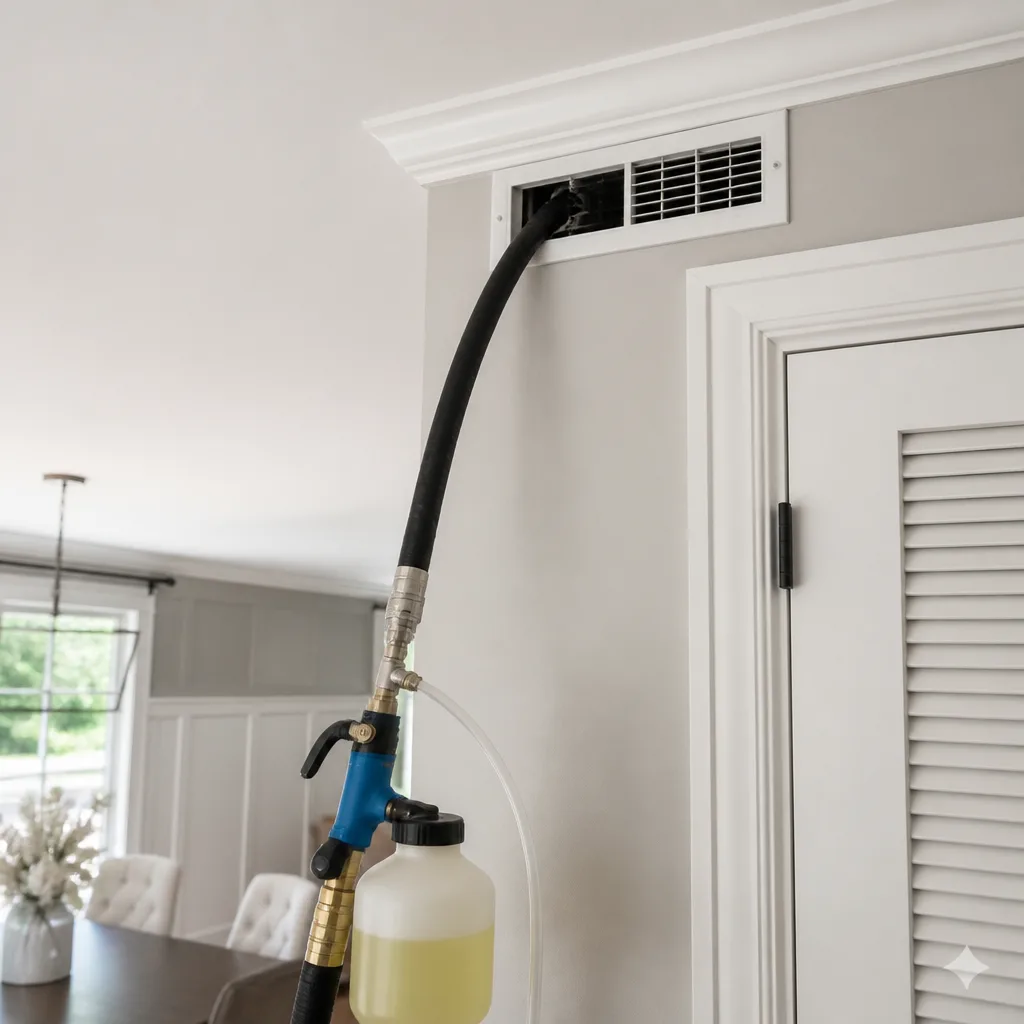
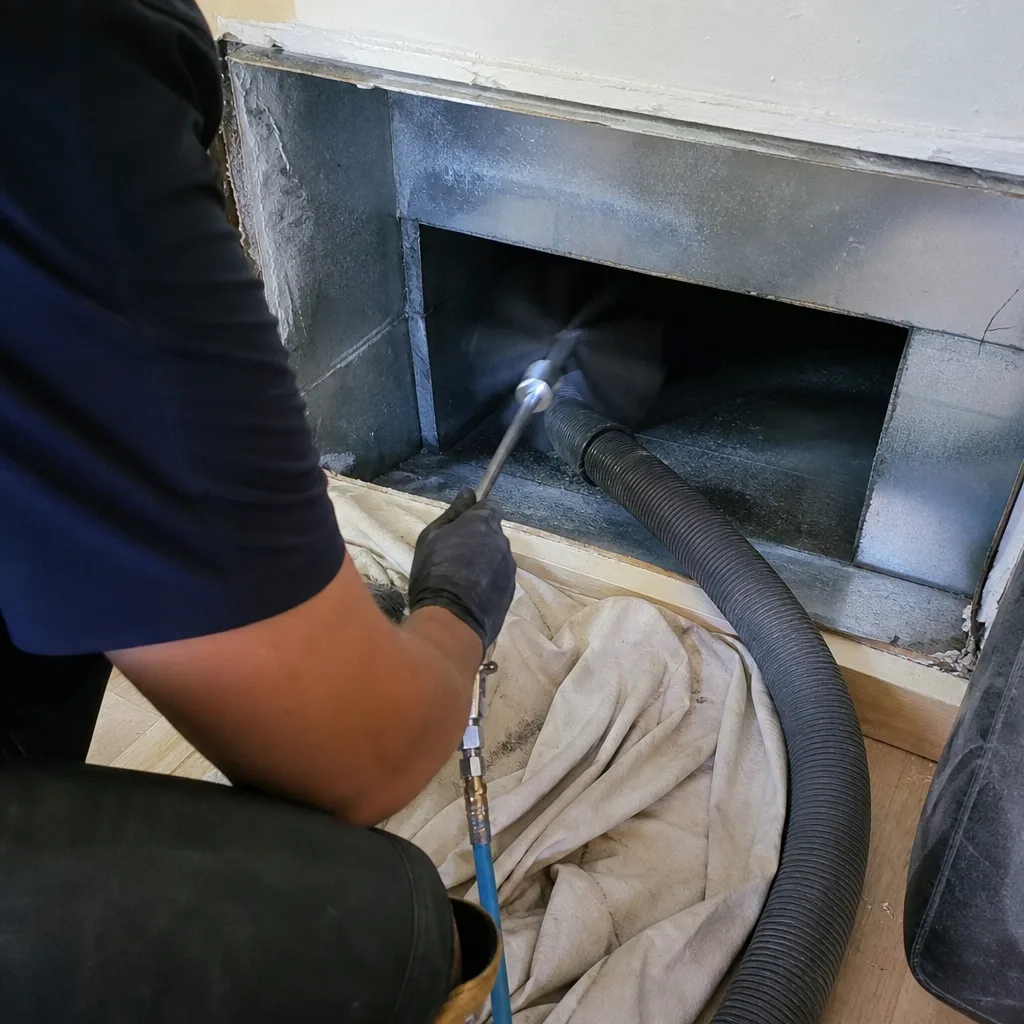
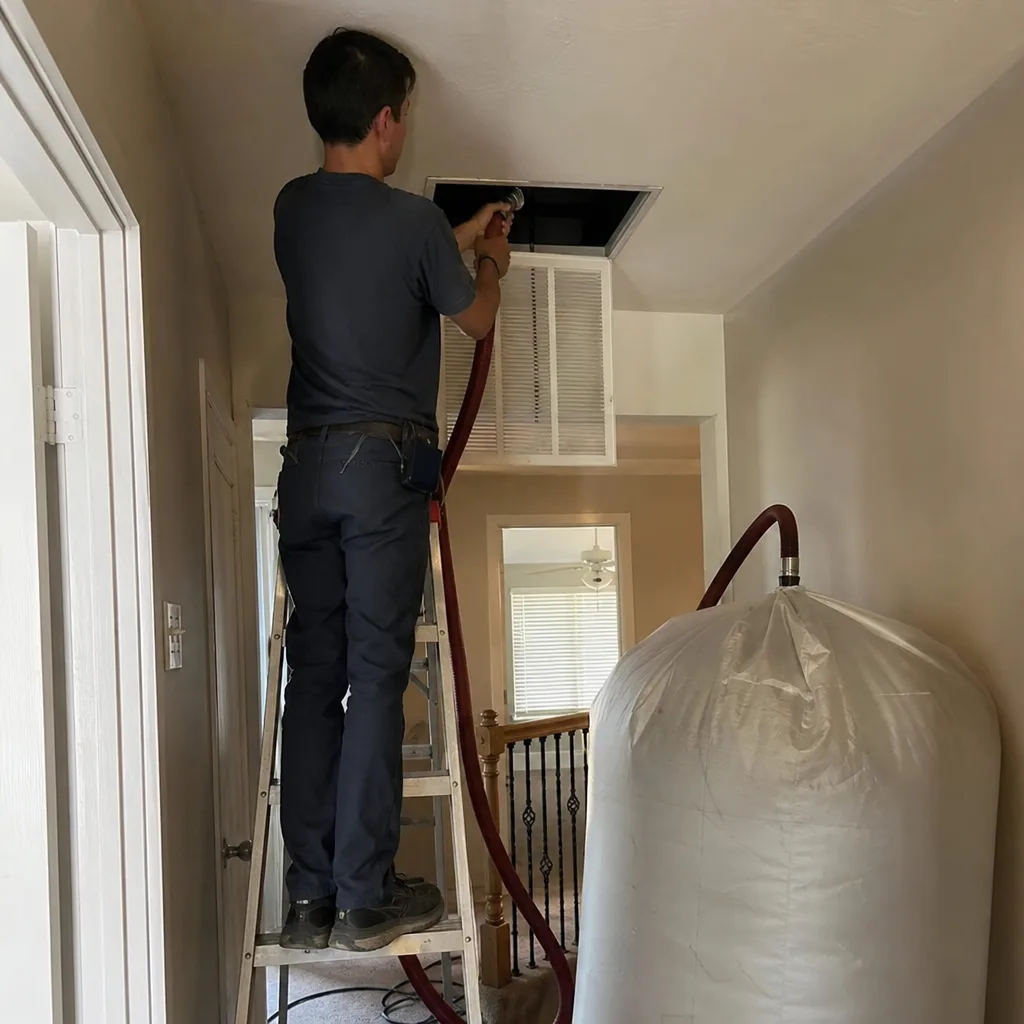
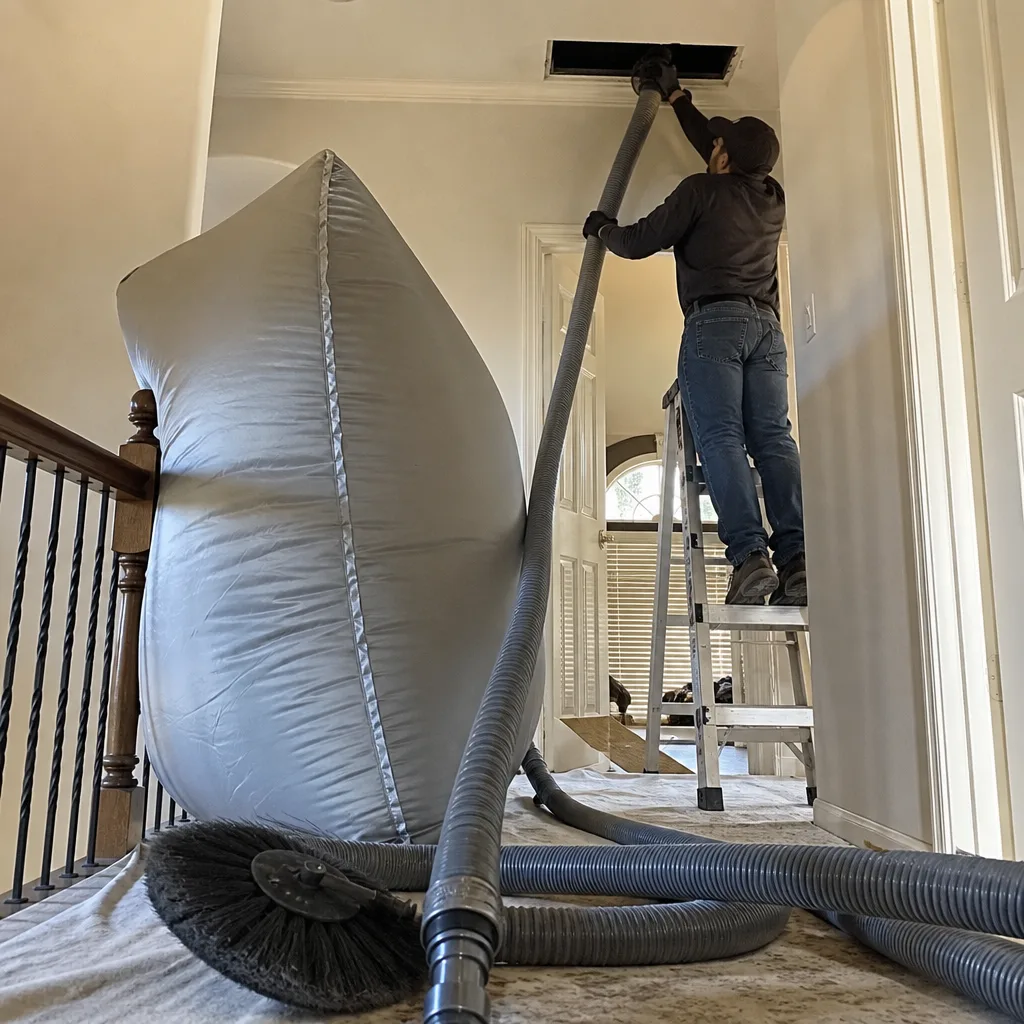
Professional access to the return plenum requires partial disassembly and negative-pressure containment to prevent debris redistribution. Equipment from Abatement Technologies and Guardsman is designed specifically for this containment challenge. When evaluating a duct cleaning provider, ask whether their process includes plenum access and photographic documentation. Our standard at CleanRun Air Duct Cleaning Plano includes both.
Maintaining Your Equipment Between Professional Visits
Your duct system is only as clean as the components connected to it. These three tasks bridge the gap between professional cleanings.
Evaporator Coil Access and Inspection
The evaporator coil sits above your furnace or air handler and is the primary moisture removal point in cooling mode. A dirty coil reduces efficiency and can become a biological growth site. Most Plano systems have an access panel that a homeowner can remove with a screwdriver.
Look for: dust accumulation on the fins (the aluminum ridges), any musty odor when you sniff near the opening, and water staining in the drain pan below. Do not attempt to clean the fins yourself; they bend easily and require specialized brushes. Document condition with photos and include them in your maintenance log.
Condensate Drain Line Maintenance
Plano’s summer humidity produces gallons of condensate daily. The drain line carries this water to a floor drain or exterior exit. A clogged line backs up into the pan, overflows, and can introduce moisture into the duct system through the coil cabinet.
Monthly during cooling season: pour a cup of white vinegar down the drain line access port (typically a T-fitting near the indoor unit). This suppresses algae growth without the corrosion risk of bleach. If you notice slow drainage or water in the emergency pan, the line needs mechanical clearing, not more vinegar.
Blower Motor and Housing
The blower wheel accumulates debris that bypasses the filter and deposits on the blades. This imbalance reduces efficiency and can cause premature bearing wear. Visual inspection through the blower compartment access panel is sufficient for homeowner maintenance; cleaning requires removal and should be done professionally.
Document blower condition annually, ideally before summer peak load. Heavy debris loading here indicates filter bypass or return leakage upstream.
Common Mistakes to Avoid
- Upgrading MERV rating without checking static pressure. A MERV-13 filter in a system designed for MERV-8 reduces airflow, strains the blower, and can cause coil freeze-up or heat exchanger damage. Verify compatibility with your HVAC manual or a technician before upgrading.
- Treating all registers as equivalent. The register closest to the air handler typically shows the most airflow and least debris; the farthest register shows the opposite. Inspecting only the convenient register gives a false baseline. Check one per zone, every time.
- Ignoring the return side entirely. Supply registers are visible and accessible; returns are often larger, louder, and less noticed. The return plenum accumulates debris faster than any supply run. A maintenance checklist that skips returns is incomplete by design.
- Scheduling cleaning on calendar autopilot. “Every 3-5 years” ignores occupancy changes, renovation activity, pet additions, and construction quality. A home in Parker with post-tension slab settling and flex-duct strain needs different timing than a identical square footage in Willow Bend with hard-pipe metal and no pets. Your photo log determines timing, not a calendar.
- Using “duct cleaning” as a synonym for “mold remediation.” Visible mold in ducts requires source elimination (moisture control, leak repair) before cleaning is meaningful. Cleaning moldy ducts without fixing the moisture source is temporary at best and can redistribute spores. Document mold with photos and call for inspection, not just cleaning.
- Accepting a quote without written line items. The duct cleaning industry’s bait-and-switch reputation exists because homeowners agree to a phone estimate or “starting at” price. A valid quote specifies: number of supply runs, number of returns, plenum access included or excluded, and total price. At CleanRun Air Duct Cleaning Plano, Haven Standard Clause 1 requires written price before any work starts; no exceptions since 2013.
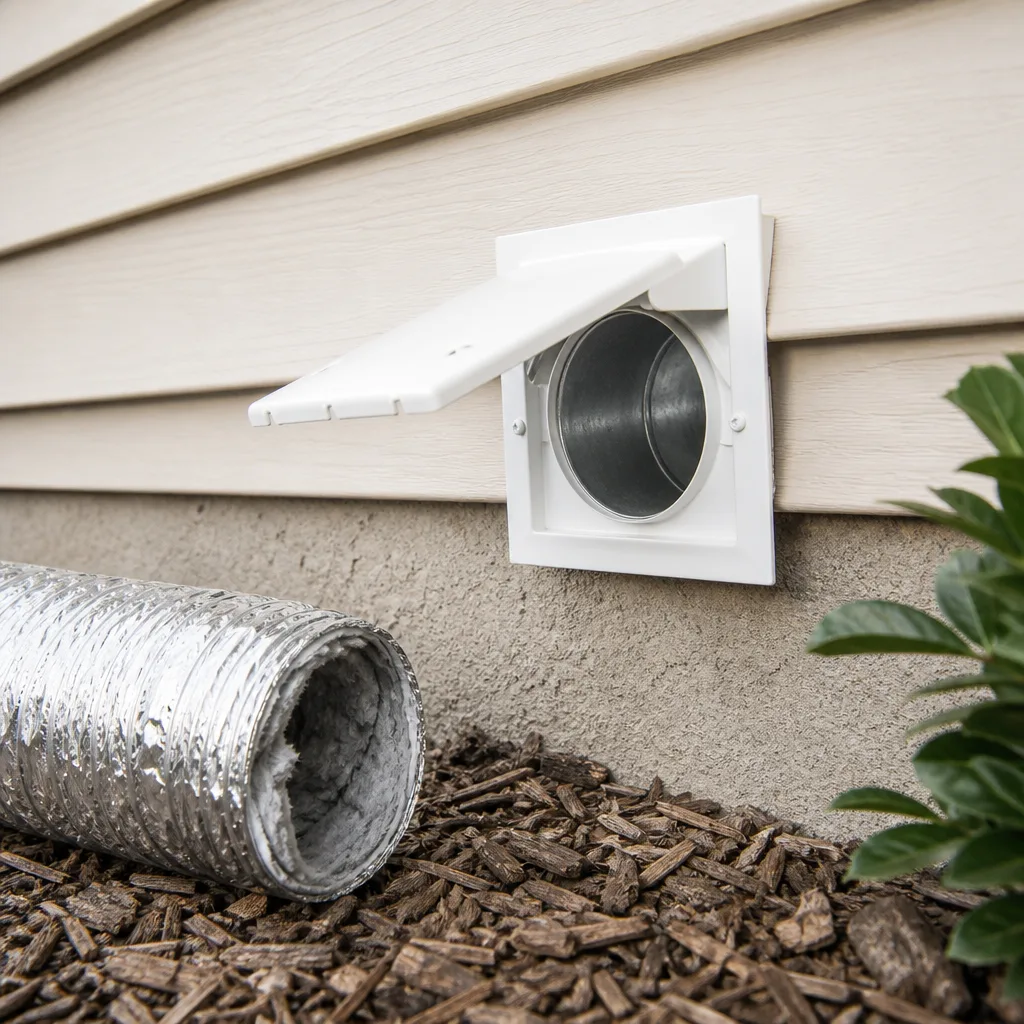
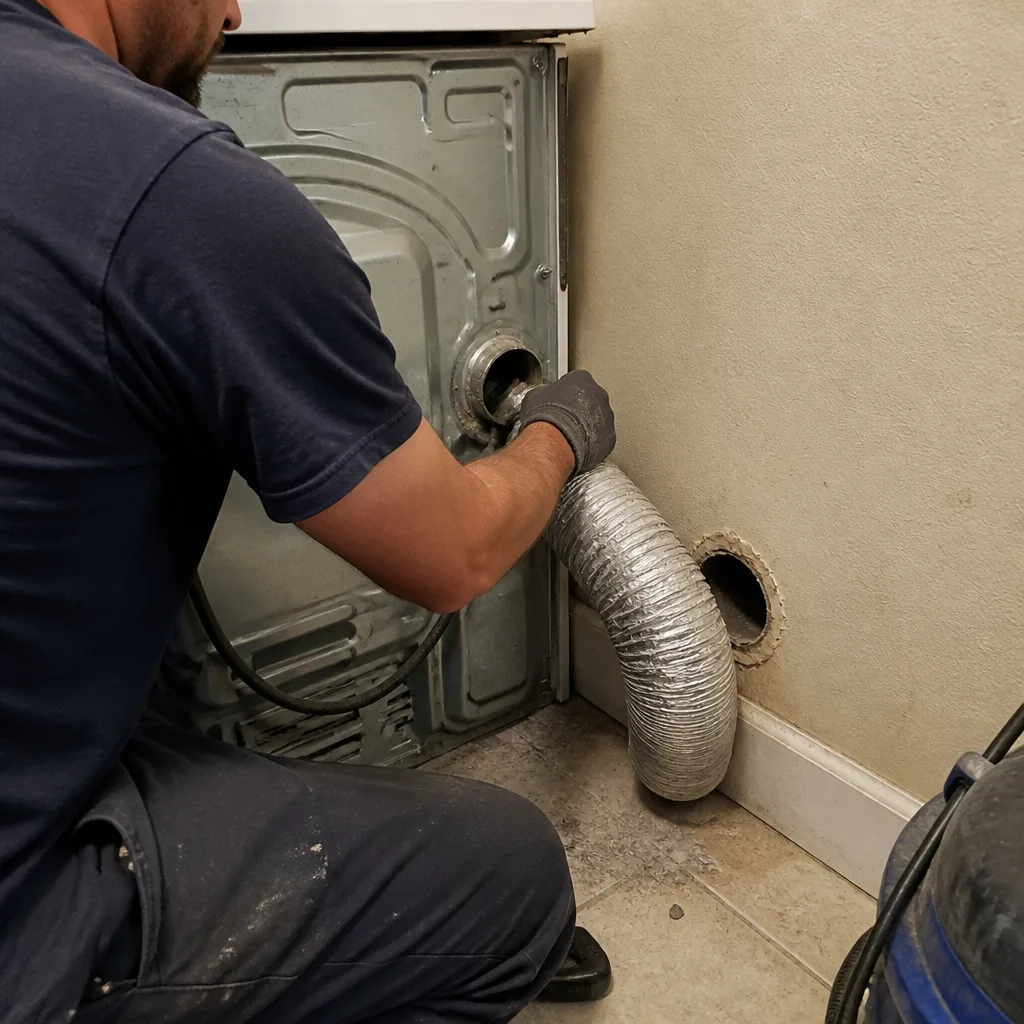
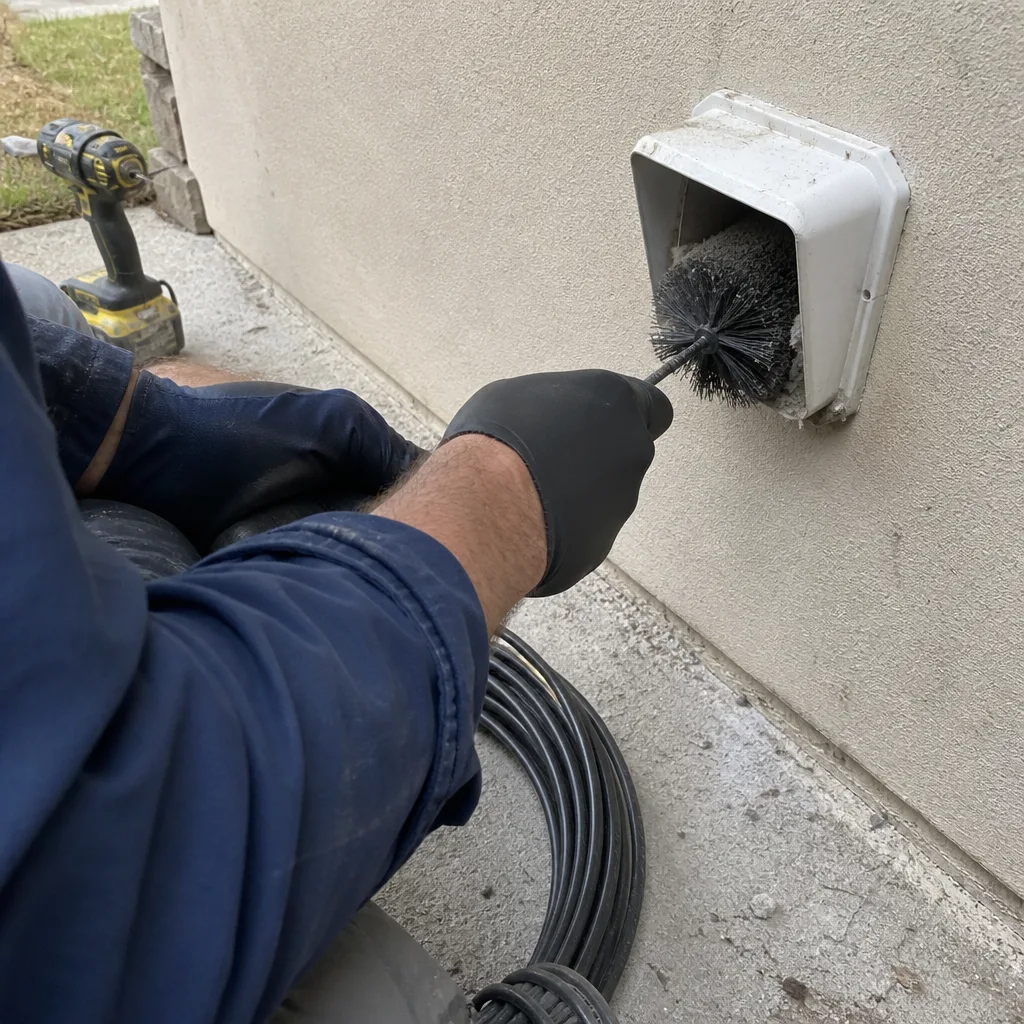
- Neglecting dryer vent maintenance as part of duct system health. Your dryer vent is not HVAC ductwork, but it shares the same infrastructure: a concealed duct run, lint accumulation, and fire risk. In Plano’s clay soil, settling foundations can compress dryer vent runs and create blockage points that lint alone would not cause. Include dryer vent inspection in your annual maintenance cycle.
When to Call a Professional
Call for professional evaluation when your log shows accelerating debris accumulation, any moisture or mold indicators, temperature differential changes exceeding 3°F from baseline, or post-renovation debris that your inspection cannot reach. Duct repair and sealing should precede cleaning when leaks are present; cleaning sealed debris is more effective and longer-lasting.
CleanRun Air Duct Cleaning Plano offers free estimates in Plano. Every estimate includes a written scope with line-item pricing before any work starts, documented photo record of every accessible duct run, and the 365-Day Done Right Promise backed in writing. Call (469) 452-7766 to schedule. We also provide full HVAC system cleaning for homeowners who want integrated service.
Frequently Asked Questions
Whole-system duct cleaning in Plano typically ranges $450-$850 for a standard single-system home, depending on duct count, accessibility, and whether plenum cleaning and sealant application are included. Quotes below $300 often indicate limited scope (only visible registers, no plenum access) or bait-and-switch pricing that increases on arrival. CleanRun Air Duct Cleaning Plano provides written line-item pricing before work starts under Haven Standard Clause 1; call (469) 452-7766 for an exact quote on your system.
Run all five checkpoints quarterly, aligned with the seasonal triggers described above. Spring inspection focuses on pollen loading at returns; summer on attic duct moisture; fall on switchover debris; winter on static pressure and filter fit. The photo log determines whether conditions warrant professional attention; most Plano homeowners with no pets or construction activity find annual professional evaluation sufficient, while homes with multiple pets or recent renovation may need more frequent service.
Low quotes typically exclude scope that higher quotes include: plenum access, negative-pressure containment, register removal and cleaning, or photographic documentation. A $79 coupon service often runs a rotary brush through accessible supply ducts only, without accessing returns or the plenum. The meaningful comparison is not price but deliverables: how many duct runs, before-and-after documentation, and written guarantee. CleanRun has delivered written scope and photo records on every job since 2013.
Demand a documented photo record of every duct run, before and after, with timestamps. Without this, you have only the technician’s word. At CleanRun Air Duct Cleaning Plano, the photo record is a standard deliverable included on every visit, not an upsell. You receive the images as part of your job record, with each duct run labeled by location.
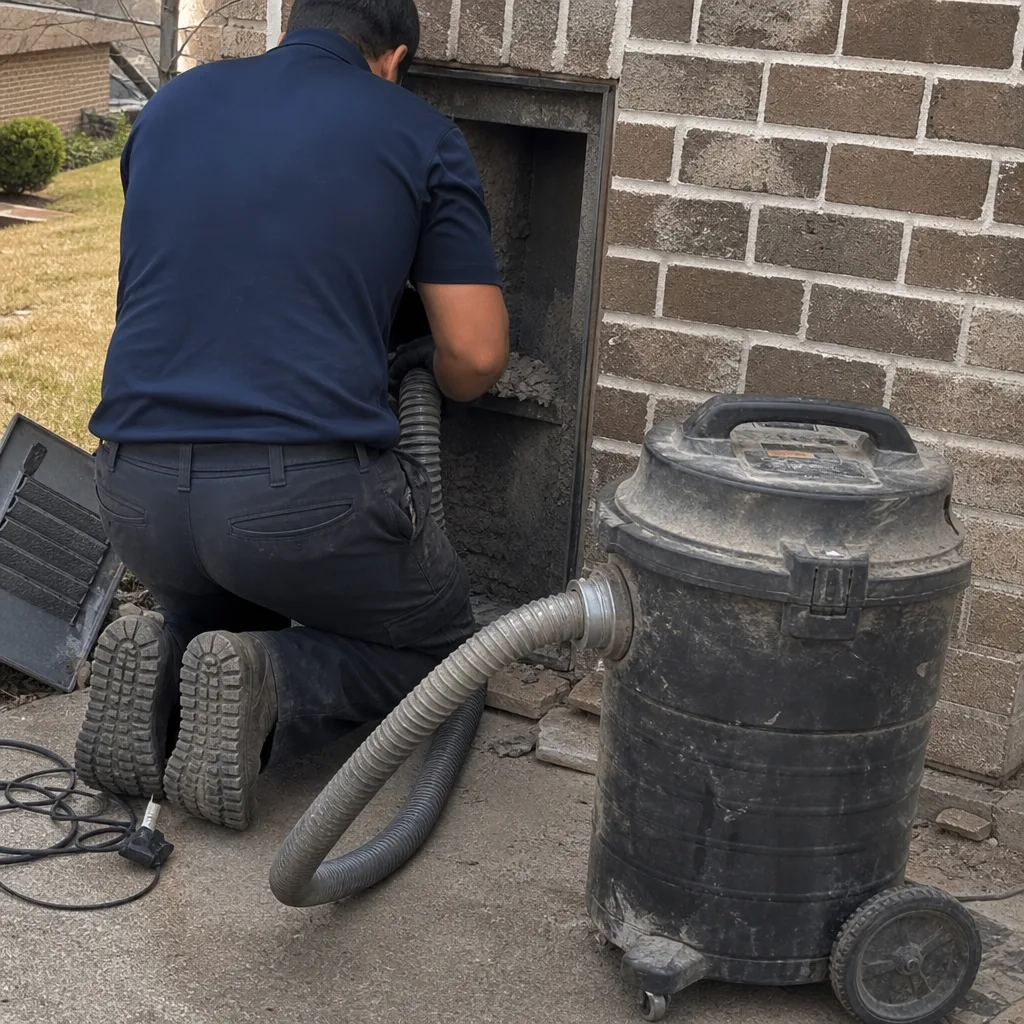
A shop vacuum can remove surface debris at registers and shallow boot sections but cannot reach the main trunk lines, plenum, or most branch ducts. More importantly, without negative-pressure containment, agitating debris in an unsealed duct system redistributes it into your living space. For accessible maintenance, vacuum your registers and change filters regularly. For full system cleaning, professional equipment from manufacturers like Rotobrush and Nikro, with HEPA containment, is required to prevent redistribution.
Plano’s clay soil creates foundation movement that stresses duct runs, particularly flex duct in slab-on-grade construction. We find more disconnected joints in Plano homes 10-20 years old than in equivalent-age homes on sandy or loam soils. The hard water does not directly affect ducts but does impact humidifier pads and evaporator coil scale, which are part of integrated HVAC system maintenance. Include coil inspection in your annual checklist, particularly if you run a whole-house humidifier in winter.
The Bottom Line
Effective duct maintenance is not a calendar event. It is a documentation practice: five observable checkpoints, photographed and logged, compared over time to reveal when conditions change. In Plano’s pollen-heavy springs, humid summers, and thermally stressful attic environments, the baseline record is your only reliable guide to when professional intervention is warranted. Change your filter on schedule, but inspect your system on evidence. When the evidence points to need, demand written pricing before work starts, photographic proof after completion, and a guarantee that outlasts the technician’s drive home.
Written by Tomas Reyes, Owner at CleanRun Air Duct Cleaning Plano, serving Plano since 2013.