
Last updated September 23, 2026
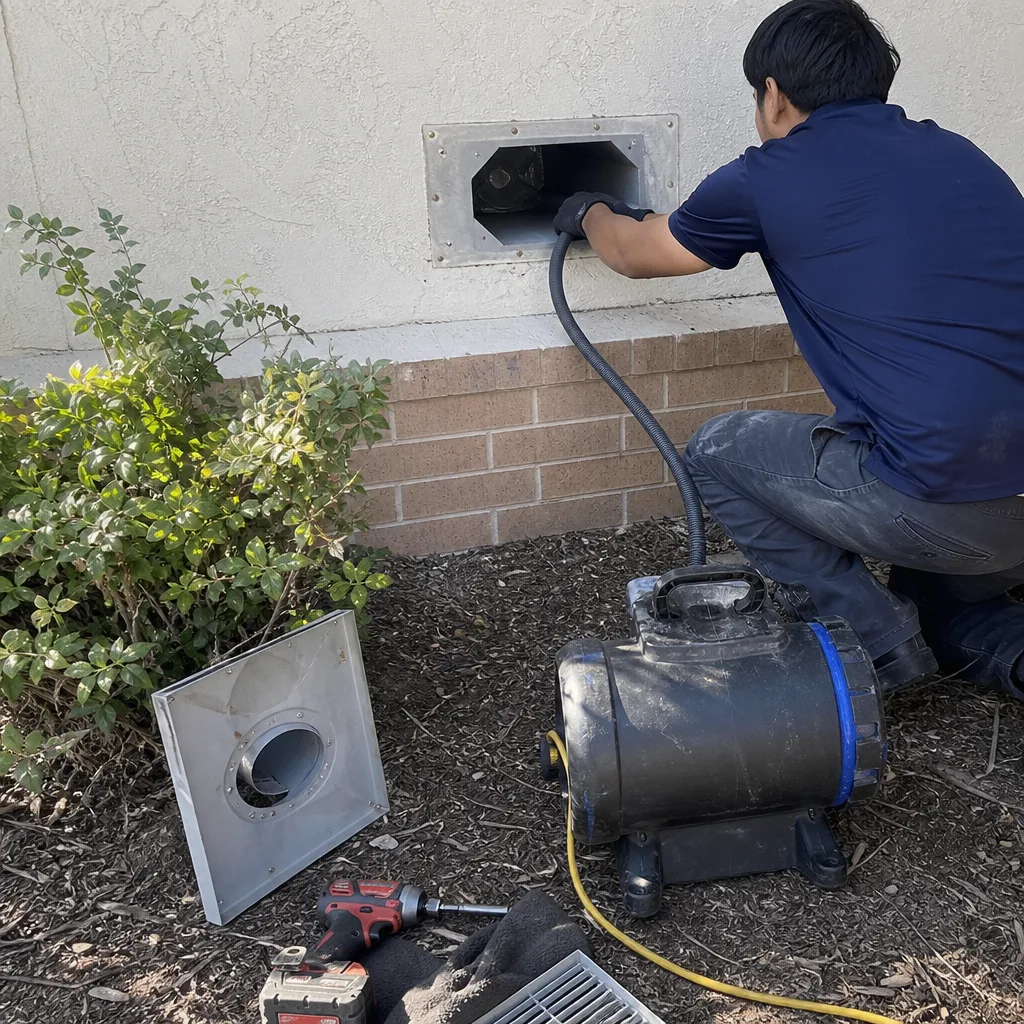
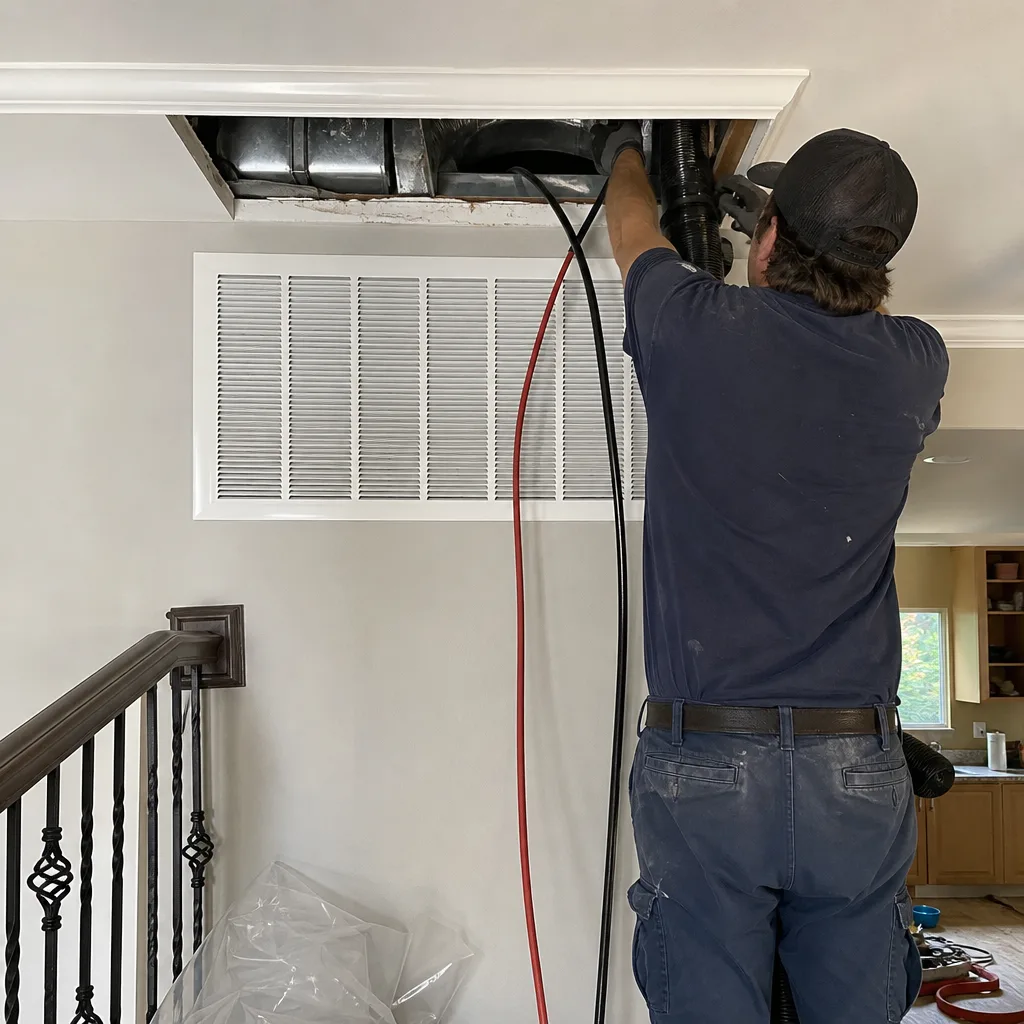
Whole-system duct and dryer vent check with before-and-after photos - you see exactly what came out of your vents
That "$99 whole-house special" is a bait ad - the real number appears once they are in your hallway, or the "clean" is a shop-vac at the register. We photograph the inside of your ducts before and after instead.

 Before
 After
After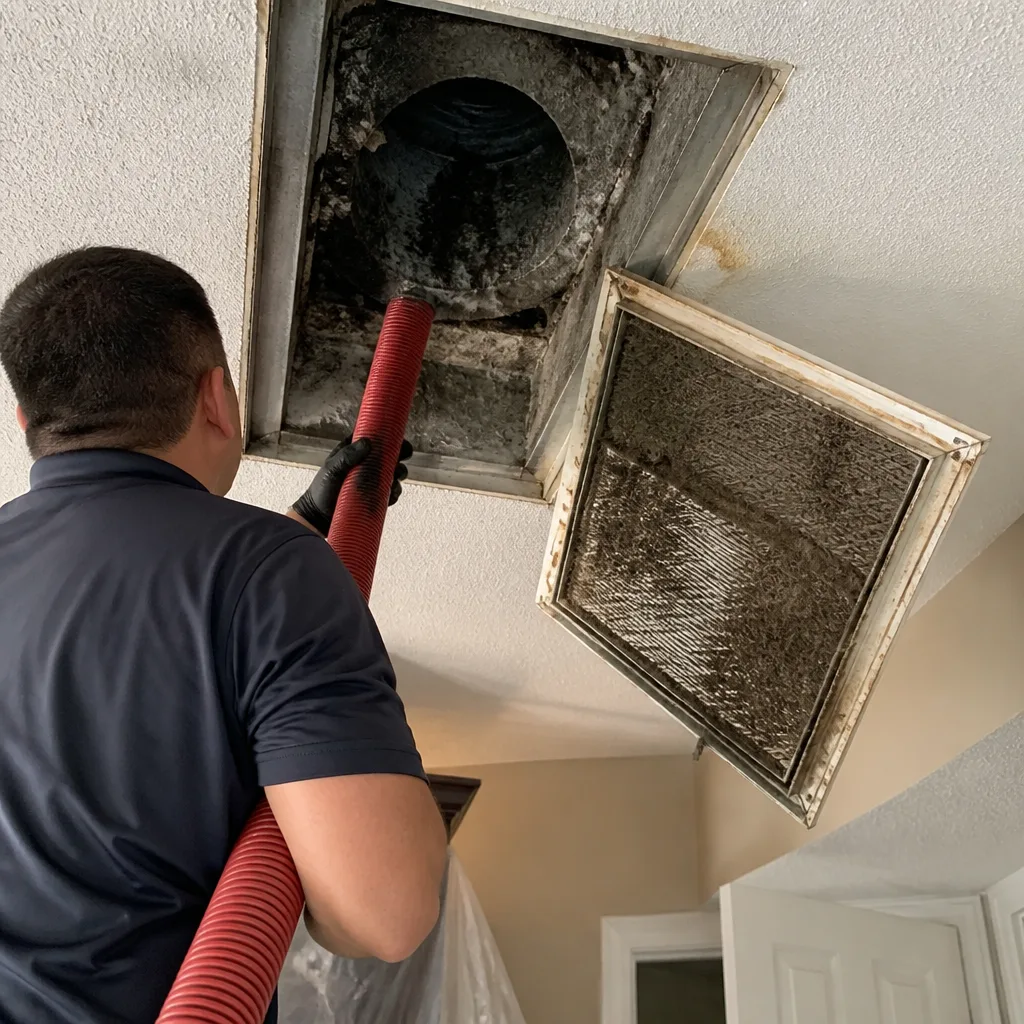 Before
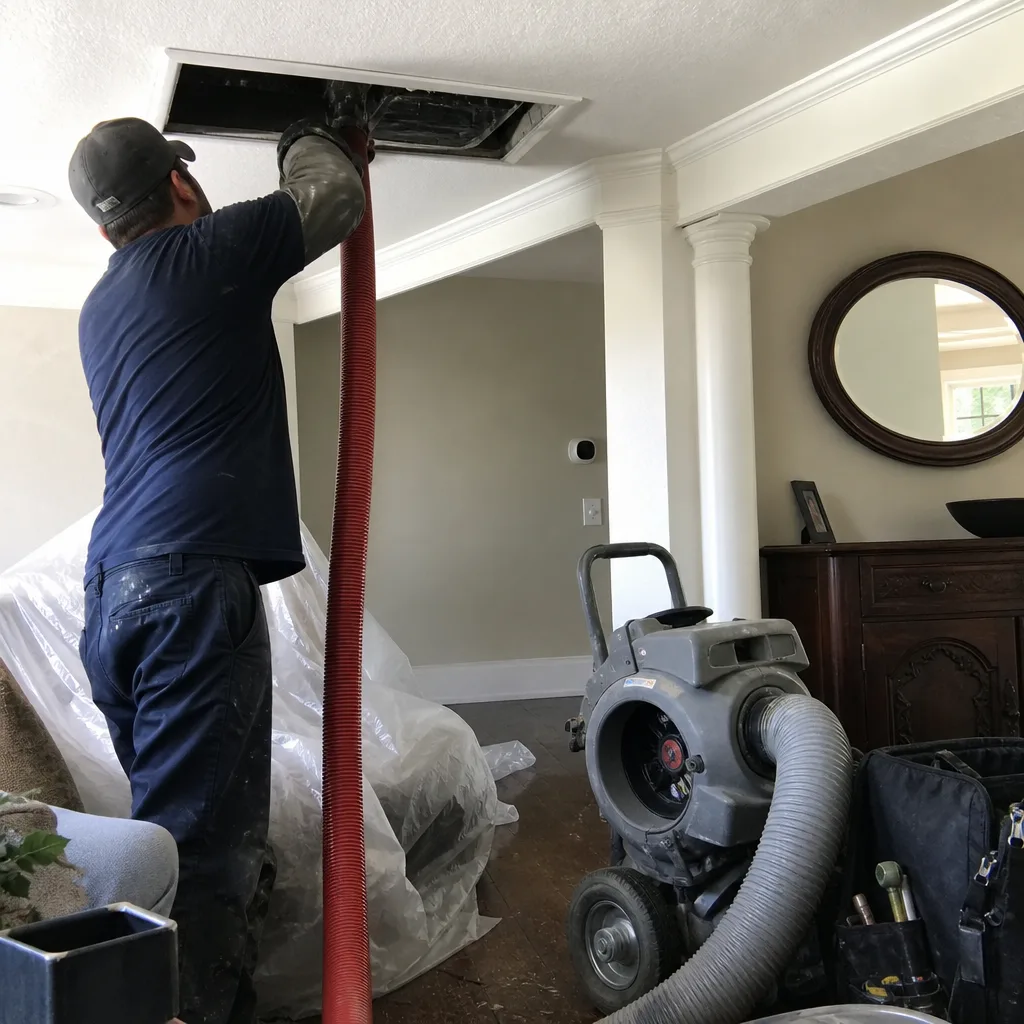 After
After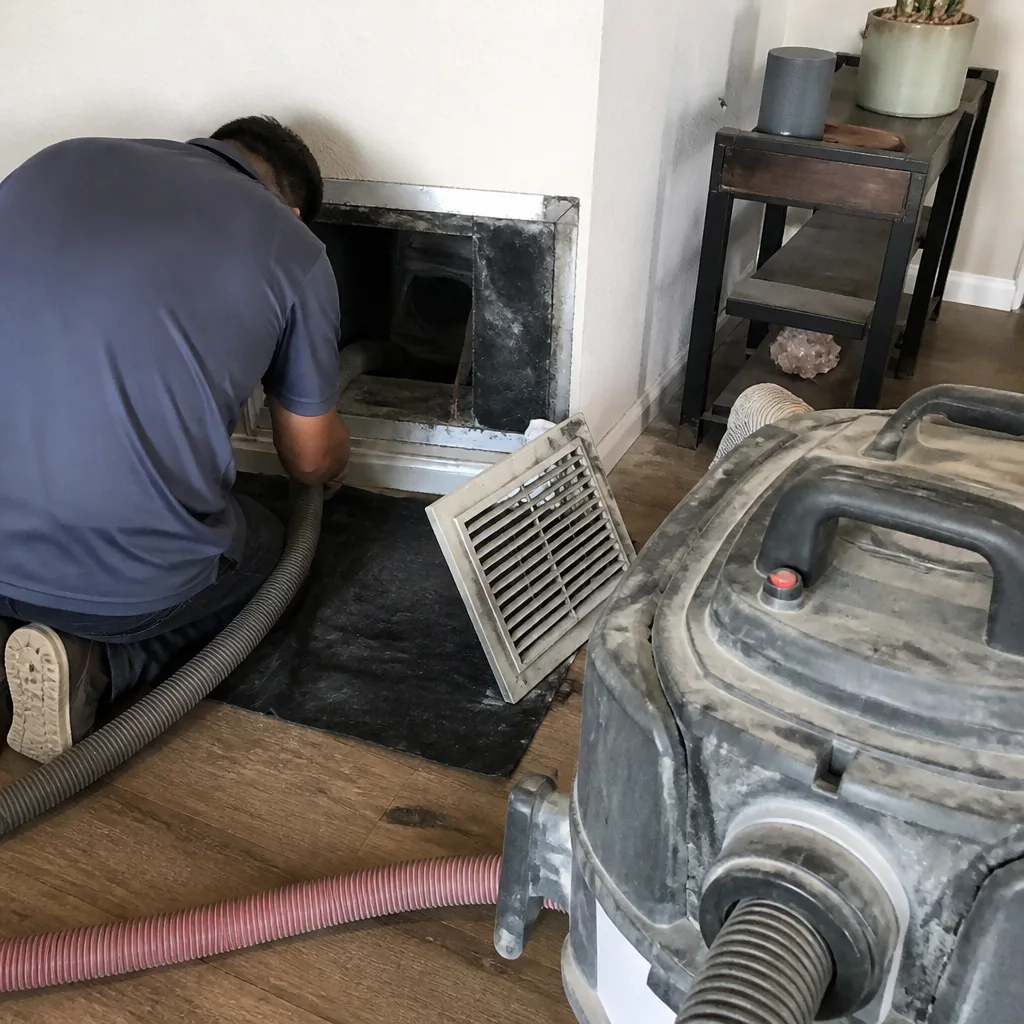 Before
 After
AfterAir Duct Cleaning Warning Signs: A Plano Homeowner’s Reference Guide
Visible dust on your supply registers is almost never caused by dirty ducts. In our work across Plano since 2013, we’ve documented the inside of more than 52,000 homes, and the pattern is consistent: dusty registers usually mean a clogged filter or a return-air leak pulling attic dust through gaps in the ductwork. The companies that sell you a full cleaning based on that symptom alone are solving the wrong problem. This guide maps what you actually see and smell to the specific duct condition that produces it, so you can describe your situation accurately before anyone arrives with a van and a written price.
Quick Answer
The warning signs that actually indicate duct cleaning is needed in Plano homes include: visible debris buildup inside supply ducts (photographed at the register with a phone flashlight), musty odors that persist after filter changes and coil cleaning, uneven room temperatures combined with low airflow at distant registers, and post-renovation dust recirculation appearing 2-6 months after construction ends. Rodent droppings, nesting material, or gnawed flex duct require immediate professional assessment, not our Air Duct Cleaning services. Most other symptoms, dusty registers, rising energy bills, frequent cycling, point to equipment or envelope issues, not duct contamination.
Table of Contents
- The Symptom-to-Cause Map: What You’re Actually Seeing
- Dusty Supply Registers: The Most Misread Sign
- Musty Odors and Mold-Adjacent Growth
- Uneven Room Temperatures and Weak Airflow
- The Post-Renovation Dust Window
- Rodent Evidence in Plano Ductwork
- Rising Energy Bills: Duct Leak vs. Duct Dirt
- How to Document What You See Before Calling
BeforeAfterThe Symptom-to-Cause Map: What You’re Actually Seeing
Homeowners in Plano, especially those who bought between 2015 and 2025 in developments like Willow Bend, Kings Ridge, or the Legacy West corridor, are working with relatively new construction. That matters because the duct problems in a 2018-built home differ from those in a 1985 system. Newer flex duct is more prone to rodent damage and installer gaps; older galvanized steel may have decades of accumulated debris but intact structural integrity.
Here’s what we’ve found across our documented jobs: symptoms cluster into four actual causes, and only two of them warrant cleaning.
| Symptom You Observe | Most Likely Actual Cause | Correct Response |
|---|---|---|
| Dust collecting on supply register fins | Dirty filter or return duct leak pulling attic air | Replace filter; inspect return plenum and boot connections |
| Musty smell when HVAC cycles | Dirty evaporator coil, condensate pan, or duct debris with moisture history | Coil cleaning first; duct inspection if smell persists |
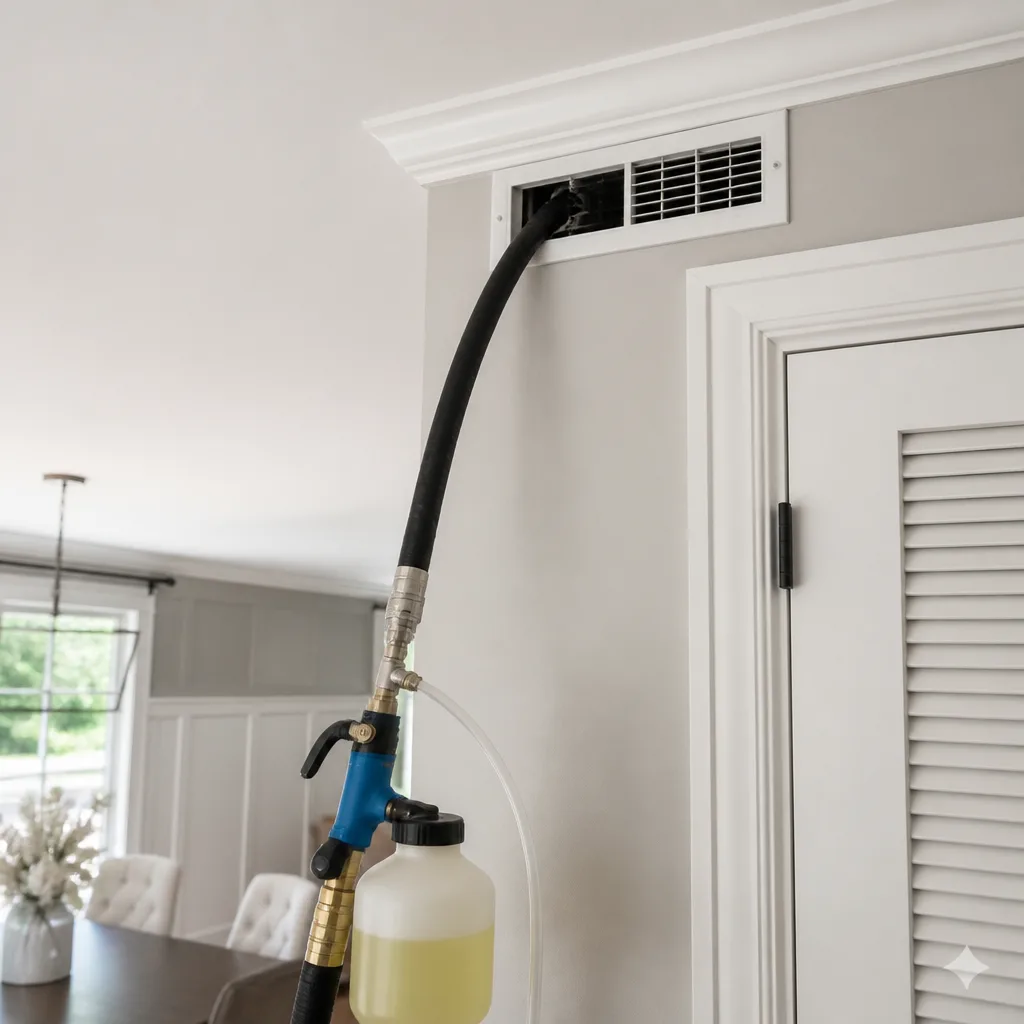
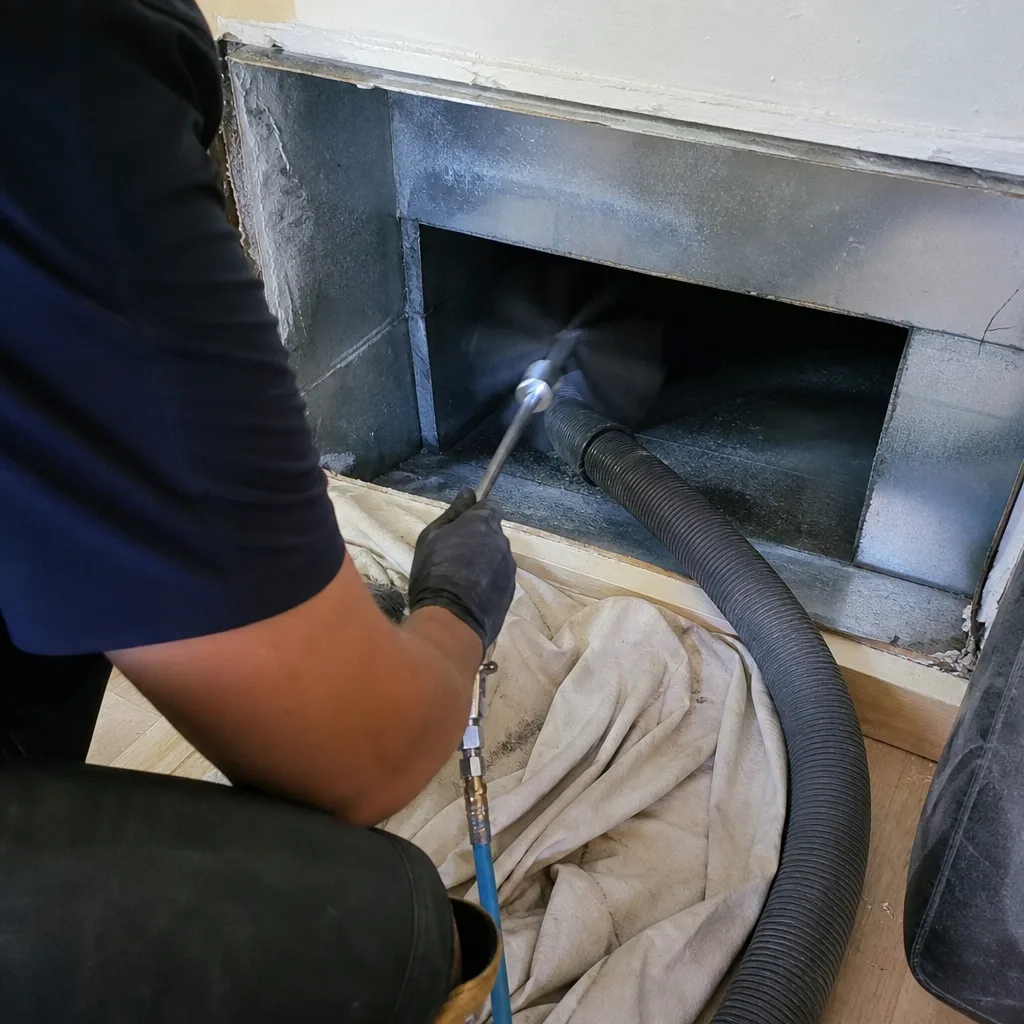
| Visible debris inside duct (photo confirms) | Accumulated construction dust, pet dander, or debris from deteriorating flex duct | Negative-pressure extraction cleaning with brush agitation |
| One room consistently 4-8°F different | Duct leak, kinked flex run, or damper issue | Duct repair and sealing, not cleaning |
| Energy bill rising 15%+ year-over-year | Duct leakage to unconditioned space or equipment efficiency loss | Pressure test and duct sealing; equipment assessment |
| Post-renovation dust recurrence | Drywall dust settled in supply ducts, redistributed by cycling | Full system cleaning 2-6 months post-construction |
The critical distinction: cleaning treats contamination inside the duct. It does not treat leakage, equipment failure, or envelope problems. A written estimate should specify which condition is being addressed. At CleanRun Air Duct Cleaning Plano home, we separate these scopes explicitly, Haven Standard Clause 1, because a homeowner who pays for cleaning when they need sealing has been sold noise, not a solution.
Dusty Supply Registers: The Most Misread Sign
This is where the most money gets wasted in Plano. A homeowner notices gray accumulation on the fins of their ceiling supply registers, assumes the ducts are filthy, and calls for cleaning. The technician arrives, confirms the dust exists, and sells a full system cleaning. The registers look the same six weeks later.
Here’s why. Supply registers are the exit point of conditioned air. The air passing through them has already been filtered at the return, cooled at the coil, and pushed by the blower. If that air contains enough dust to coat registers, the contamination is happening downstream of the filter, or the filter itself is bypassing air.
Three specific checks before you call anyone:
- Remove the register and photograph inside the duct boot with your phone flashlight. Actual duct debris appears as a layer on the duct floor or walls, not just dust on the register fins. If the metal boot is clean behind the register, the dust is ambient room air settling on a cool surface, a physics problem, not a duct problem.
- Check your filter fit and change date. A 1-inch filter not fully seated in its rack, or a filter unchanged past 90 days in Plano’s pollen-heavy spring, allows unfiltered return air to bypass. That dust loads the coil and eventually re-enters the supply stream. The fix is a $12 filter, not a $600 cleaning.
- Inspect the return air path for gaps. In Plano’s hot attic environments, return ductwork often runs through 140°F unconditioned space. A gap at a return boot or plenum connection creates negative pressure that pulls attic dust directly into the system, bypassing the filter entirely. This dust then distributes through supply registers. The symptom looks identical to dirty ducts; the cause is entirely different.
We’ve photographed this exact scenario in Plano homes near Prestonwood and in the Russell Creek area: pristine duct interiors, heavily loaded filters with bypass gaps, and return plenums pulling visible attic insulation fibers. The correct scope was return duct sealing and filter rack modification, not supply duct cleaning. A company that does not inspect the return side before quoting supply cleaning is not diagnosing; they’re selling.
If your phone flashlight shows clean metal boots behind dusty registers, the ducts are not the problem. Save the inspection fee and fix the filter or the return leak first.
Musty Odors and Mold-Adjacent Growth
Musty smell when the HVAC cycles is the symptom that produces the most anxiety and the most misleading sales pitches. Let’s separate what you can observe from what requires professional assessment.
Mold-adjacent growth is a legitimate cleaning candidate. This appears as dark spotting or faint discoloration on the interior duct surface, typically near the evaporator coil where condensate creates sustained humidity. It wipes away with mild agitation and does not penetrate the duct material. In Plano’s climate, with summer dew points regularly above 70°F, this condition is common in systems where the coil has not been cleaned in 2+ years. The odor is present but not overwhelming; it intensifies when the system first cycles after a period of disuse.
Active mold colonies require remediation, not cleaning. Visual indicators: fuzzy or raised texture, color variation (green, black, or white), growth that extends onto insulation or surrounding structure, and a persistent earthy odor that does not vary with HVAC cycling. If you can photograph growth that appears three-dimensional or that has spread beyond the duct interior, you need a mold assessment with sampling, not a duct cleaning quote.
The distinction matters for scope and cost. Cleaning addresses surface contamination inside the duct. Remediation addresses colonization of building materials and requires containment, negative air pressure, and post-remediation verification. A company that cannot describe the difference in these terms, or that treats all discoloration as a cleaning job, is working outside their competency.
In our Plano work, we’ve found that musty odors resolve without duct cleaning in roughly 60% of cases. The actual source is often:
- A dirty evaporator coil (coil cleaning, not duct cleaning)
- A clogged condensate drain pan allowing standing water (drain line service)
- Oversized equipment short-cycling without adequate dehumidification (equipment assessment)
- A duct leak pulling humid attic air into the return (duct sealing)
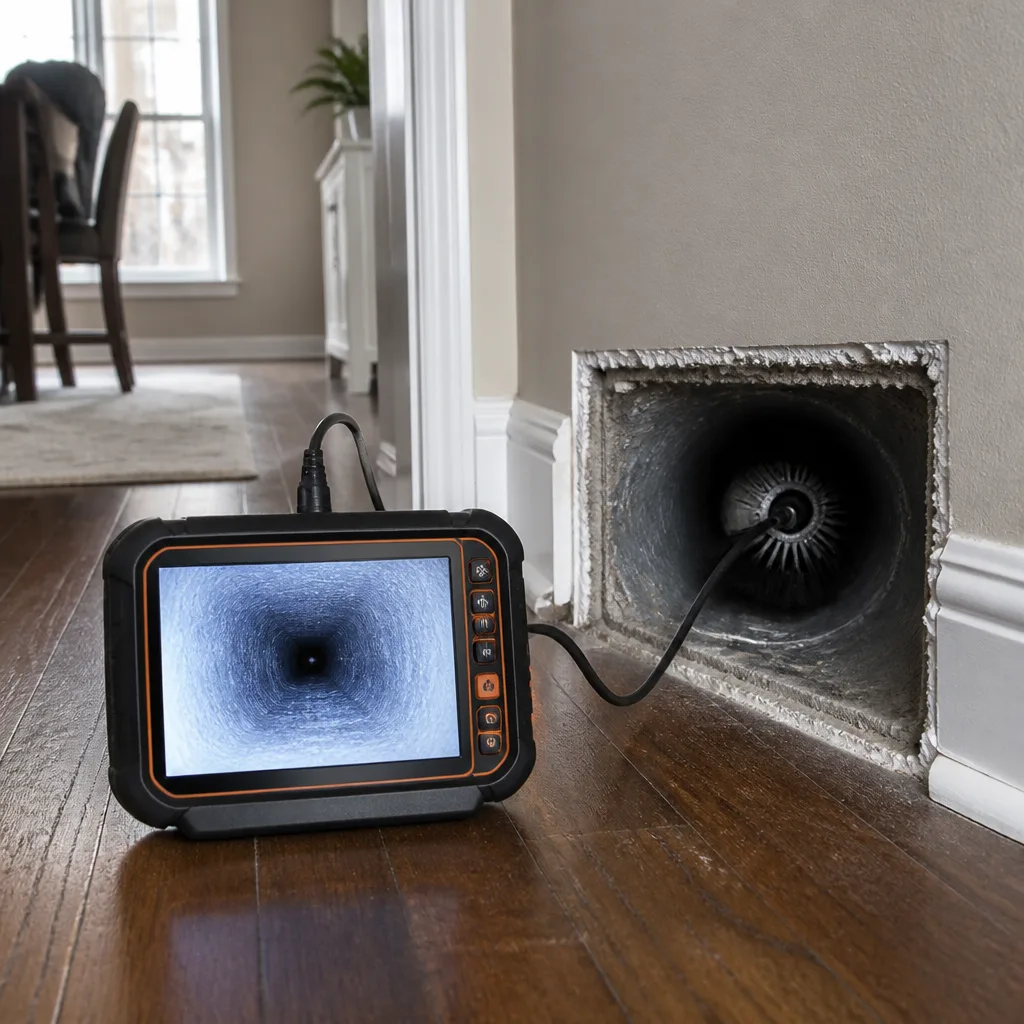
Our protocol: we clean the coil and pan first, then reassess odor after 48 hours of operation. If the smell persists, we scope the ductwork with a camera and photograph any interior contamination. The customer sees the photo before we discuss cleaning scope. This is Haven Standard Clause 1 in practice: documented evidence before written price before any work starts.
If you smell mustiness, change your filter, note whether the odor varies with humidity (check a weather app for dew point), and photograph any visible discoloration at registers with your phone flashlight. This documentation produces an accurate scope when you call, not a guess based on “musty smell” alone.
Uneven Room Temperatures and Weak Airflow
A bedroom that won’t cool below 78°F while the living room holds 72°F is not a dirty duct problem. It’s a distribution problem. The confusion arises because homeowners associate “air not getting there” with “something blocking the air,” and cleaning companies are happy to reinforce that association.
The actual causes, in order of frequency in Plano homes we’ve serviced:
- Kinked or crushed flex duct. Flexible ductwork common in post-2005 Plano construction is easily compressed during attic work, storage, or by installers who left insufficient slack. A 6-inch flex duct kinked to 3-inch effective diameter delivers less than 25% of design airflow. The register may feel cool but weak. Cleaning does not restore diameter; physical repair or replacement does.
- Duct leakage to unconditioned space. A supply duct with a gap at a connection, or torn outer liner on flex duct, dumps conditioned air into the attic. The room starves. In Plano’s 140°F attics, this is also an energy disaster. The correct scope is pressure testing and sealing, typically with mastic or aerosol sealant, not interior cleaning.
- Damper mispositioning or absence. Some Plano builders install manual dampers for zone balancing; others don’t. A damper partially closed at the trunk line, or never installed on a long run, creates predictable temperature stratification. Adjustment or addition of balancing dampers is a design issue, not a contamination issue.
- Undersized duct for the load. A room with added square footage, converted garage, or west-facing glass may have a duct sized for original construction loads. The air is clean; there’s just not enough of it. This requires duct modification or equipment reassessment.
When might cleaning help? If a long duct run has accumulated enough debris to measurably restrict airflow, typically in homes with 15+ years of filter neglect or significant pet hair loading. We’ve seen this in Plano’s older neighborhoods near downtown, where 1980s galvanized duct has never been cleaned and registers show visible hair accumulation. But this is the exception. In 12 years of documented jobs, we’ve recommended cleaning for airflow issues in fewer than 10% of uneven-temperature calls.
The diagnostic step: hold a tissue against the problem register and against a well-performing register. If the tissue barely deflects, you have a flow problem, not a cleanliness problem. If it deflects normally but the air feels warm, you have an equipment or insulation problem. Document this before calling; it prevents a cleaning quote for a sealing or repair need.
The Post-Renovation Dust Window
This is the warning sign most competitors miss entirely, and it’s particularly relevant in Plano’s active renovation market. Homes in Willow Bend, Avignon Windhaven, and along the Preston corridor are regularly updated. Homeowners complete a kitchen remodel or addition, clean thoroughly, replace filters, and assume the dust is gone. Six weeks later, or three months later, or sometimes six months later, fine dust begins recirculating through registers.
The mechanism: drywall sanding, tile cutting, and woodwork generate particulate in the 1-10 micron range. During construction, HVAC systems are typically shut down or covered. Dust settles throughout the ductwork, especially in horizontal supply runs where airflow is minimal. When the system resumes normal operation, the initial cycles don’t disturb much of this settled material. Over weeks of thermal expansion and contraction, vibration, and gradually increasing runtime, the dust slowly mobilizes. It appears at registers long after the renovation ended and the homeowner has stopped looking for it.
The timeline:
- Weeks 1-2 post-renovation: minimal dust; system was off or filtered during work
- Weeks 3-8: occasional dust at registers; homeowner attributes to normal household dust
- Months 2-6: persistent fine dust, often gray or white, that reappears within days of cleaning registers
- Month 6+: if dust was substantial, continued redistribution; if minimal, may have cleared through normal operation
The specific indicator that distinguishes post-renovation dust from normal household dust: it is consistently fine, often light-colored, and reappears at all registers roughly simultaneously rather than concentrating near high-traffic areas. Normal household dust is darker, includes fibers and skin cells, and loads registers near entryways and living spaces first.
Our recommendation: if you’ve completed renovation work in the past six months and are seeing unexplained dust recurrence, schedule a camera inspection of the supply trunk and main branches. The photo will show whether significant construction debris remains. If so, Air Duct Cleaning in Plano with negative-pressure extraction and brush agitation, using equipment like Rotobrush or Nikro systems, is the appropriate scope. We document the before condition so you can verify the after.
Waiting beyond six months does not improve the situation. The dust does not “settle out” permanently; it cycles until removed or until it loads your filter and coil to the point of equipment strain.
Rodent Evidence in Plano Ductwork
Plano’s mature neighborhoods with established tree canopy, Russell Creek, Park Forest, sections of Old Plano, have active roof rat and squirrel populations. These animals access attics through eave gaps, vent screens, and construction defects, then explore ductwork for nesting material and travel corridors. This is not a cleaning scenario. It is a contamination event requiring specific response.
What to look for:
- Droppings: Rodent droppings in ductwork are elongated, 1/4 to 1/2 inch, and may appear in clusters near register openings or at low points in the duct where gravity concentrates them. Fresh droppings are dark and soft; old droppings are gray and brittle. Either indicates access, not just historical presence.
- Nesting material: Shredded insulation, paper, or fabric packed into duct bends or near register boots. This restricts airflow and creates fire hazard if near heat sources.
- Chewed flex duct: Flexible duct has a plastic inner liner that rodents chew to access the fiberglass insulation layer. The damage appears as irregular holes or tears, often with insulation visible. Unlike mechanical damage, chew marks show paired incisor grooves.
- Odor: A sharp, ammonia-heavy smell distinct from mold mustiness. This indicates active or recent occupancy.
If you observe any of these, do not run the HVAC system before professional assessment. Operating the system distributes allergens, parasites, and potentially hantavirus-contaminated particulate throughout the home. Close the register dampers if accessible, turn the system off, and call for inspection.
The correct scope involves: pest control access remediation (sealing entry points), removal of contaminated duct material (not cleaning), replacement of damaged sections, and sanitizing of remaining intact ductwork. We use professional-grade HEPA containment during this work and document all damaged sections photographically before removal.
Standard duct cleaning without addressing the access point and removing contaminated material is incomplete and potentially hazardous. Any company that offers to “clean up” rodent evidence without describing access sealing and material replacement is not following safe practice. At CleanRun, we coordinate with licensed pest control professionals when rodent access is active, and we do not resume HVAC operation until the access is sealed per Haven Standard protocols.
Rising Energy Bills: Duct Leak vs. Duct Dirt
A homeowner in Plano sees their summer electric bill climb from $280 to $380 and assumes, reasonably, that something in the HVAC system is wrong. If they call a duct cleaning company, they may be sold cleaning as the efficiency restoration. This is almost always incorrect.
Duct contamination does reduce efficiency, but marginally. A heavily loaded duct system might increase static pressure enough to reduce blower efficiency by 5-10%. The efficiency loss from duct leakage to unconditioned attic space is 20-40%. The math is not close.
Plano’s climate amplifies this. With attic temperatures reaching 140°F in July and August, a supply duct leaking 20% of its air into the attic is dumping cooled air into a furnace and pulling superheated attic air into the return. The equipment runs longer, cycles more frequently, and still cannot maintain setpoint. The homeowner pays for cooling that never reaches the living space.
Signs that point to leakage rather than contamination:
- Bill increase is gradual over 1-2 years (duct tape and mastic degrade; contamination builds over longer periods)
- System runs continuously during peak heat without reaching setpoint
- Attic ductwork is visibly disconnected, taped rather than mastic-sealed, or uses deteriorating flex duct
- Rooms farthest from the air handler are most affected (leakage accumulates along long runs)
- Filter loads unusually quickly (return leaks pull attic dust, loading filters faster than normal household air)
The diagnostic tool is a duct pressure test, typically performed with a blower door and duct blaster. This quantifies leakage to outside and identifies whether it exceeds code maximums. In Plano, Texas Energy Code requires duct systems to leak no more than 12% of total airflow to unconditioned space; many older homes leak 25-40%.
Cleaning does not seal leaks. Sealing does not remove interior contamination. If your bills are rising and you suspect duct issues, request a pressure test, not a cleaning quote. At CleanRun, we perform this test as part of our assessment and separate the sealing scope from any cleaning scope in our written estimate. Haven Standard Clause 1: the price is for the work documented, not a package that includes unnecessary services.
How to Document What You See Before Calling
The quality of your written estimate depends on the quality of information you provide before the technician arrives. Vague descriptions produce vague scopes, and vague scopes are where bait-and-switch pricing thrives. Here’s how to document effectively:
- Photograph register interiors. Remove the register cover, turn on your phone flashlight, and photograph straight into the duct boot. Take one photo from directly below and one angled to show the duct wall. Date the photos. These establish baseline condition and help distinguish surface dust from accumulated debris.
- Note the symptom timeline. When did you first notice the issue? Did it coincide with filter change, season change, renovation, or weather event? Sudden onset suggests equipment failure or access event; gradual onset suggests accumulation or degradation.
- Record specific locations. “Master bedroom northeast register” is more useful than “upstairs.” “Register above kitchen island” identifies a specific duct run. Our crews use this to prioritize camera inspection and to associate symptoms with duct routing.
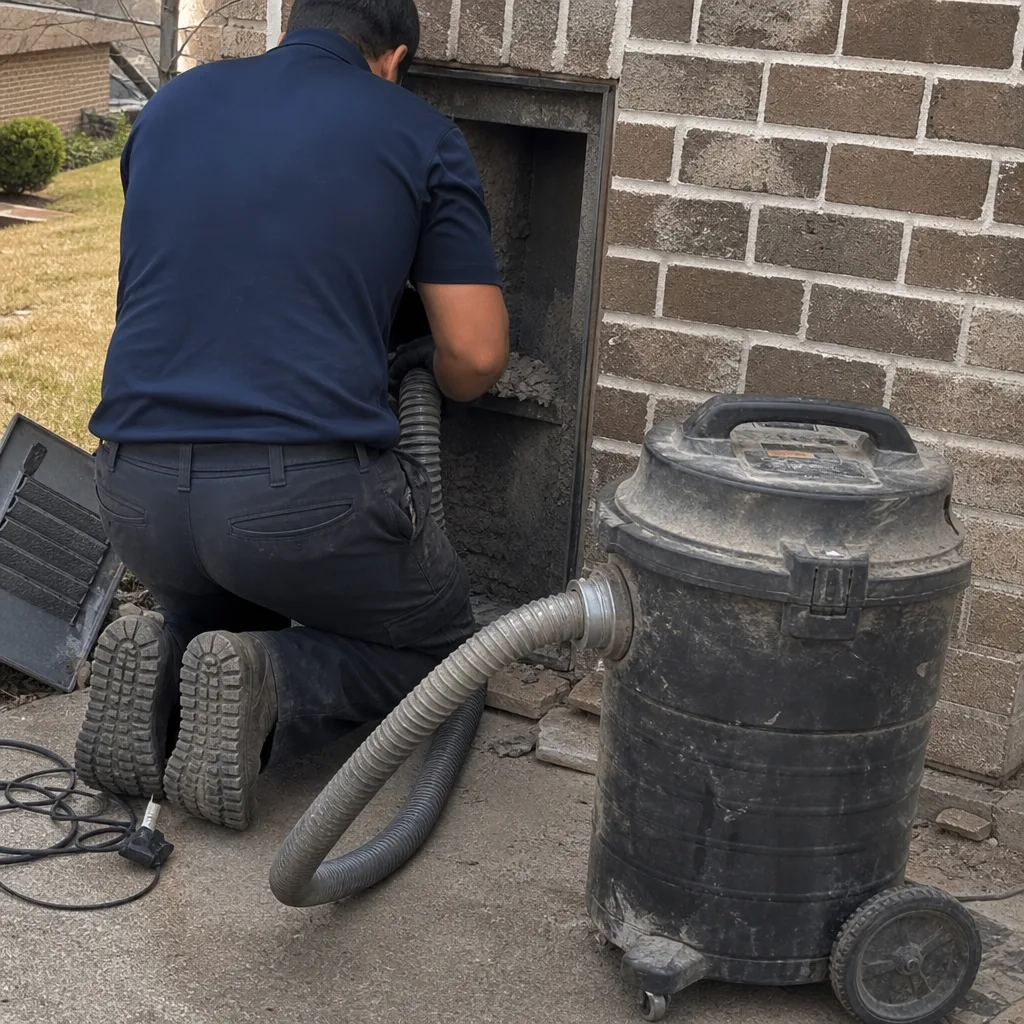
- Document equipment age and maintenance history. Know your system’s installation date, last coil cleaning, and any previous duct work. In Plano’s newer developments, we frequently find that the original builder’s duct cleaning subcontractor used shop-vac equipment without negative-pressure containment, leaving debris mobilized but not removed.
- Measure airflow subjectively. The tissue test described earlier, or simply noting whether a register used to “blow your hair back” and now barely moves a candle flame, indicates flow restriction versus cleanliness issues.
- Preserve any physical evidence. If you find droppings, nesting material, or filter debris that seems unusual, photograph it in place before removing. Do not discard until a professional has assessed it.
When you call CleanRun Air Duct Cleaning Plano home at (469) 452-7766, we ask these questions specifically. The answers let us arrive with appropriate equipment, whether that’s a camera scope for inspection, a Rotobrush system for brush agitation cleaning, or a duct sealing rig for leakage remediation. A company that quotes over the phone without this information is guessing, and guesses tend to be low.
Our written estimate, delivered on-site after inspection and before any work begins, references the specific photos and observations you provided. This is the Haven Standard in practice: documented evidence, written price, then work. No exceptions since 2013.
Common Mistakes to Avoid
- Assuming dusty registers mean dirty ducts. In Plano’s new construction especially, this symptom almost always indicates filter or return-side issues. Cleaning supply ducts without addressing the source wastes money and leaves the symptom unchanged.
- Waiting for “obvious” problems before acting. By the time you see debris at registers, contamination has progressed significantly. Schedule camera inspection at the first persistent odor or unexplained dust recurrence, not when the problem becomes visible.
- Accepting phone quotes or per-vent pricing. These are structurally designed to escalate. A legitimate scope requires inspection of the full system, including return and supply sides, with photographic documentation. Any price given without this is provisional at best, deceptive at worst.
- Treating all discoloration as mold requiring remediation. Surface staining from dust and moisture is common and cleanable. Fuzzy, three-dimensional, or structurally pervasive growth requires professional mold assessment. Misidentification leads to either insufficient response or unnecessary expense.
- Ignoring the post-renovation window. Plano homeowners who renovated in 2023-2024 and are now seeing dust recurrence often attribute it to “Texas dust.” The timing suggests construction debris still cycling. Camera inspection confirms or rules this out definitively.
- Hiring based on coupon price alone. The $79-$129 duct cleaning advertised in Plano mailers typically covers a brief vacuuming of accessible registers, not full-system negative-pressure extraction with brush agitation. The final invoice after “discovered” issues averages $600-900. Our written price is for the complete documented scope, agreed before work starts.
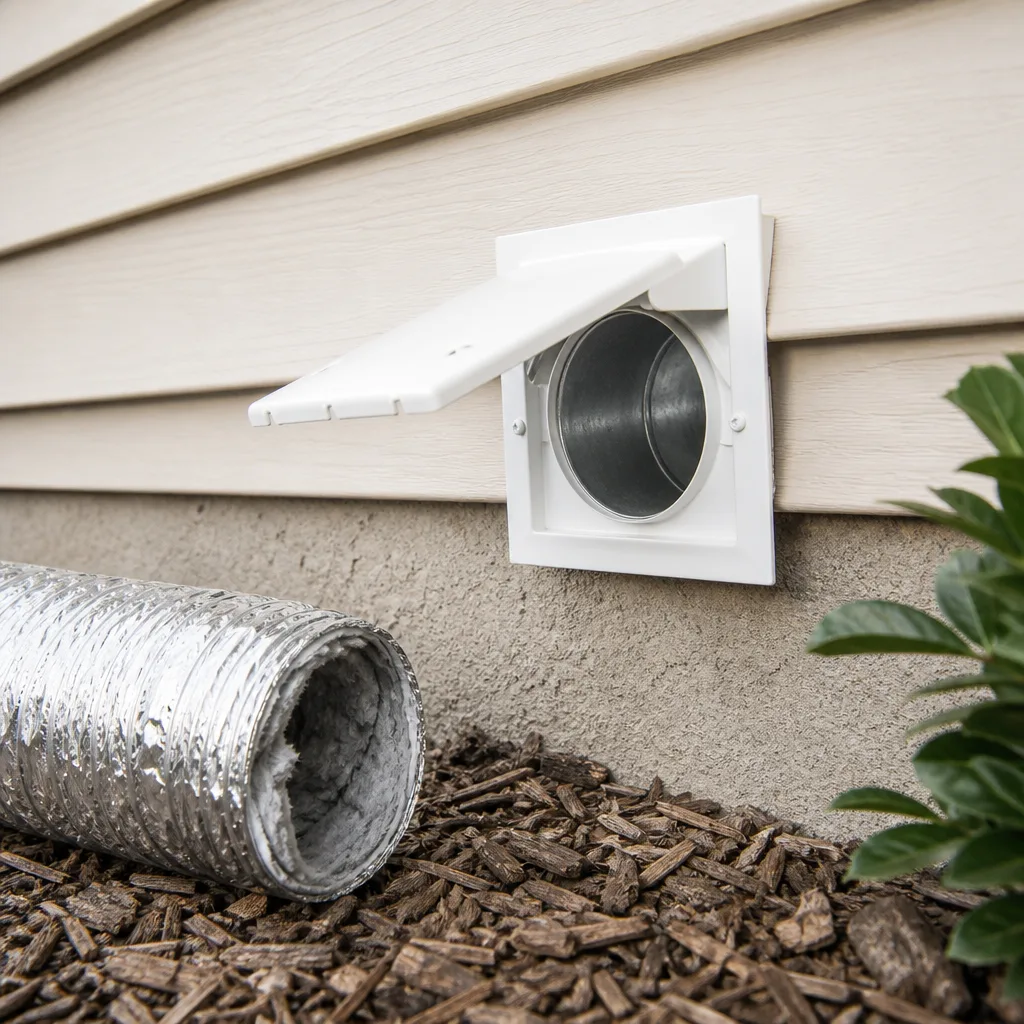
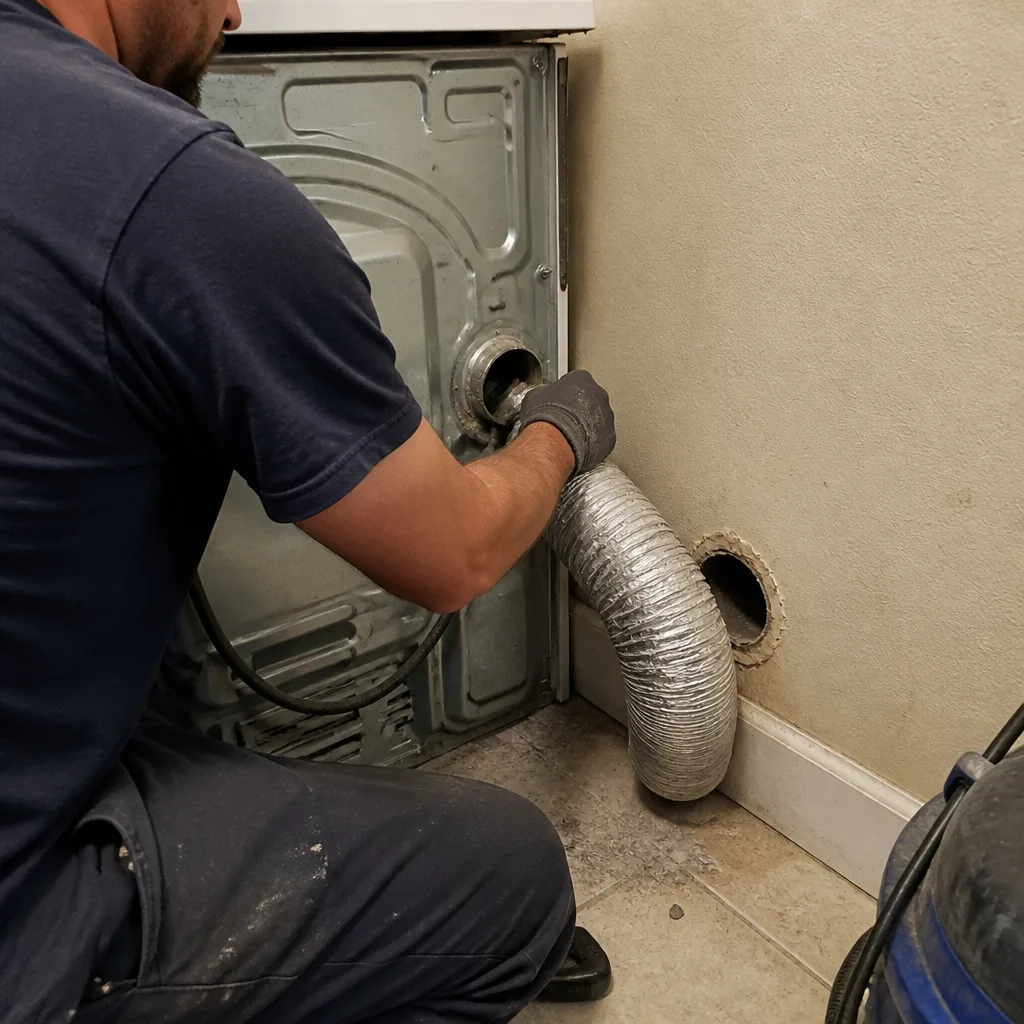
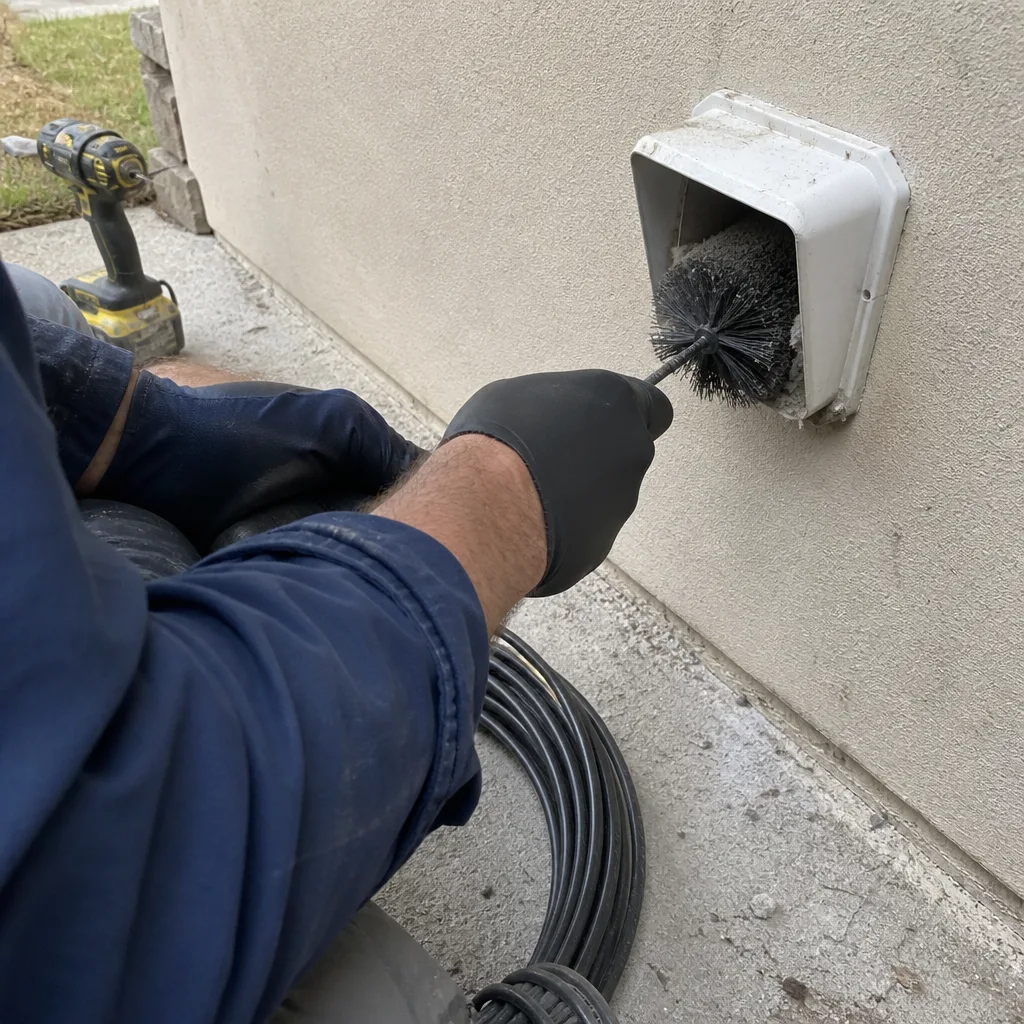
- Neglecting dryer vent maintenance alongside duct cleaning. A clogged dryer vent creates back pressure that can compromise ductwork connections and introduces lint contamination into utility spaces. If you’re assessing HVAC duct condition, include Dryer Vent Cleaning in Plano in your maintenance review.
When to Call a Professional
Call for professional assessment when you observe: visible debris inside ductwork confirmed by photography, musty odors persisting after filter and coil maintenance, temperature differences exceeding 5°F between rooms with normal register airflow, any evidence of rodent access or contamination, or dust recurrence within six months of renovation completion. Do not operate HVAC systems if rodent evidence is present; seal registers if possible and call immediately.
CleanRun Air Duct Cleaning Plano offers free estimates in Plano. Every estimate includes camera inspection, photographic documentation of findings, and a written price for the specific scope required, delivered before any work begins. Call (469) 452-7766 to schedule. All calls are answered by a live person, and our background-checked, uniformed technicians arrive identified by name, under Haven Standard Clause 3: Verified Crews.
Frequently Asked Questions
Whole-system air duct cleaning in Plano typically ranges from $450 to $850 for a standard single-system home, depending on duct configuration, accessibility, and contamination level. This covers full negative-pressure extraction with brush agitation, before-and-after photography of every duct run, and the written 365-Day Done Right Promise. Prices below $300 generally indicate partial cleaning or equipment insufficient for complete debris removal. Call (469) 452-7766 for a written estimate specific to your home, no obligation.
Low quotes usually exclude critical components: return ductwork cleaning, register and boot detailing, or proper negative-pressure containment. The advertised price covers a brief vacuuming of accessible supply registers; the technician then identifies “additional issues” that multiply the final invoice. At CleanRun, we deliver one flat price per system, agreed in writing before work starts, with no per-vent add-ons. Haven Standard Clause 1 requires this transparency.
You receive a Documented Photo Record of every duct run, before and after, as a standard deliverable on every job. These images show the interior condition at specific points in the system, dated and referenced to your home’s duct layout. We’ve maintained this practice since 2013 because visible evidence outperforms verbal assurance. If a company cannot or will not provide this documentation, you cannot verify what occurred inside your ductwork.
For most Plano homes with regular filter maintenance and no renovation or pest events, every 5-7 years is adequate. Homes with multiple pets, recent construction, or occupants with severe allergies may benefit from 3-5 year intervals. More frequent cleaning is rarely necessary and may indicate an underlying equipment or filtration issue that should be addressed instead. We assess actual condition by camera inspection rather than selling on a calendar schedule. For additional maintenance guidance, explore more guides & resources on our blog.
Consumer-grade equipment cannot achieve negative pressure or proper brush agitation inside ductwork. Attempting DIY cleaning with a household vacuum risks damaging flex duct, dislodging debris without removing it (making air quality temporarily worse), and disturbing electrical or gas connections in utility spaces. For HVAC Cleaning in Plano that includes coil and blower components, professional equipment and training are essential for safe access and proper reassembly.
Duct cleaning removes contamination from the interior of ductwork. Duct sealing closes leaks in the duct envelope that allow conditioned air to escape to unconditioned spaces. They address different problems: cleaning for debris and bio-growth, sealing for efficiency and distribution. Some homes need both; many need one or the other. Our inspection determines which scope applies, and we quote them separately so you pay only for what your system actually requires.
Plano’s combination of high spring pollen, dusty summer conditions, and active new construction increases particulate loading compared to more temperate climates. However, the bigger factor is our extreme attic temperatures, which accelerate degradation of duct tape and flex duct seals, creating return leaks that pull unfiltered air into the system. Climate affects duct condition more than cleaning frequency; regular inspection for leakage often prevents the contamination that would require cleaning.
The Bottom Line
Most duct warning signs point to causes other than dirty ducts. Dusty registers indicate filter or return-side problems. Uneven temperatures indicate leaks, kinks, or design issues. Rising bills indicate envelope or equipment efficiency loss. The symptoms that genuinely warrant cleaning, visible interior debris, persistent musty odors after coil service, post-renovation dust cycling, and rodent contamination, are identifiable with simple observation and documentation. Know what you’re seeing before you call, demand photographic evidence before you agree to scope, and insist on a written price before any work starts. These three practices eliminate most of the frustration and excess cost in duct service. In Plano since 2013, we’ve built our work on them.
Written by Tomas Reyes, Owner at CleanRun Air Duct Cleaning Plano, serving Plano since 2013.