
Last updated September 23, 2026
Whole-system duct and dryer vent check with before-and-after photos - you see exactly what came out of your vents
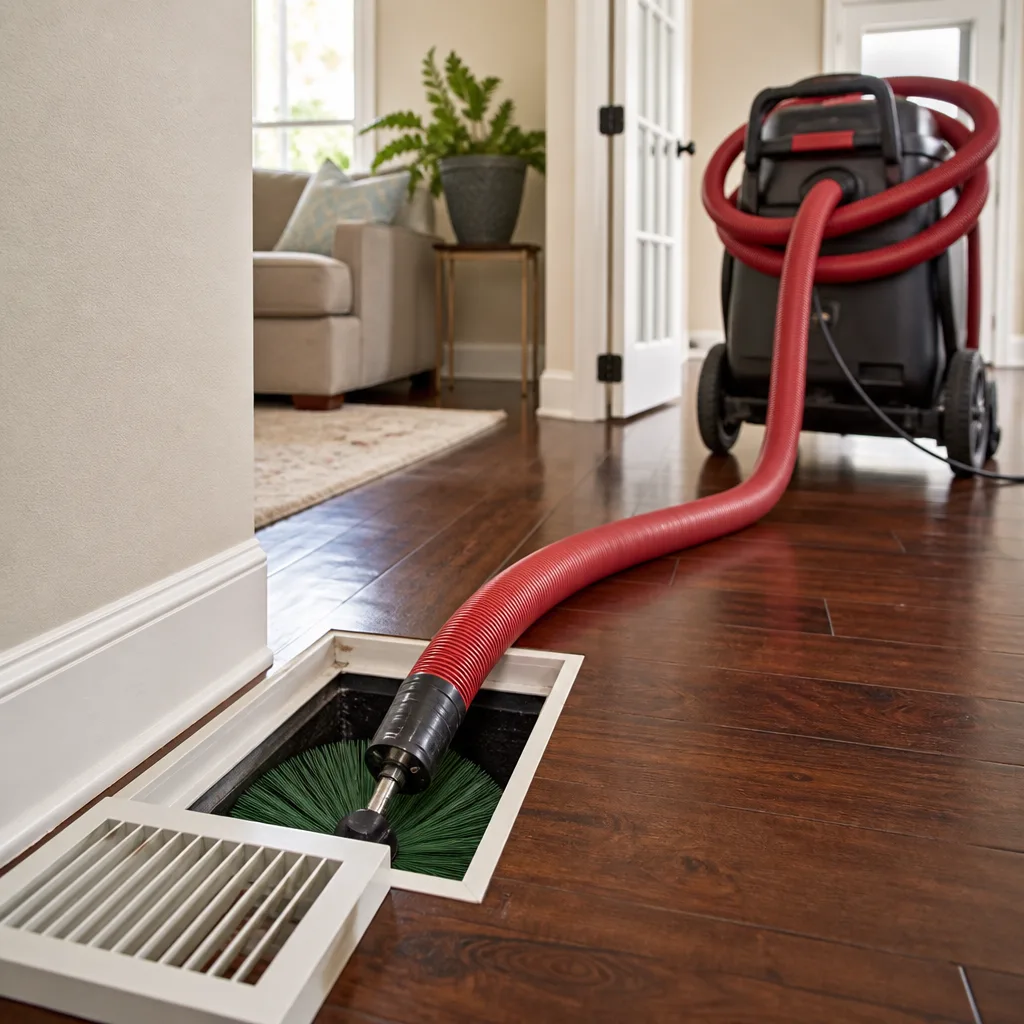
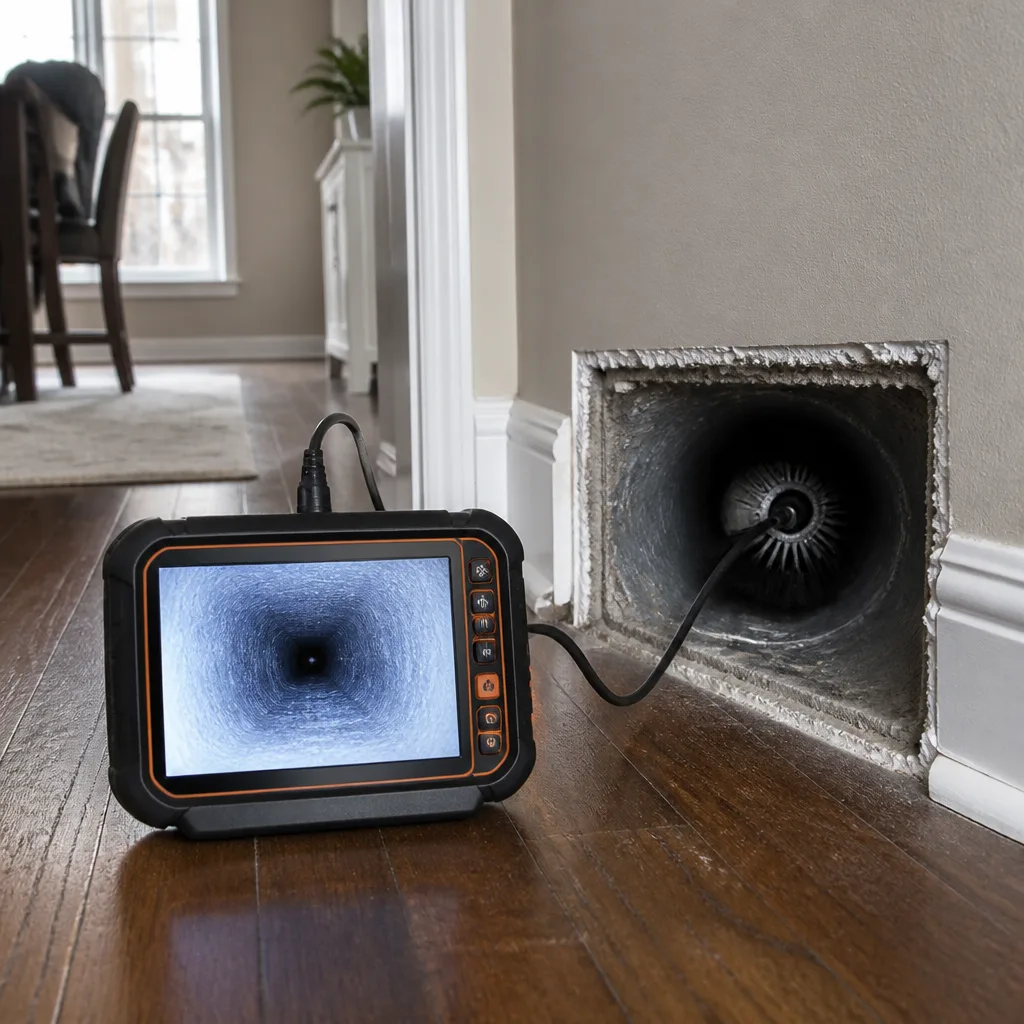
That "$99 whole-house special" is a bait ad - the real number appears once they are in your hallway, or the "clean" is a shop-vac at the register. We photograph the inside of your ducts before and after instead.
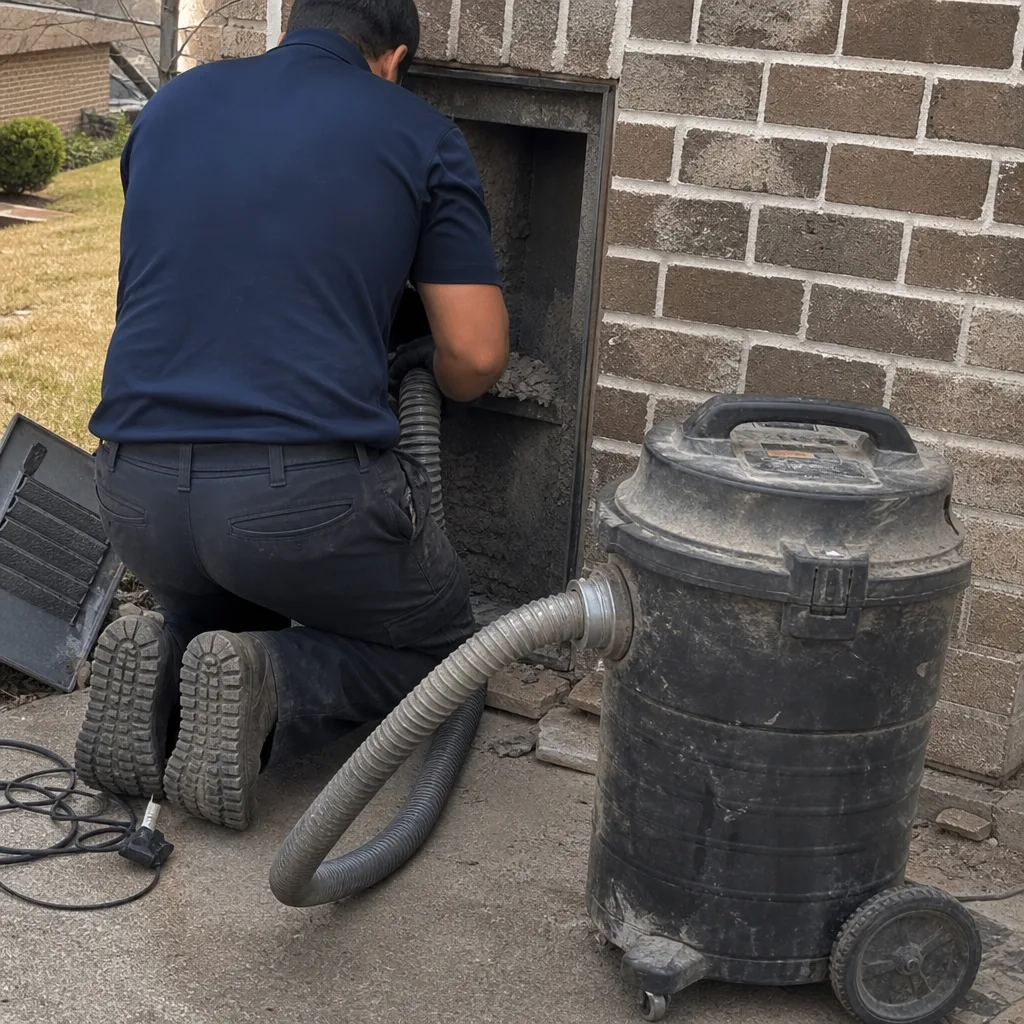 Before
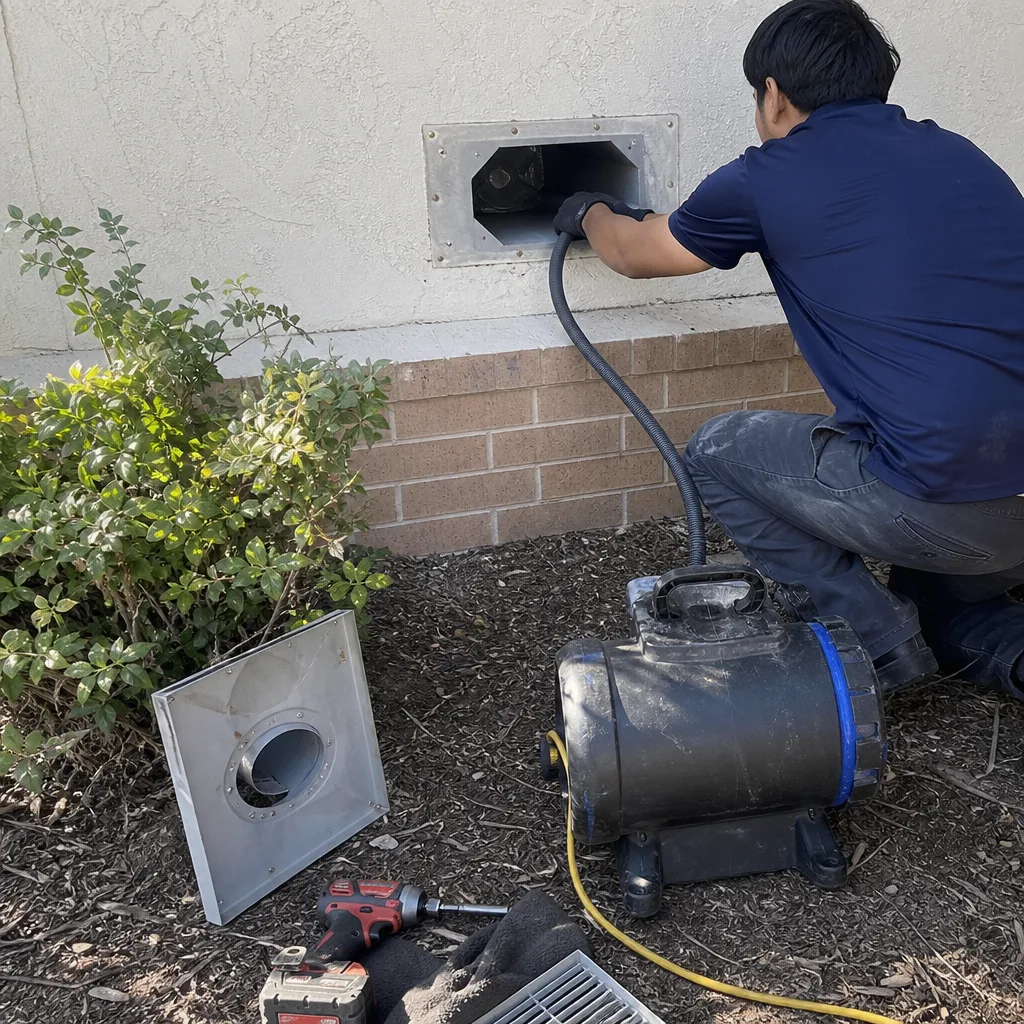 After
After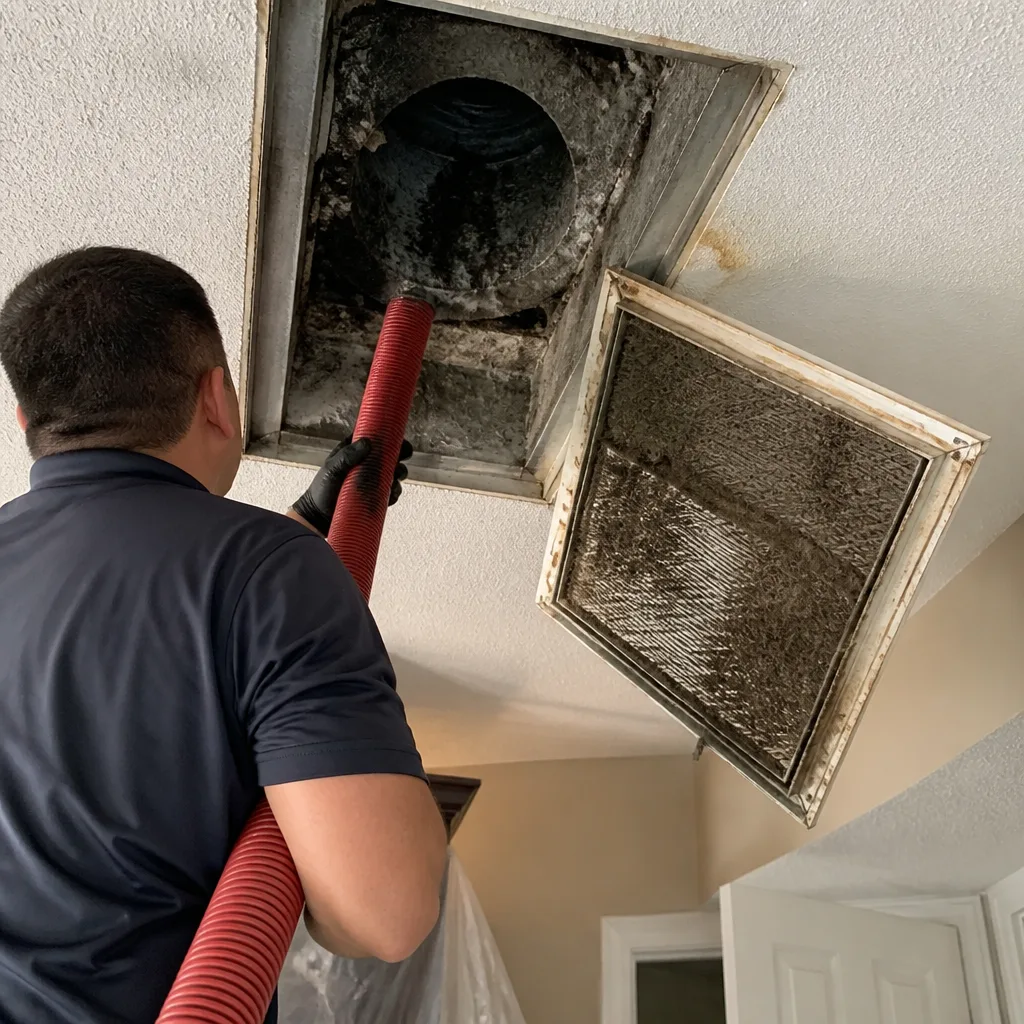 Before
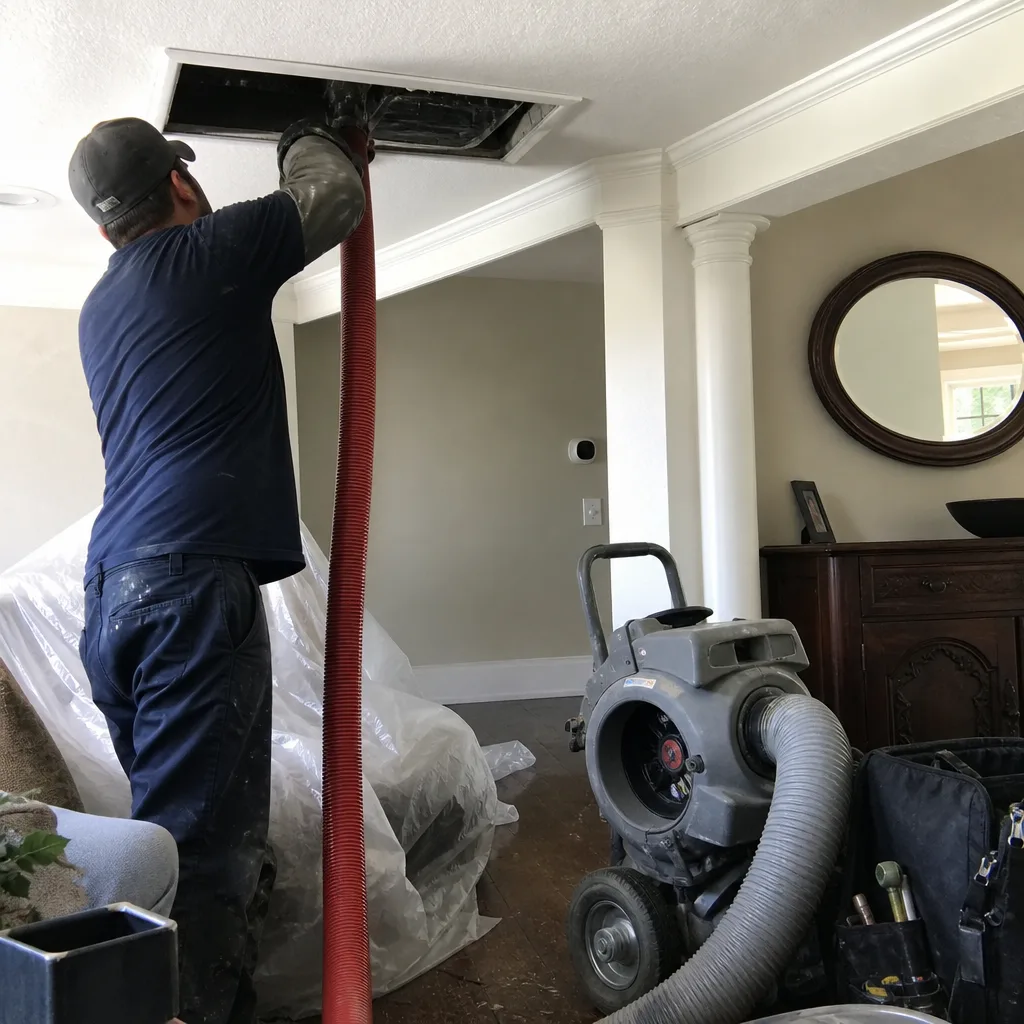 After
After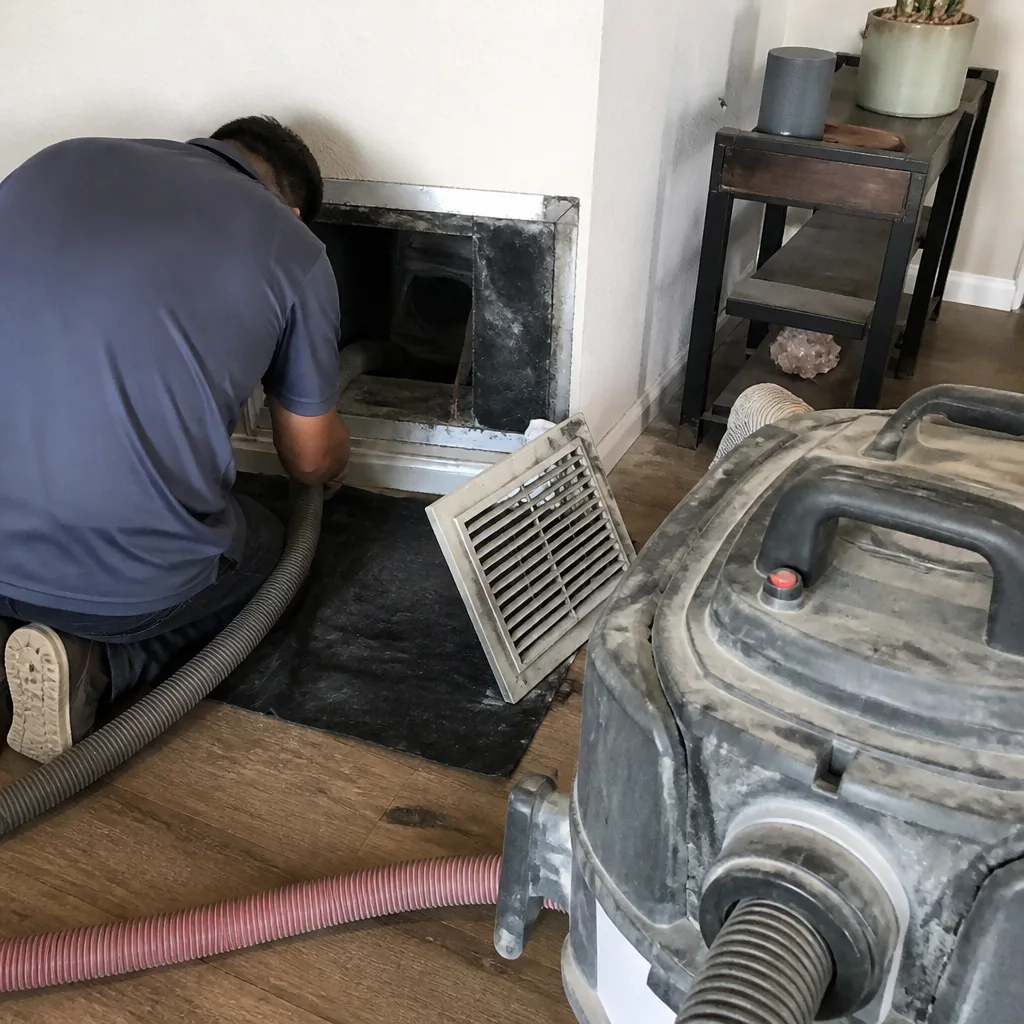 Before
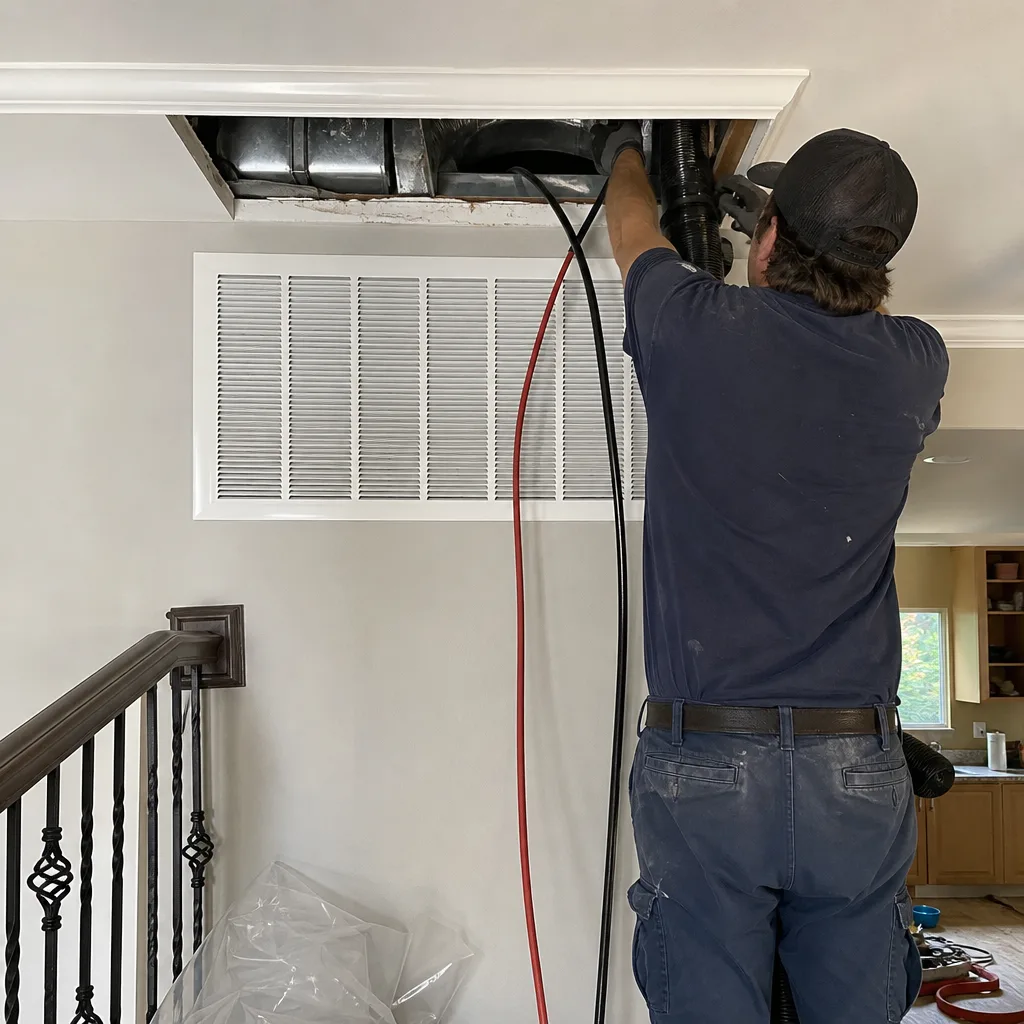 After
AfterSeasonal Air Duct Cleaning Care for Plano: Year-Round Homeowner’s Guide
Plano averages 60 days per year above 100°F. During those days, your HVAC runs almost continuously, moving air through whatever is inside your ducts at a rate that dwarfs what any other season produces. That’s not an argument for more cleanings - it’s an argument for knowing when to look. Most homeowners in Plano treat duct cleaning as a one-and-done checklist item, scheduled on a generic 3-5 year reminder that ignores how North Texas climate actually loads contamination into the system. This guide maps four distinct stress periods that hit Plano ductwork differently, shows what to inspect yourself at each seasonal turn, and explains when professional Air Duct Cleaning pays for itself versus when you’re paying for peace of mind you already have.
Quick Answer
Plano homeowners should inspect their ductwork four times per year - at the spring construction peak, before summer humidity spikes, during the first fall heating cycle, and after winter stagnation periods - and schedule professional cleaning when visual inspection or performance changes indicate buildup, not on a fixed calendar interval. A single annual cleaning scheduled blindly misses the specific windows when drywall dust, humidity-driven microbial growth, or particulate settling actually accelerate contamination.
Table of Contents
- Spring Construction Season: The Drywall Dust Window
- Summer Humidity and Attic Duct Condensation Risk
- Fall HVAC Switchover: The Burned-Dust Smell Explained
- Winter Stagnation in Infrequently Used Zones
- Building Your Four-Entry Annual Duct Log
- What Professional Cleaning Costs in Plano
- Common Mistakes to Avoid
- When to Call a Professional
- Frequently Asked Questions
BeforeAfterSpring Construction Season: The Drywall Dust Window
March through May in Plano brings something most seasonal guides ignore entirely: the regional construction surge. Collin County permits more new residential construction than almost any metro area in Texas, and spring is when framing, drywall installation, and finishing work peak. If you live in Willow Bend, Kings Ridge, or any of the newer Plano developments built after 2015, or if you’ve renovated within the past two years, your ducts have likely processed more gypsum particulate in one season than a decade of normal household dust.
Drywall dust behaves differently from ordinary household debris. It’s ultrafine, highly alkaline, and electrostatically charged - meaning it doesn’t settle passively. It plates onto the interior surfaces of duct runs, especially at elbows and transitions where air velocity drops. Once plated, standard fiberglass filters won’t pull it loose. The dust becomes a seed layer that captures subsequent debris more efficiently, accelerating buildup in a compounding cycle we’ve documented repeatedly in Plano homes.
In Legacy West and along the Dallas North Tollway corridor, we regularly find 2-4 millimeter white films at the first elbow past the plenum in homes less than three years old. The camera shows it clearly: a uniform pale coating that looks nothing like the dark, fibrous accumulation in older systems. This is construction residue, not living dust, and it responds differently to cleaning.
What to check yourself this season:
- Remove a supply register in the room nearest your HVAC unit - typically a central hallway or living area.
- Shine a flashlight into the duct boot (the sheet-metal transition between register and duct run). Look for pale, chalky film on the horizontal surfaces.
- Check your return air grille. If you see a white or gray line at the filter edge where air bypasses the frame, that’s drywall dust that has already migrated past your filter.
- Note any recent nearby construction - within 500 feet, dust travels through outdoor air intakes and gaps in building envelope.
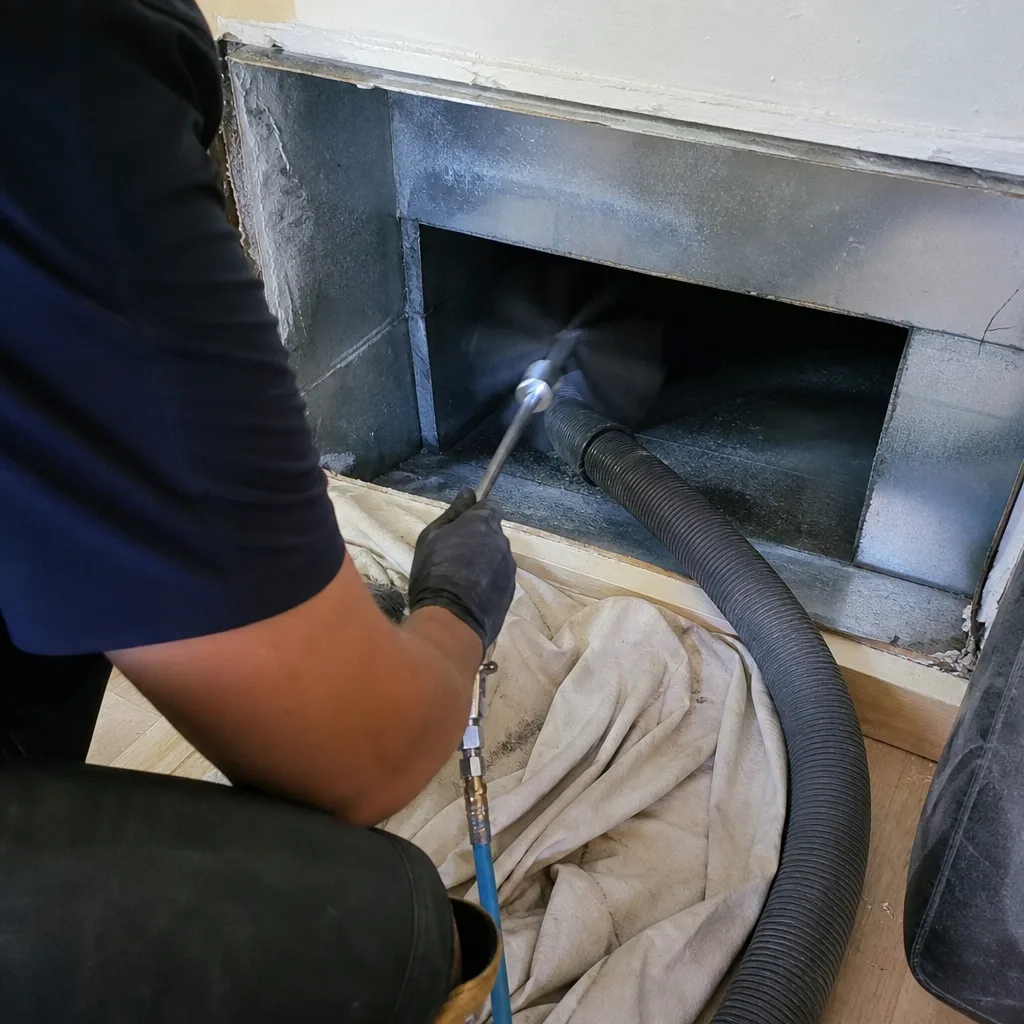
Professional cleaning during this window uses negative-pressure extraction with agitation tools - Rotobrush systems or Nikro vacuums with powered whips - to dislodge plated particulate before it cures onto the metal. Waiting until summer, when humidity sets the dust into a harder film, requires more aggressive mechanical action and sometimes longer job times. In Plano’s spring market, we price whole-system cleaning from $380-$520 for single-zone residential systems, with written price delivered before any panel comes off, per Haven Standard Clause 1. For a detailed breakdown, see our Air Duct Cleaning Cost Breakdown: The Plano Homeowner’s Reference for 2026.
Summer Humidity and Attic Duct Condensation Risk
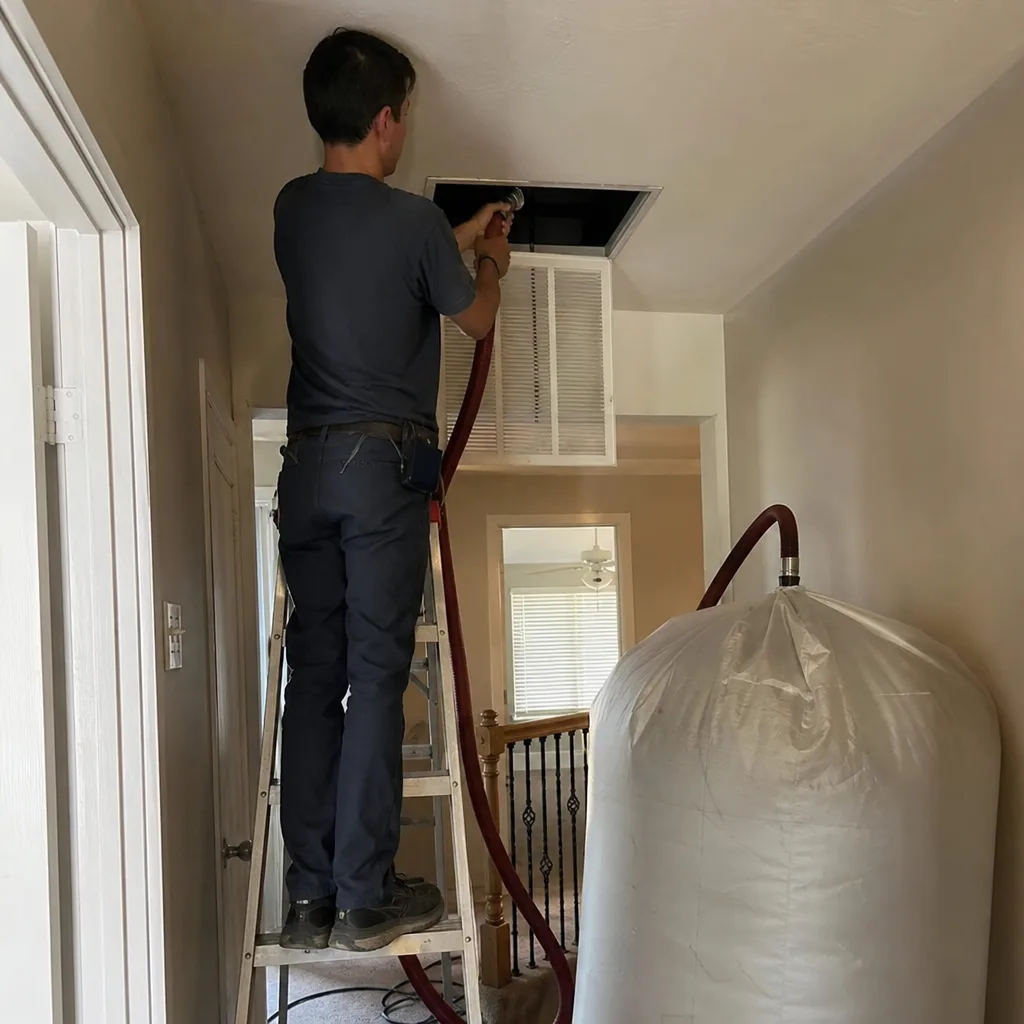
July mornings in Plano average 70%+ relative humidity, and by August the dew point regularly sits above 70°F. This matters for ductwork because your attic - where much of Plano’s duct infrastructure runs - is not conditioned space. When supply ducts carry 55°F air through 95°F attic ambient, the temperature differential across the duct wall can drop surface conditions below dew point. Condensation forms. Where condensation forms, microbial growth follows.
This is not a hypothetical risk. In Plano’s older neighborhoods - Park Forest, Plano East, the areas with homes built in the 1970s and 1980s - we’ve photographed supply ducts with water staining at insulation seams and, in several cases, active mold colonies on the interior surface downstream of condensation points. The camera showed dark, mottled patches that tested positive for Cladosporium and Aspergillus species common to North Texas.
The critical factor is whether your ducts are properly sealed and insulated. Gaps in flex-duct connections, compressed insulation at truss contact points, or deteriorated vapor barriers all create cold spots. Plano’s 2018 adoption of the International Energy Conservation Code (IECC) requires R-8 insulation on attic ducts in new construction, but many homes built before that threshold have R-6 or less, and retrofit compliance is spotty.
Early warning signs to monitor:
- Water spots on ceiling drywall directly below duct runs - especially after the first sustained hot week in June.
- Musty odor from registers when AC first cycles on, diminishing after a few minutes as the duct surface warms.
- Insulation that appears flattened, displaced, or darkened at contact points with framing.
- Unexplained increase in cooling costs despite unchanged thermostat settings - wet insulation conducts heat, forcing longer runtimes.
If you find active moisture or visible growth, professional intervention is warranted. CleanRun’s process includes photographic documentation of the full duct run, moisture meter readings at suspected condensation points, and cleaning with HEPA-contained negative-pressure extraction using Abatement Technologies equipment. We do not apply chemical treatments as a substitute for removing source contamination - Haven Standard Clause 4 requires physical extraction before any sanitizing step.
For homes in Plano’s humid summer pattern without visible issues, this season is primarily a monitoring window. Check your attic access if you have one, or schedule a professional inspection if your home predates the 2018 code cycle. The cost of catching a condensation problem before it becomes a remediation project is typically under $200 for inspection and spot-sealing; remediation of established growth runs $1,200-$2,800 in Plano’s market.
Fall HVAC Switchover: The Burned-Dust Smell Explained
The first heating cycle of autumn produces a distinctive odor in most Plano homes - a dry, slightly acrid smell that lasts from a few minutes to several hours. Homeowners often call us worried about electrical fires or gas leaks. In nearly every case, the source is benign and predictable: dust accumulation on the heat exchanger and in supply ducts, heated rapidly after months of dormancy.
Here’s what actually happens. During Plano’s long cooling season - typically April through October - the furnace heat exchanger sits idle. Household dust, skin cells, and fiber particles settle on its surfaces and on the walls of duct runs that carried only cool air. When the thermostat finally calls for heat in late October or November, that accumulated layer flash-heats. The smell is oxidized organic material, not combustion byproduct, and it dissipates as the layer burns off.
The diagnostic question is: how long does it last? Fifteen minutes of odor is normal. Three days of recurring smell with each cycle is not. Persistent odor indicates either excessive accumulation or, more concerning, a restriction somewhere in the system forcing higher temperatures at the heat exchanger.
What the first heating cycle tells you:
- Time the odor duration from cycle start to when you can no longer detect it at the register.
- Check whether smell returns with subsequent cycles or only the first of the day.
- Inspect visible supply registers for dark, fluffy accumulation - this material is what you’re smelling when heated.
- Listen for blower strain: a system working harder against restriction often produces a changed pitch.
In Plano’s fall market, this is the single best time for a register-level visual inspection because your nose is already calibrated to detect change. If the burned-dust smell extends beyond two hours or returns persistently, schedule professional evaluation. The combination of visual inspection and blower amp draw measurement tells us whether you’re looking at normal seasonal accumulation or a restriction requiring cleaning.
Fall is also when Plano’s allergen profile shifts. Ragweed peaks in September, mountain cedar arrives in December. Ducts that accumulated summer debris now redistribute it into living space on the first heating cycles. For households with allergic sensitivity, this window - late October, before cedar ramps - is often the optimal cleaning timing, removing the summer load before winter confinement concentrates exposure.
Winter Stagnation in Infrequently Used Zones
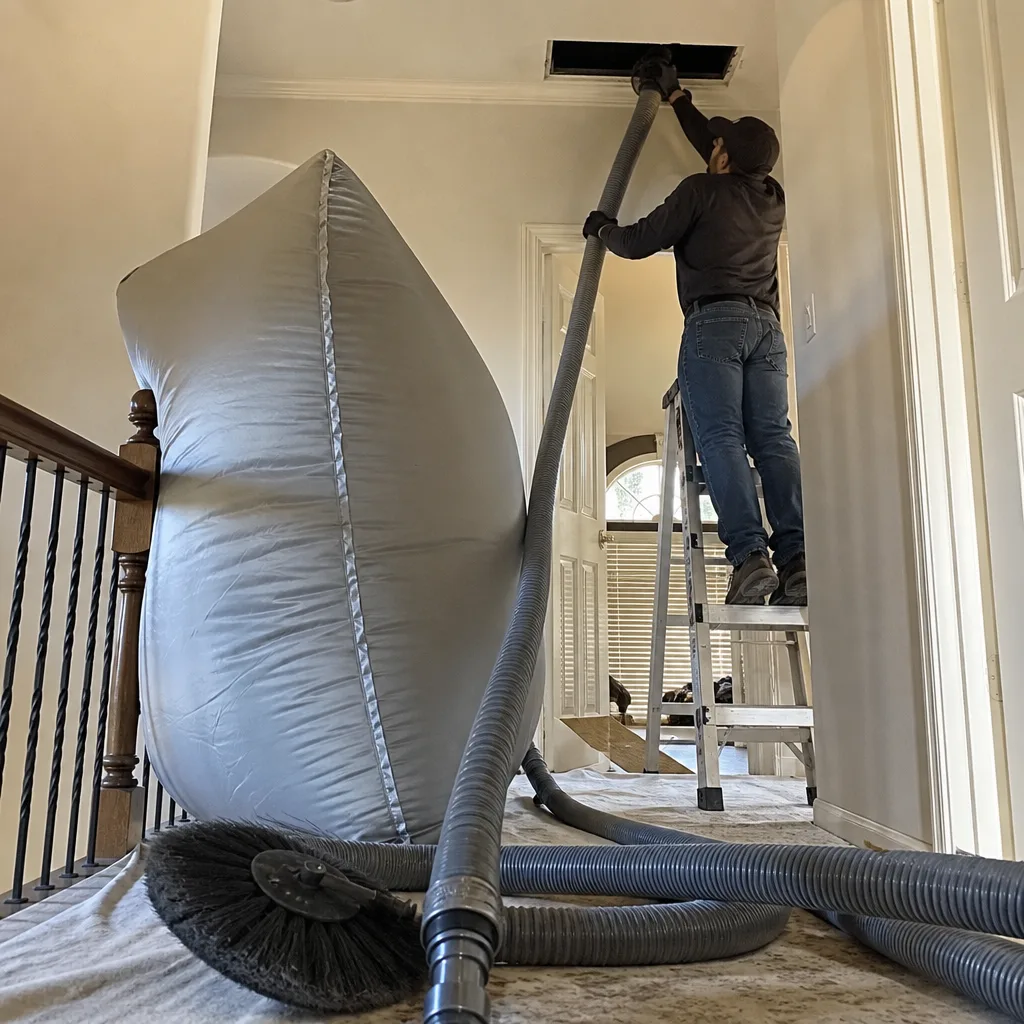
Plano winters are mild by national standards - average January lows around 34°F, heating degree-days roughly one-third of Minneapolis - but this relative warmth creates a specific duct condition that colder climates avoid: extended periods of minimal HVAC runtime.
When outdoor temperatures sit in the 50s and 60s for days, as they frequently do in Plano’s December and February, the thermostat may not call for heating or cooling for 12-18 hours at a stretch. Air in ductwork becomes stagnant. In zones with closed doors - guest bedrooms, formal dining rooms, home offices used intermittently - the stagnation extends to days. Particulate that would otherwise be carried to the filter settles by gravity. Humidity equilibrates with the duct surface, and in unconditioned attic spaces, temperature cycling between day and night creates micro-condensation events that don’t occur during continuous operation.
The result is uneven loading. Your master bedroom duct, fed by continuous nighttime heating, may show minimal accumulation after three months. The guest room duct, stagnant since Thanksgiving, can show measurable debris at the first elbow. This pattern is invisible to whole-house thinking but obvious when you inspect zone by zone.
Winter inspection protocol:
- Open closed registers in unused rooms for 48 hours before inspecting - this re-establishes airflow and reveals whether odor or particulate releases when disturbed.
- Check the filter after the first sustained cold snap (below 40°F for 48+ hours). The sudden increase in runtime often dislodges settled debris and loads the filter rapidly.
- Note any room that feels “stuffy” when first reoccupied after a week or more of disuse - this often indicates stagnant duct air mixing with living space on register opening.
Winter is not typically a cleaning season in Plano unless specific conditions warrant it - post-construction, post-remediation, or documented accumulation in stagnant zones. The value of this season is diagnostic: you’re building the fourth entry in your annual log, completing the cycle before spring construction begins again.
Building Your Four-Entry Annual Duct Log
Professional inspection four times yearly would be excessive for most Plano homes. But professional cleaning without any interim documentation is equally blind. The middle path is a homeowner-maintained Air Duct Cleaning Maintenance Checklist for Plano Homeowners that captures condition at each seasonal checkpoint, creating a record that informs when professional service is actually warranted.
We’ve developed this four-entry format based on what our technicians document on service calls, stripped to elements any homeowner can record in 15 minutes per season.
Log Entry 1: Spring (April)
- Photograph the filter face at removal - date-stamp the image.
- Photograph the interior of one supply register boot with flash.
- Note any construction activity within 500 feet of the home.
- Record HVAC runtime hours from your smart thermostat if available, or estimate based on utility bill cycle dates.
Log Entry 2: Summer (August)
- Photograph the same supply register boot for year-over-year comparison.
- Note any musty odor at startup, with duration.
- Record highest sustained outdoor temperature and corresponding indoor humidity.
- Check attic access for visible duct insulation condition if safely accessible.
Log Entry 3: Fall (November)
- Time and record burned-dust odor duration at first heating cycle.
- Photograph filter face - compare spring image for loading rate.
- Note any allergy symptom changes in household members.
- Inspect all registers for visible accumulation; photograph worst example.
Log Entry 4: Winter (February)
- Photograph same supply register boot; compare to August image.
- Open and inspect any closed-zone registers; note odor or particulate release.
- Record filter condition after first sustained cold period.
- Note any rooms with changed comfort or air quality perception.
This log serves two purposes. First, it creates objective evidence that overrides the “I think it was worse last year” uncertainty that drives unnecessary service calls. Second, when you do contact a professional, the log provides context that improves diagnostic accuracy. A technician who knows your August boot photograph showed clean metal versus one who starts blind will ask different questions and inspect different components.
CleanRun’s documented photo record on every professional visit - the before-and-after images of every duct run, delivered as part of the standard job record - extends this homeowner log with professional-grade documentation when service is warranted. The combination creates a complete system history that protects against both neglect and overservice.
What Professional Cleaning Costs in Plano
Plano’s duct cleaning market spans from $79 coupon operations to $900+ premium services. The spread reflects genuine differences in scope, equipment, and documentation - and understanding those differences protects against the bait-and-switch that has damaged this industry’s reputation.
Whole-system cleaning price ranges in Plano (2024-2025 market):
| System Type | Basic Scope | Documented, Equipment-Specified |
|---|---|---|
| Single-zone residential (up to 12 registers) | $180-$280 | $380-$520 |
| Two-zone or larger home (13-20 registers) | $260-$380 | $520-$780 |
| With dryer vent cleaning bundled | $320-$450 | $680-$920 |
The lower tier typically means vacuum-only service with no register-by-register documentation, often performed with shop-vac grade equipment that cannot achieve negative-pressure containment. The technician may or may not remove each register, may or may not access the plenum, and provides no photographic record of what was or wasn’t found.
The documented tier - CleanRun’s practice since 2013 - includes:
- Written price delivered before any work starts, with scope specified by register count and system zones.
- Photographic documentation of every duct run interior, before and after, with images delivered to the customer.
- Professional-grade equipment specified by manufacturer: Rotobrush or Nikro agitation systems, Abatement Technologies HEPA containment, Honeywell or Aprilaire filtration verification where applicable.
- 365-Day Done Right Promise in writing - if the work is not right, we make it right.
Red flags in Plano’s market: per-vent pricing that balloons at the door (“you have more vents than estimated”), equipment that cannot be named or verified, and any operator who cannot produce a Texas Air Conditioning Contractor license on request. CleanRun publishes our license number on every page and provides it verbally on every call - Haven Standard Clause 2: Transparent Credentials.
Air Duct Cleaning in Plano from CleanRun follows this structure on every job, with no exceptions since our first service call in 2013.
Common Mistakes to Avoid
- Scheduling on a fixed 3-year interval regardless of condition. A home in Plano’s construction zone with active drywall dust loading needs different timing than a 20-year-old home in established Ridgewood with stable occupancy. The calendar doesn’t know your duct condition.
- Treating the burned-dust smell as an emergency. Fifteen minutes of odor at first heating cycle is normal combustion of settled dust. Calling for emergency service wastes money; timing the duration and inspecting registers yourself provides the actual diagnostic data.
- Ignoring attic ductwork because it’s out of sight. In Plano’s climate, attic ducts represent the highest condensation risk and the least inspected component. If you have safe attic access, seasonal visual checks are high-value; if not, professional inspection every 2-3 years is warranted for pre-2018 homes.
- Accepting per-vent pricing without a written total. This structure invites invoice inflation. Insist on whole-system pricing in writing before work begins - Haven Standard Clause 1 exists specifically because this practice is endemic in North Texas.
- Cleaning without addressing the source. If your Plano home has return air leakage pulling attic dust, or a filter bypass gap, cleaning alone resets the clock to zero without stopping the contamination input. Professional service should include inspection for these pathways.
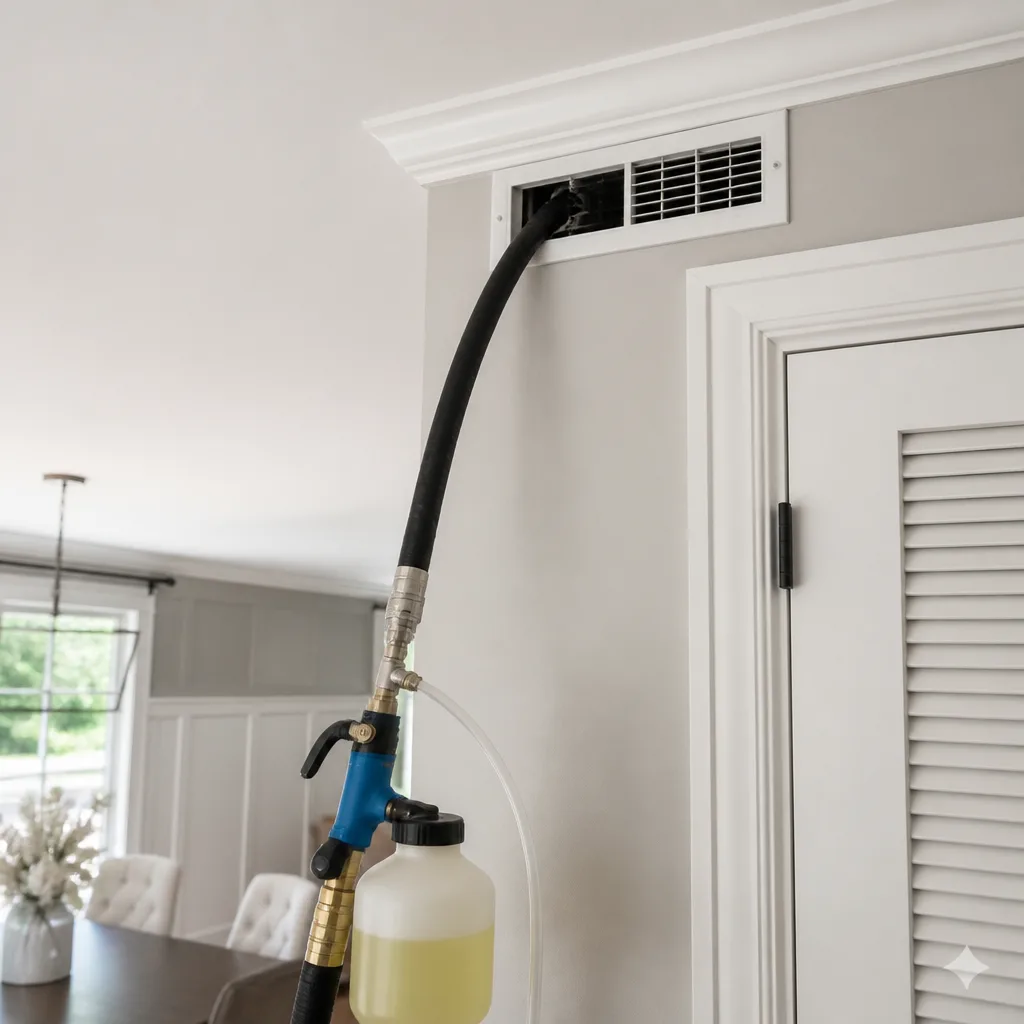
- Using chemical “sanitizers” as primary treatment. EPA-registered antimicrobial application has a role after physical extraction, but spraying chemicals into ducts without removing source debris violates basic contamination control principles. Physical extraction first - always.
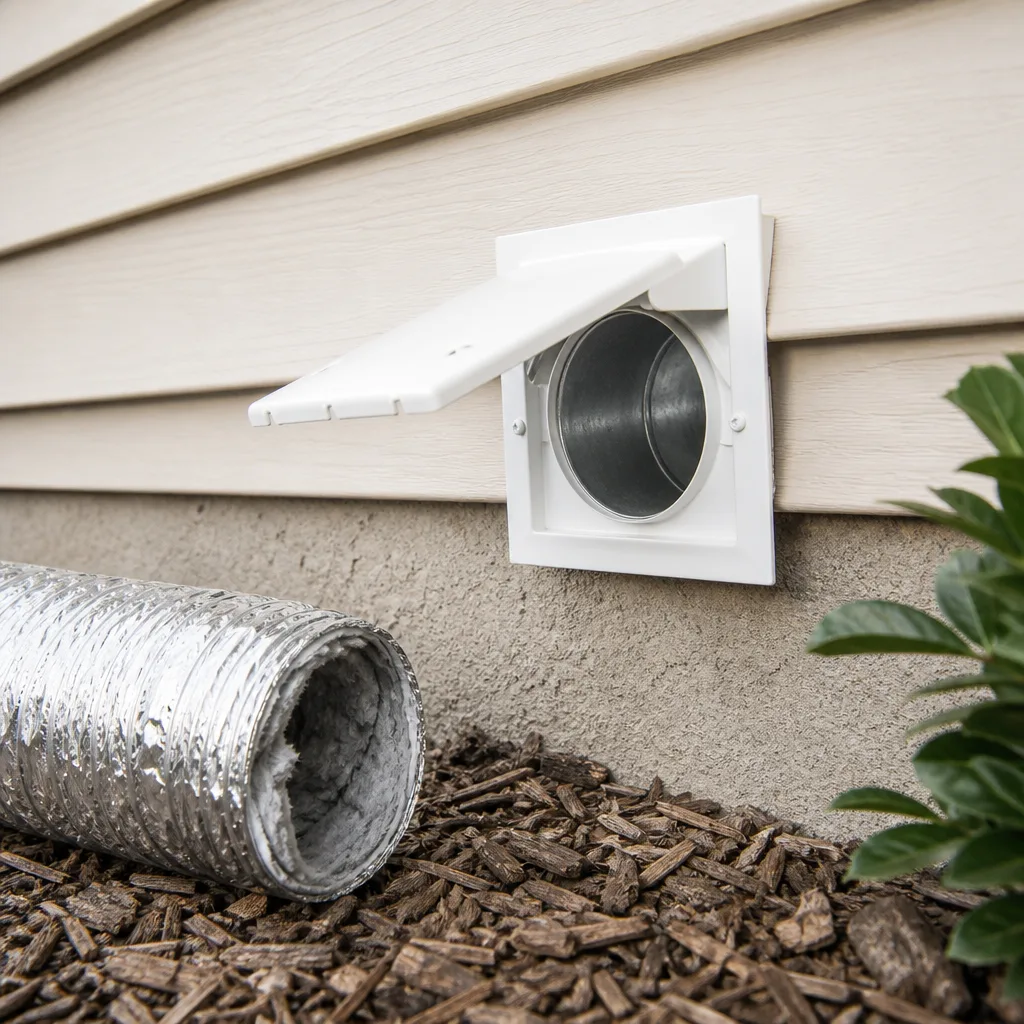
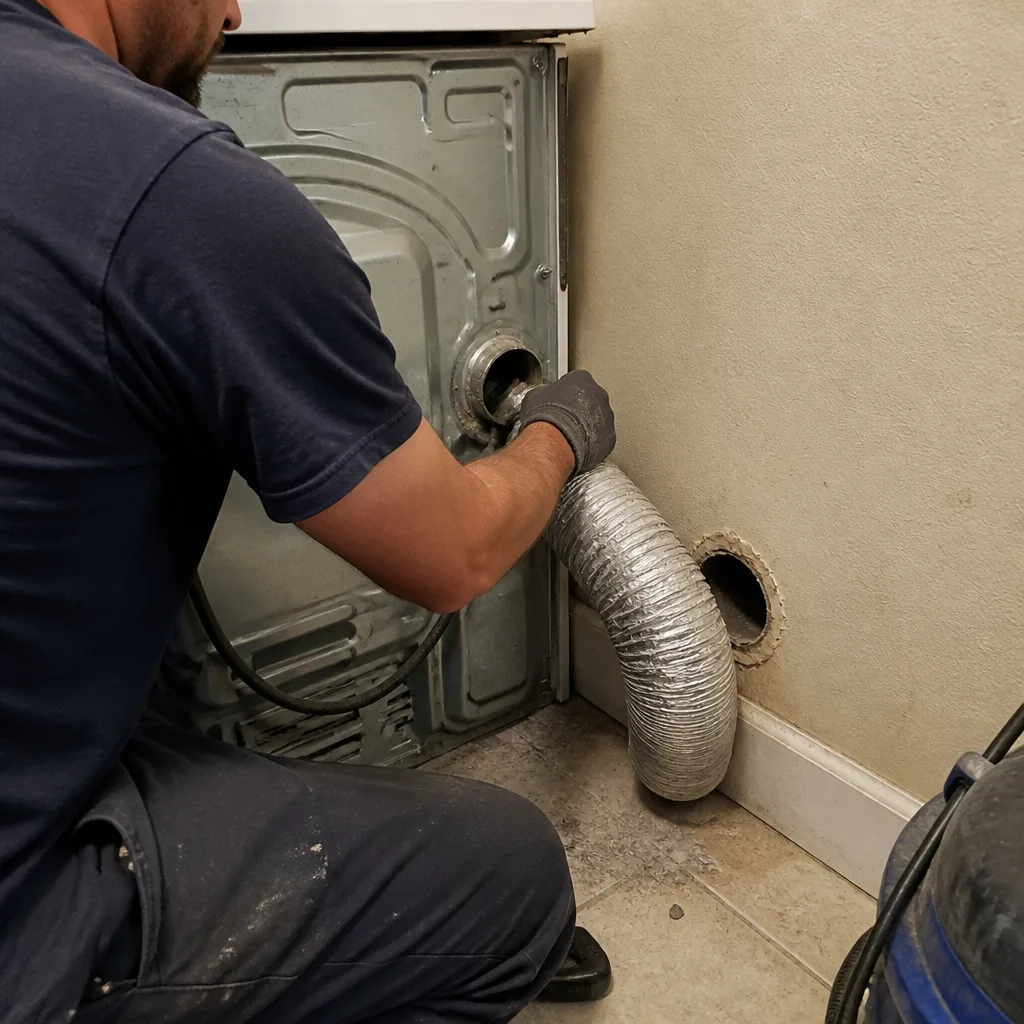
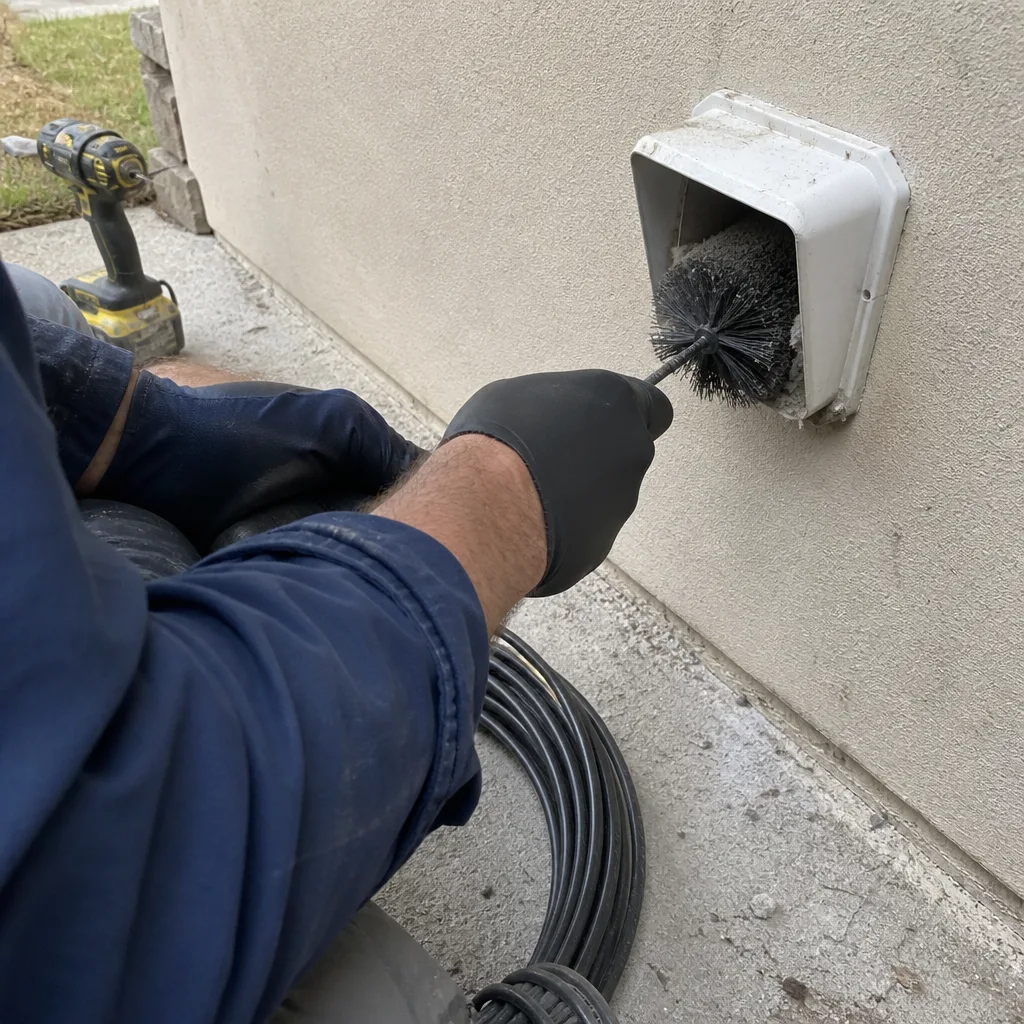
- Neglecting the dryer vent. In Plano’s lint-heavy environment - cottonwood in spring, heavy towel and sheet cycling in summer - dryer vents clog faster than ducts and present genuine fire risk. Dryer Vent Cleaning in Plano should be on the same seasonal calendar, typically annually.
When to Call a Professional
Call for professional evaluation when: visual inspection shows accumulation beyond a light surface film; burned-dust odor persists beyond two hours or returns with every cycle; you find moisture, staining, or visible growth in any duct access point; a room shows persistent comfort or air quality divergence from the rest of the home; or you’re purchasing a home in Plano with no documented duct history. CleanRun Air Duct Cleaning Plano offers free estimates in Plano - call (469) 452-7766. Every estimate includes a written price before any work starts, and we provide free second opinions on any competitor’s written quote.
Frequently Asked Questions
Whole-system air duct cleaning in Plano ranges from $380-$520 for a typical single-zone home with up to 12 registers, and $520-$780 for larger two-zone systems, based on 2024-2025 market rates for documented, equipment-specified service. Basic vacuum-only services advertise lower prices but typically lack register-by-register documentation and professional-grade containment. Call (469) 452-7766 for an exact quote - estimates are free, and the written price is delivered before any work starts.
The gap reflects scope and documentation differences, not market inefficiency. A $180 service often means shop-vac cleaning of accessible registers only, no plenum access, no photographic record, and per-vent pricing that frequently inflates at the door. The documented tier specifies manufacturer equipment (Rotobrush, Nikro, Abatement Technologies), photographs every duct run, and guarantees the quoted price in writing. The cheaper quote becomes more expensive when the final invoice arrives or when the work requires redoing.
Demand photographic documentation of every duct run, before and after, as a standard deliverable - not an upsell. CleanRun has provided this on every job since 2013; the images are part of the job record, not a marketing extra. If a company cannot or will not show you the inside of your ducts, you’re buying trust, not service. The photo record is also your baseline for evaluating future accumulation.
There’s no universal interval. In Plano’s climate, homes in active construction zones or with recent renovation may need cleaning within 2-3 years of build or remodel. Established homes with stable occupancy and good filtration often extend to 5-7 years between cleanings. The four-entry annual log described in this guide provides the actual data to replace arbitrary scheduling. Condition drives frequency, not calendars.
Not directly, but Plano’s expansive clay soils create foundation movement that can stress duct connections in slab-on-grade construction. Separated duct seams in the slab draw soil gas and particulate into the system, and this pathway is invisible without camera inspection. If your home shows unexplained dust increase or musty odor without attic duct exposure, slab duct integrity may be the cause - a condition that cleaning alone won’t resolve.
Duct cleaning addresses the distribution network - the supply and return duct runs, boots, and registers. HVAC Cleaning in Plano extends to the air handler components: evaporator coil, blower assembly, heat exchanger, and condensate pan. The systems interact - a dirty coil can redistribute contamination into cleaned ducts - but they require different access protocols and equipment. CleanRun scopes each separately with written pricing for both, so you choose based on condition rather than package pressure.
The Bottom Line
Plano’s climate creates four distinct duct stress periods that a fixed cleaning interval ignores. Spring construction loads ultrafine drywall dust that plates onto duct surfaces. Summer humidity threatens condensation and microbial growth in attic runs. Fall’s first heating cycle reveals accumulated debris through odor and filter loading. Winter stagnation creates uneven zone-by-zone accumulation invisible to whole-house assumptions. A homeowner-maintained seasonal log, with professional service triggered by documented condition rather than calendar anxiety, replaces guesswork with evidence. When service is warranted, insist on written pricing before work starts, specified equipment you can verify, and photographic documentation of every duct run - the standards CleanRun has held since 2013. For more guides & resources on maintaining your Plano home’s air quality, visit our blog.
Ready to inspect your system or want a professional baseline for your seasonal log? Call CleanRun Air Duct Cleaning Plano at (469) 452-7766. We’ll deliver a written price before any work starts, photograph every duct run before and after, and back the work with our 365-Day Done Right Promise in writing. Or start at our CleanRun Air Duct Cleaning Plano home page to explore our full service scope.
Written by Tomas Reyes, Owner at CleanRun Air Duct Cleaning Plano, serving Plano since 2013.