
Last updated September 23, 2026
Whole-system duct and dryer vent check with before-and-after photos - you see exactly what came out of your vents
That "$99 whole-house special" is a bait ad - the real number appears once they are in your hallway, or the "clean" is a shop-vac at the register. We photograph the inside of your ducts before and after instead.
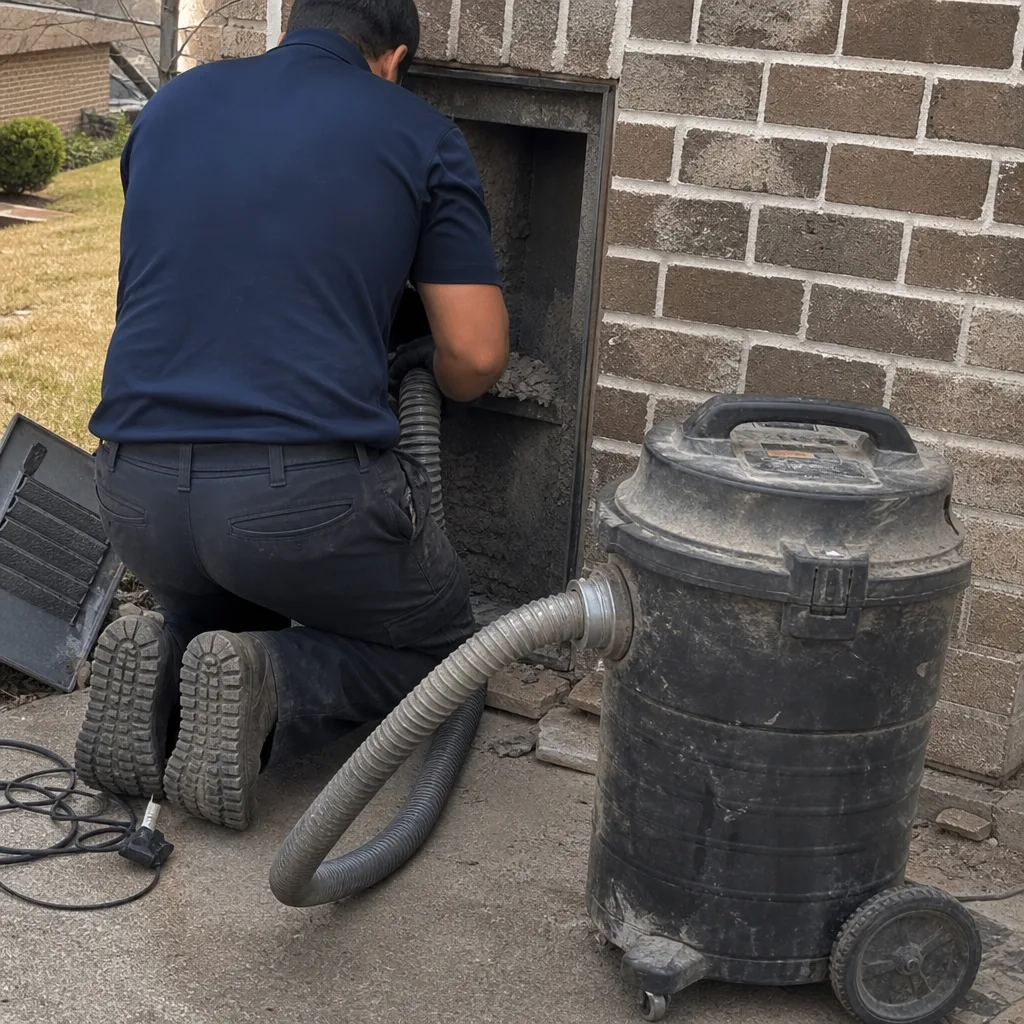 Before
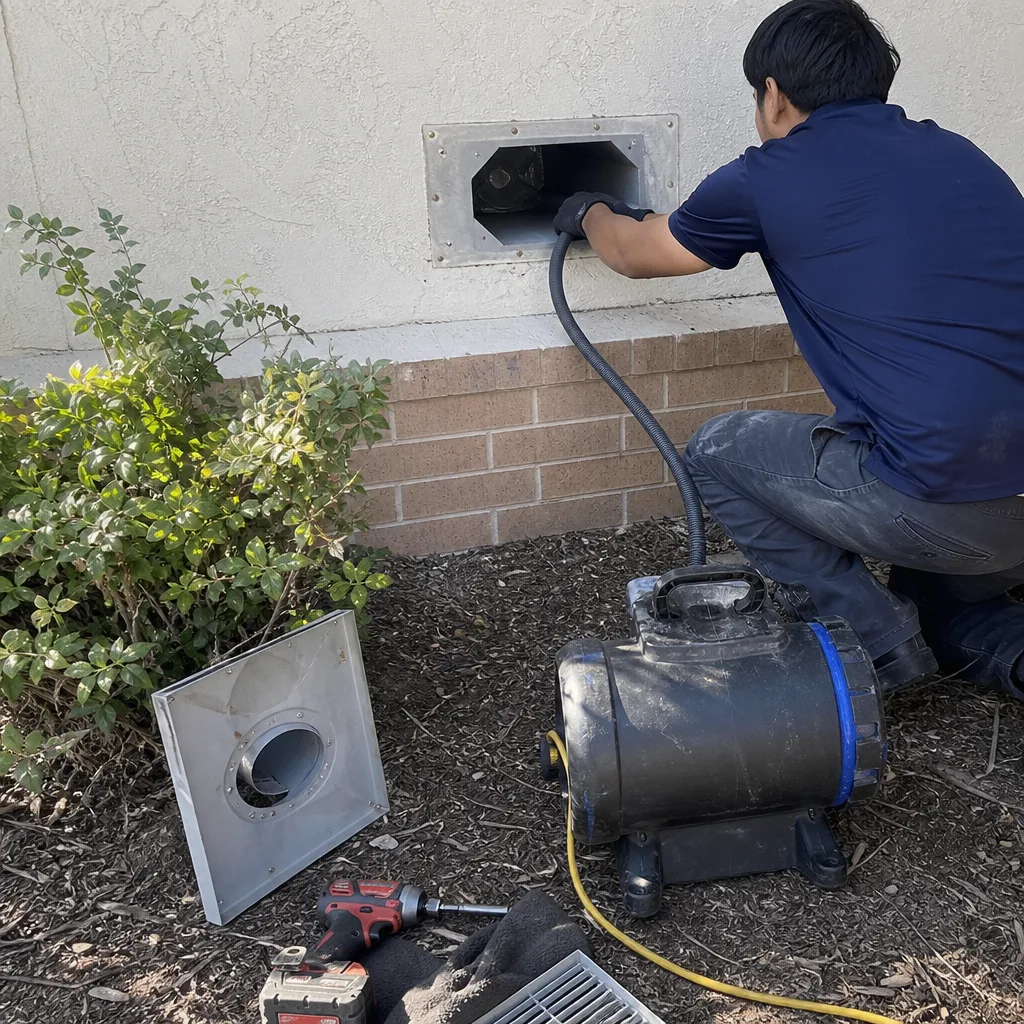 After
After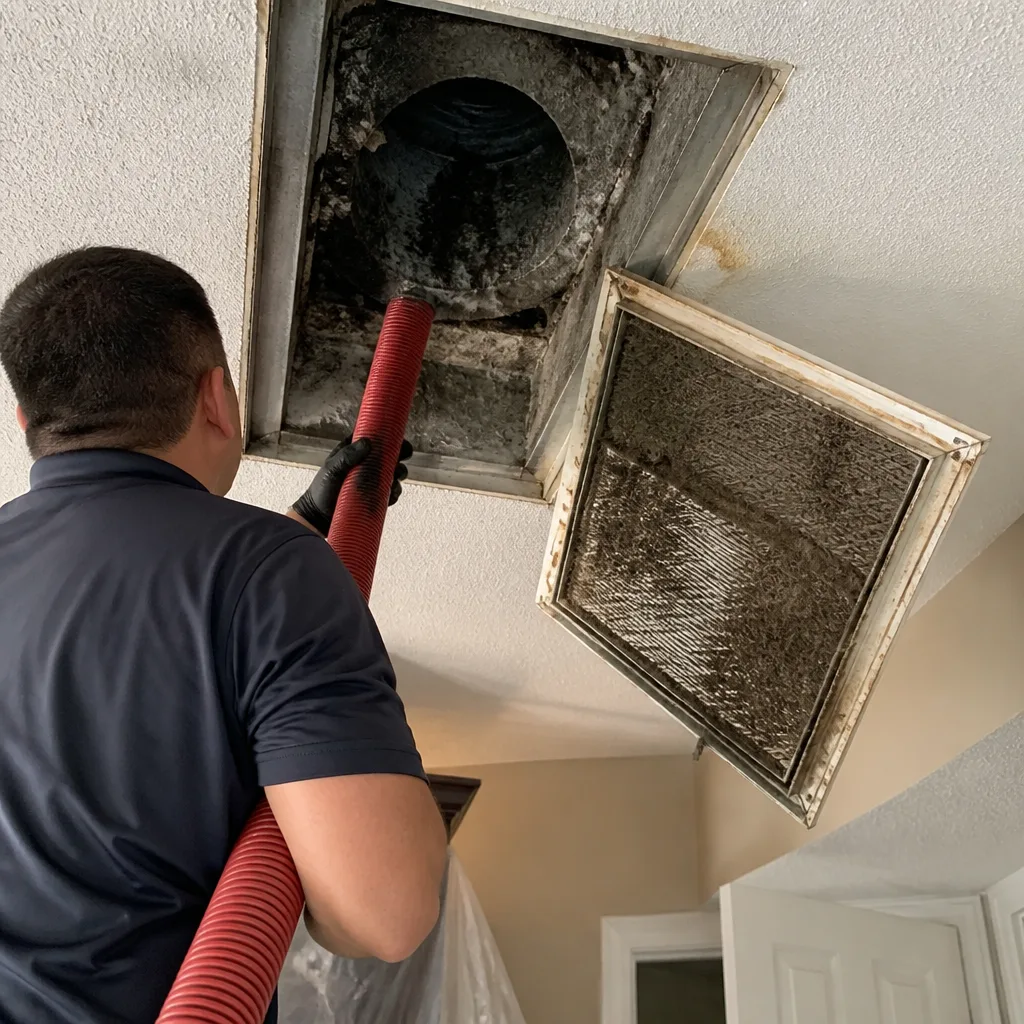 Before
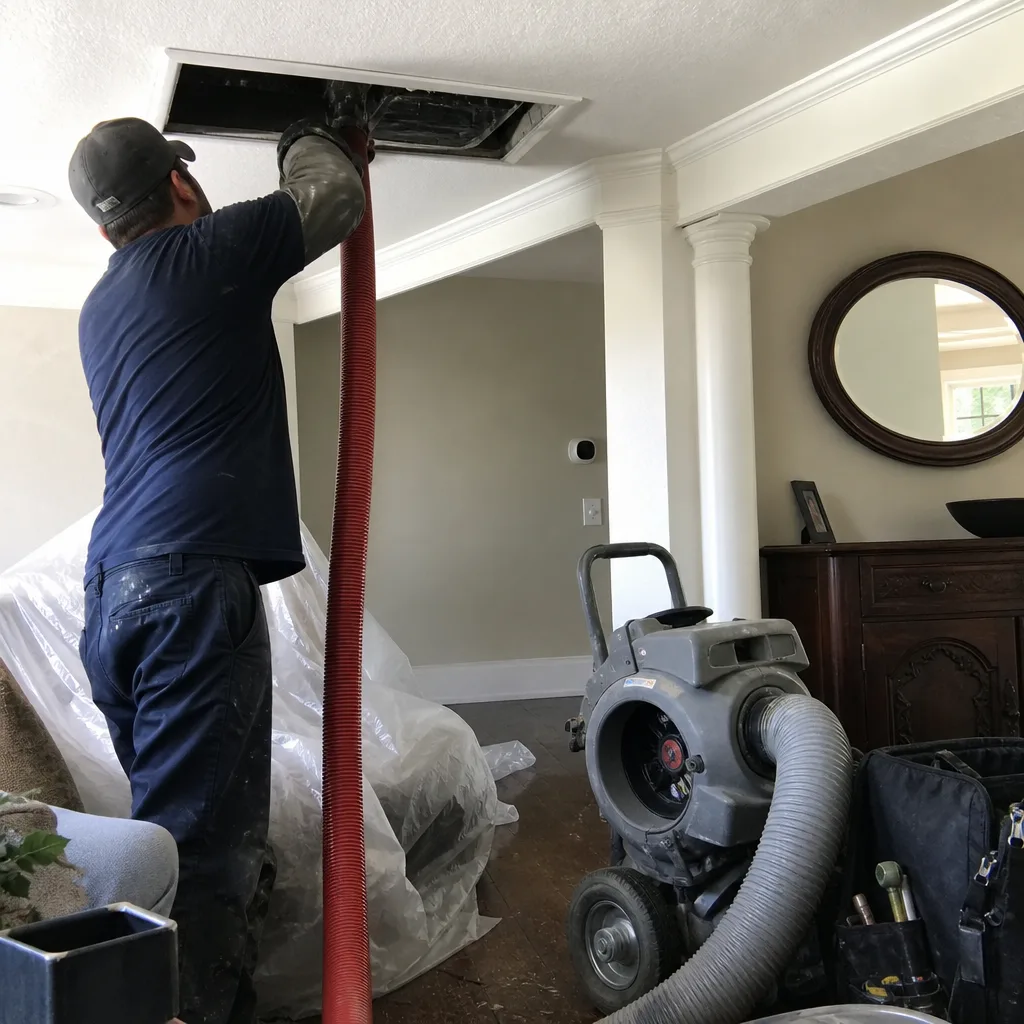 After
After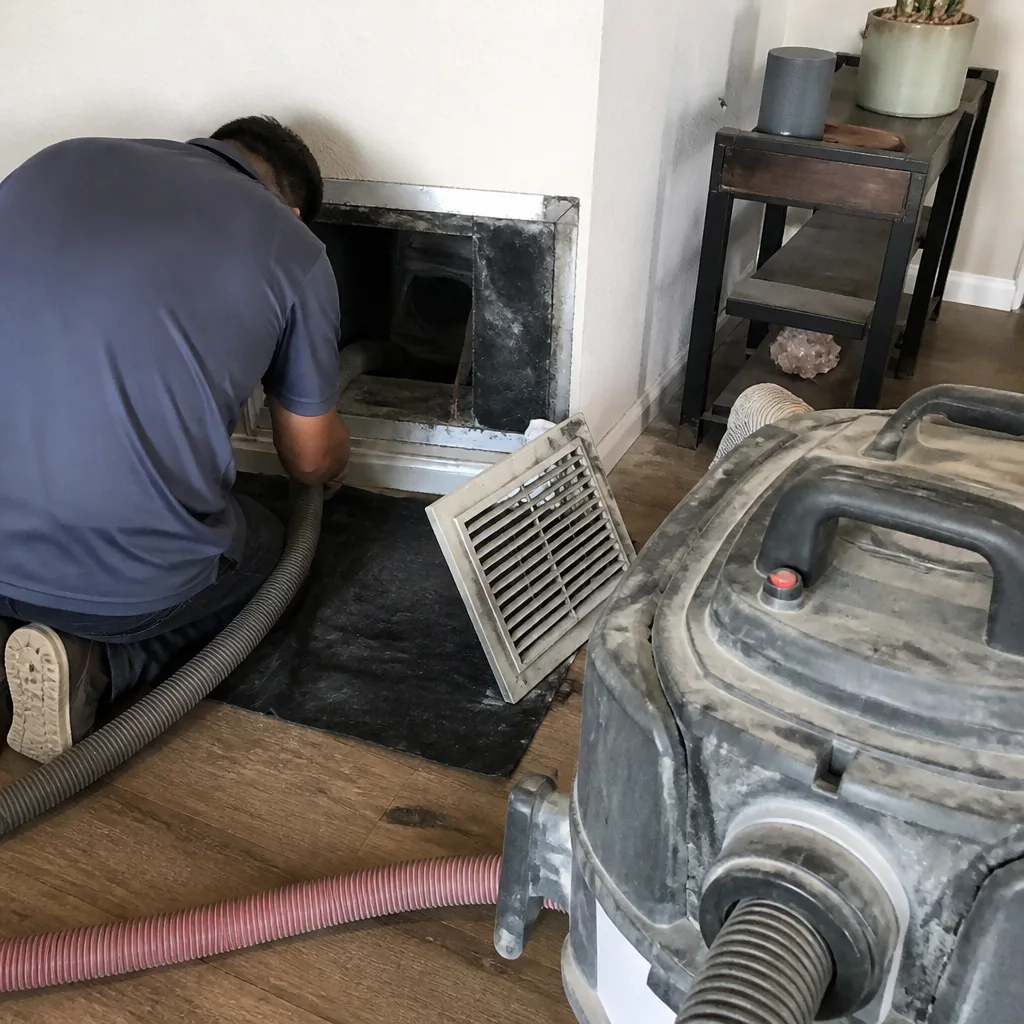 Before
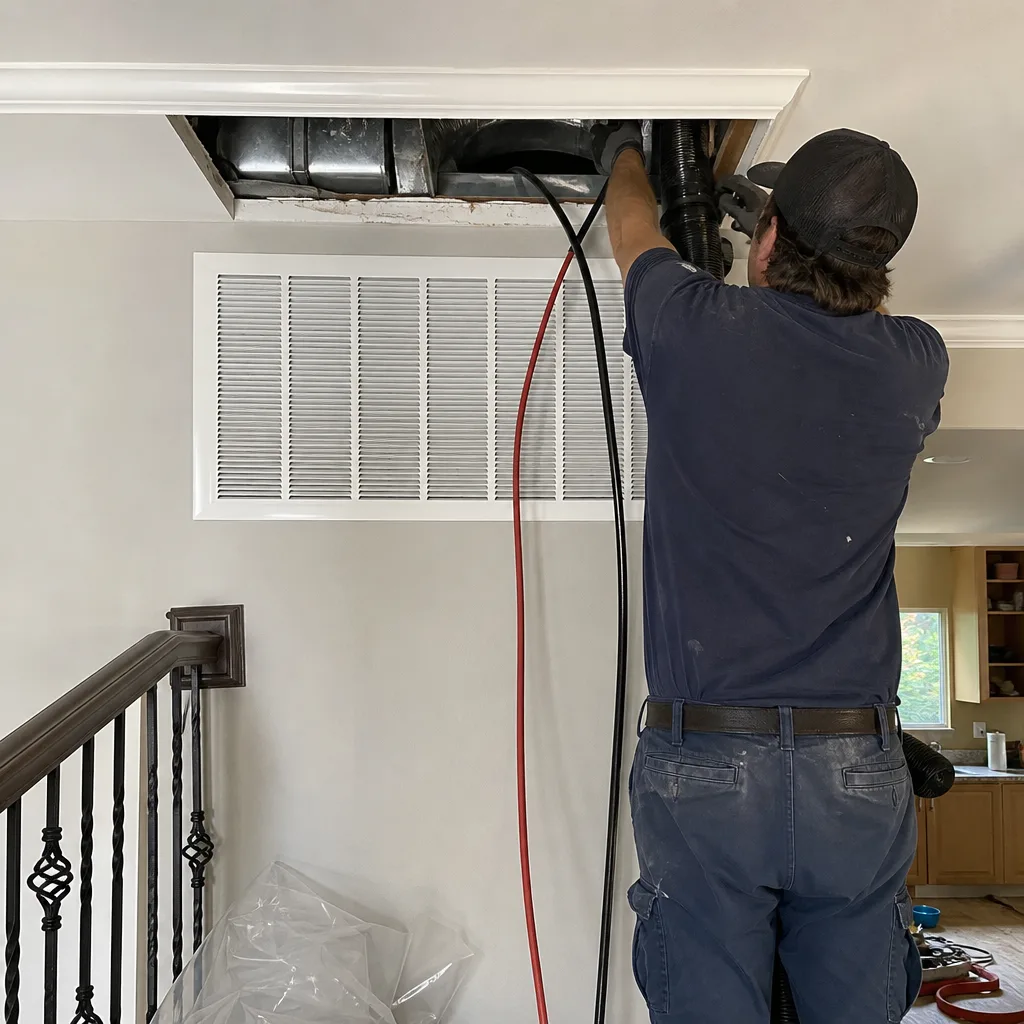 After
AfterHow to Hire a Air Duct Cleaning Contractor in Plano: A Step-by-Step Guide
Call ten air duct cleaning companies in Plano and ask for a written price before they arrive. Record how many will give you one. In our experience, fewer than three will commit to a number in writing, and that single fact explains why the $79 coupon offer has become the industry’s most reliable profit engine. This guide and our Seasonal Air Duct Cleaning Care for Plano: Year-Round Homeowner’s Guide walk you through exactly what to ask, what to demand in writing, and how to read the answers, so you hire a contractor who documents their work instead of one who leaves you with a larger invoice and no proof anything happened inside your walls.
Quick Answer
Hiring a legitimate air duct cleaning contractor in Plano means verifying NADCA certification, demanding a written scope with line-item pricing before work begins, and requiring before-and-after photography of every duct run as a standard deliverable. The contractor should use truck-mounted or professional-grade portable negative-pressure extraction equipment, itemize every vent and trunk line in the quote, and carry general liability insurance with Texas workers’ compensation. Anything less, and you’re paying for a vacuum rental with a logo on the side.
Table of Contents
- Why Written Prices Are Rare in the Plano Market
- Six Questions to Ask Before You Book
- How to Read a Quote: Line Items vs. Lump Sums
- What NADCA Membership Actually Certifies (And What It Doesn’t)
- Equipment Matters: Truck-Mounted vs. Portable Vacuums
- Red Flags That Appear During the Sales Call
- Using Photography as a Contractual Accountability Mechanism
- Common Mistakes to Avoid
- When to Call a Professional
- Frequently Asked Questions
- The Bottom Line
BeforeAfterWhy Written Prices Are Rare in the Plano Market
The Plano air duct cleaning market splits into two distinct operations. One group runs documented businesses with itemized quotes, published license numbers, and crews that arrive in marked vehicles. The other operates through coupon mailers, third-party lead generators, and dispatch networks where the person who answers your call has never met the technician who shows up.
The $79 coupon is the bridge between these two worlds. It exists because it works. A homeowner sees a price that seems reasonable for “whole house” duct cleaning, calls the number, and books an appointment. The technician arrives, inspects the system, and discovers “additional issues” - mold, heavy buildup, inaccessible runs - that push the final invoice to $400, $600, or more. The homeowner, now invested in the visit and facing a stranger in their home, often agrees.
We’ve been operating in Plano since 2013, and we’ve documented this pattern across thousands of second-opinion calls. The coupon price isn’t a price. It’s a door-opening tactic, and the business model depends on the technician’s ability to upsell once inside. The companies that use this model cannot give written prices in advance because the price isn’t the point. The point is access to your home and your decision-making fatigue.
Haven Standard Clause 1 exists specifically to eliminate this dynamic. Every CleanRun job starts with a written price before any work begins. No exceptions. The scope is fixed, the line items are itemized, and the number doesn’t change because the technician “discovered” something that was visible from the first glance at the register.
Plano’s housing stock makes this especially relevant. The city has grown rapidly since 2010, with large concentrations of two-story homes in subdivisions like Willow Bend, Kings Ridge, and Legacy West. These homes have longer duct runs, more complex plenum configurations, and higher static pressure requirements than the ranch-style homes that dominated older Texas markets. A contractor who hasn’t priced for the actual system configuration before arriving is either planning to upsell or planning to skip the runs they can’t easily reach.
Six Questions to Ask Before You Book
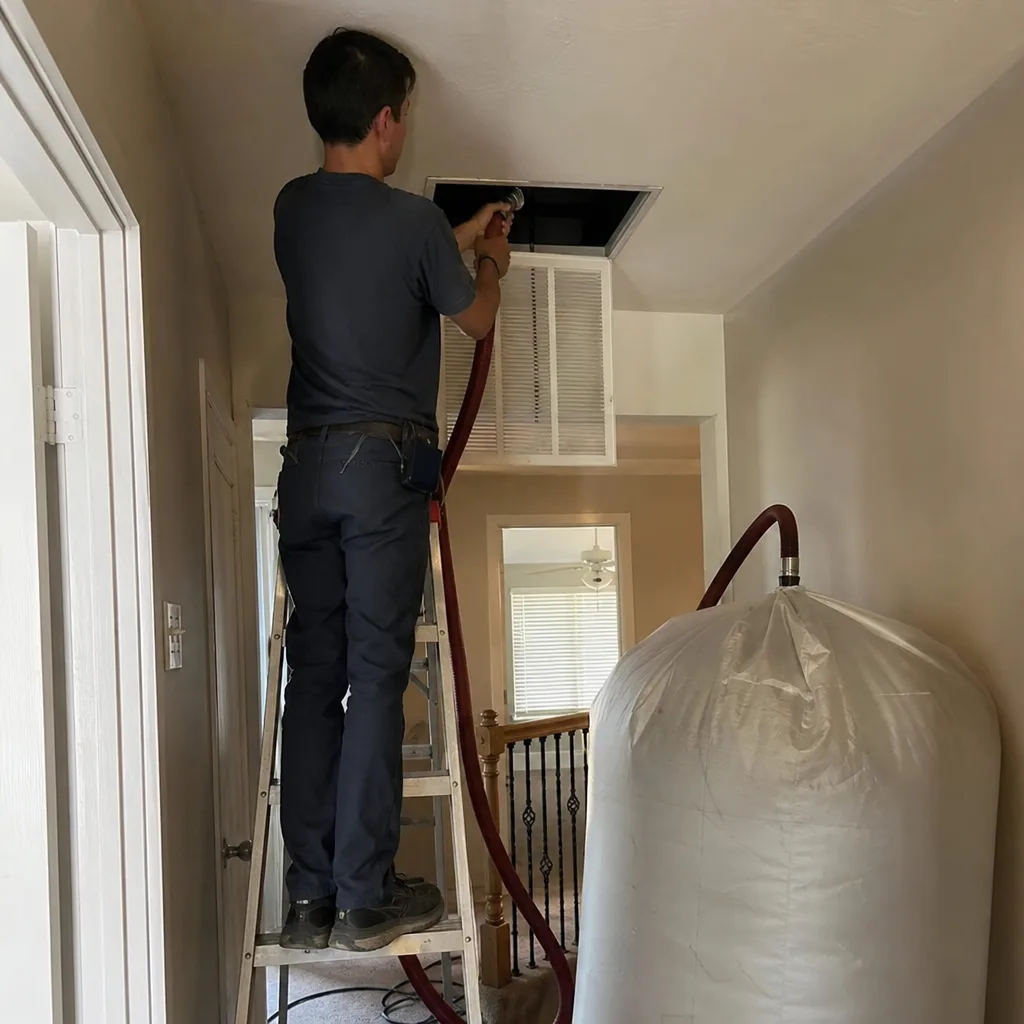
These six questions separate documented operations from dispatch networks. Ask them in order, and record the answers.
- Will you put the full scope and price in writing before you arrive? Not an estimate range. A fixed price for a fixed scope. If the answer involves “we’ll assess when we get there,” you’re talking to a company that prices by upsell. At CleanRun, Haven Standard Clause 1 requires a written price before any panel comes off.
- How many supply vents, return vents, and trunk lines are included in that price? A legitimate quote itemizes each component. A “whole house” price without these details is designed to obscure what work will actually be performed. In Plano’s two-story homes, we’ve seen quotes that exclude second-floor returns entirely, or that count a single multi-room trunk line as one “vent.”
- What equipment will you use, and is it truck-mounted or portable? This distinction affects suction power, filtration efficiency, and whether the job produces negative pressure throughout the system. See the equipment section below for why this matters in Plano homes specifically.
- Will you photograph the inside of every duct run before and after, and will I receive those photos as part of the standard job record? The answer should be yes, with no additional charge. Photography is the only verifiable proof that the interior surfaces were contacted by cleaning equipment. Verbal assurance or a post-job smell test is not documentation.
- Is your company NADCA certified, and is the certification held by the corporate entity or by individual technicians? NADCA membership has specific meanings and specific limitations. See the certification section below for how to interpret the answer.
- What is your license number, and what insurance do you carry? In Texas, air duct cleaning contractors are not state-licensed as a standalone trade, but legitimate operations carry general liability insurance and Texas workers’ compensation. The license number should be published, not buried in a footer or provided only after repeated requests. CleanRun publishes its license number on every page and verifies coverage under Haven Standard Clause 3.
The pattern of evasion is consistent across the companies we encounter in Plano. They’ll answer question one with “we’re very competitive,” question two with “we’ll take care of everything,” and question four with “our technicians are very thorough.” These are not answers. They’re deflections designed to get a truck to your driveway before you’ve established any contractual accountability.
How to Read a Quote: Line Items vs. Lump Sums
A proper air duct cleaning quote in Plano should read like an inventory, not a headline. Here’s what the line items should include, and what each one represents.
| Line Item | What It Covers | What to Verify |
|---|---|---|
| Supply vents (count) | Each register delivering conditioned air to rooms | Count matches your home; second-floor supplies aren’t grouped as one |
| Return vents (count) | Each grille pulling air back to the HVAC unit | Large central returns counted separately from bedroom returns |
| Trunk lines (linear feet or count) | Main distribution ducts running from plenum to branch lines | Both supply and return trunks itemized if accessible |
| Plenum (supply and return) | Distribution boxes immediately adjacent to the air handler | Both sides specified; some quotes exclude return plenum |
| Air handler cabinet | Interior surfaces of the HVAC unit housing | Included or explicitly excluded; not assumed |
| Access panel installation | Creation of service openings where none exist | Whether new panels are sealed and insulated to code |
| Photo documentation | Before-and-after imaging of each duct run | Delivered to customer as standard, not optional add-on |
A lump-sum “whole house” price obscures every one of these elements. It allows the contractor to skip trunk lines that require crawlspace access, to clean only the first three feet of each run, or to treat a 4,000-square-foot home in Willow Bend identically to a 1,800-square-foot ranch in east Plano. The price is lower because the scope is undefined, and the undefined scope favors the contractor at every decision point.
At CleanRun, our quotes itemize each component because the Haven Standard requires it. The customer sees exactly what will be cleaned, exactly what equipment will be used, and exactly what the fixed price covers. If additional access is needed, the scope changes in writing before the work changes.
Plano’s climate adds another variable. The city sits in a zone with high summer cooling loads and significant spring pollen events. Duct systems here accumulate both fine particulate and larger organic debris, and the distribution pattern differs between homes with sealed crawlspaces and those with ventilated attics. A quote that doesn’t account for your home’s specific configuration is a quote that hasn’t been thought through.
What NADCA Membership Actually Certifies (And What It Doesn’t)
NADCA, the National Air Duct Cleaners Association, certifies companies and technicians who meet specific training and equipment standards. The certification is meaningful, but it’s a floor, not a guarantee. Understanding the distinction protects you from two common misreadings.
First, NADCA certification confirms that a company employs technicians who have passed the NADCA exam and that the company carries general liability insurance. It does not certify individual job quality, customer service standards, or pricing transparency. A NADCA-certified company can still use the $79 coupon model, still refuse written prices, and still deliver no documentation. The certification verifies training and insurance. It does not verify business ethics.
Second, NADCA membership levels differ. The “Air Systems Cleaning Specialist” (ASCS) certification is held by individual technicians. The “Ventilation Maintenance Provider” (VMP) certification is held by companies. A company that advertises “NADCA certified” may mean one technician in a twenty-person operation holds the ASCS credential. Ask specifically: how many of your technicians are ASCS-certified, and is the company itself VMP-certified?
In Plano, we’ve encountered companies that display the NADCA logo prominently while subcontracting actual work to uncertified crews. The logo appears on the website. The truck that arrives is unmarked, the technician is unnamed, and the work is undocumented. NADCA certification did not prevent this because NADCA does not police job-site execution in real time.
We maintain NADCA alignment because the training standards are legitimate. But we pair that with Haven Standard Clause 2, which requires documented photo evidence of every duct run, and Haven Standard Clause 3, which requires verified, background-checked, uniformed crews identified by name before arrival. Certification plus documentation plus verified execution is a stronger standard than certification alone.
Equipment Matters: Truck-Mounted vs. Portable Vacuums
The vacuum source determines whether your duct cleaning removes debris or merely rearranges it. This distinction matters more in Plano than in many markets because of the housing stock.
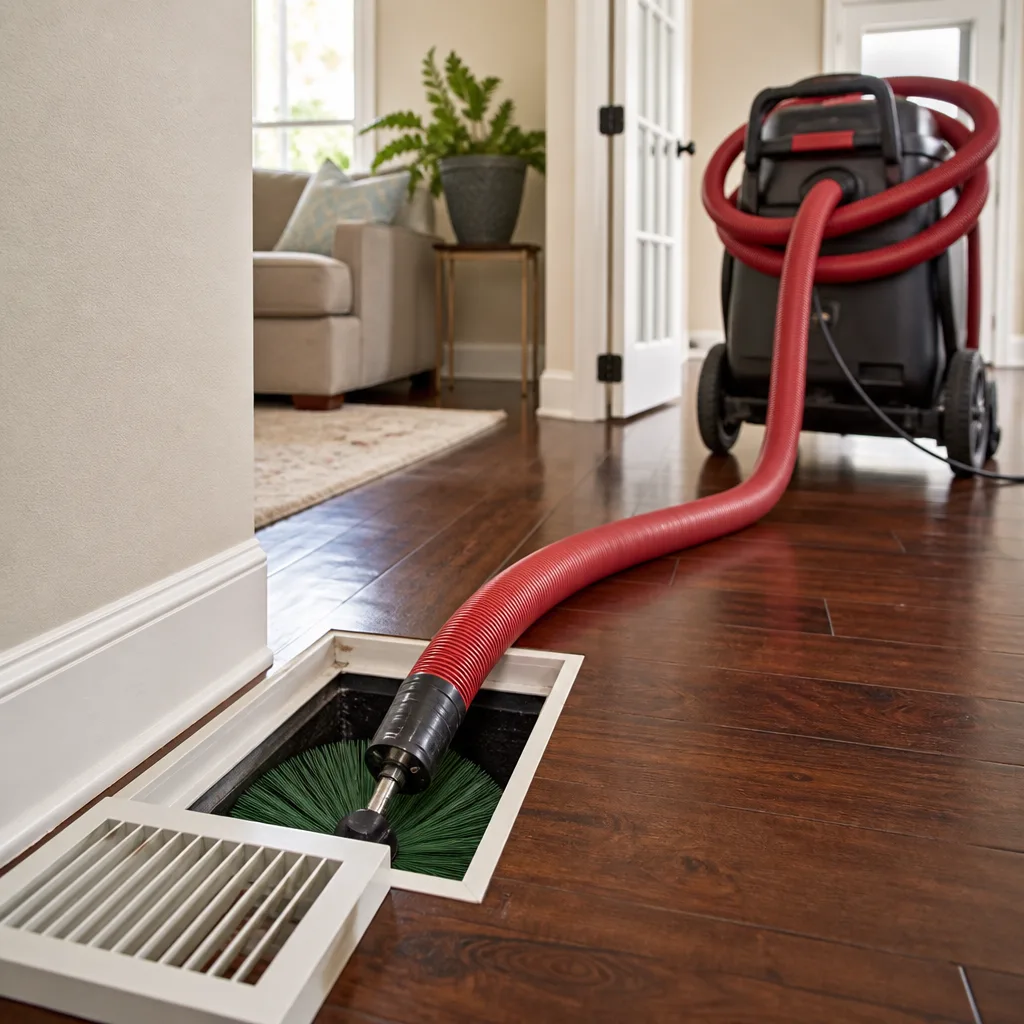
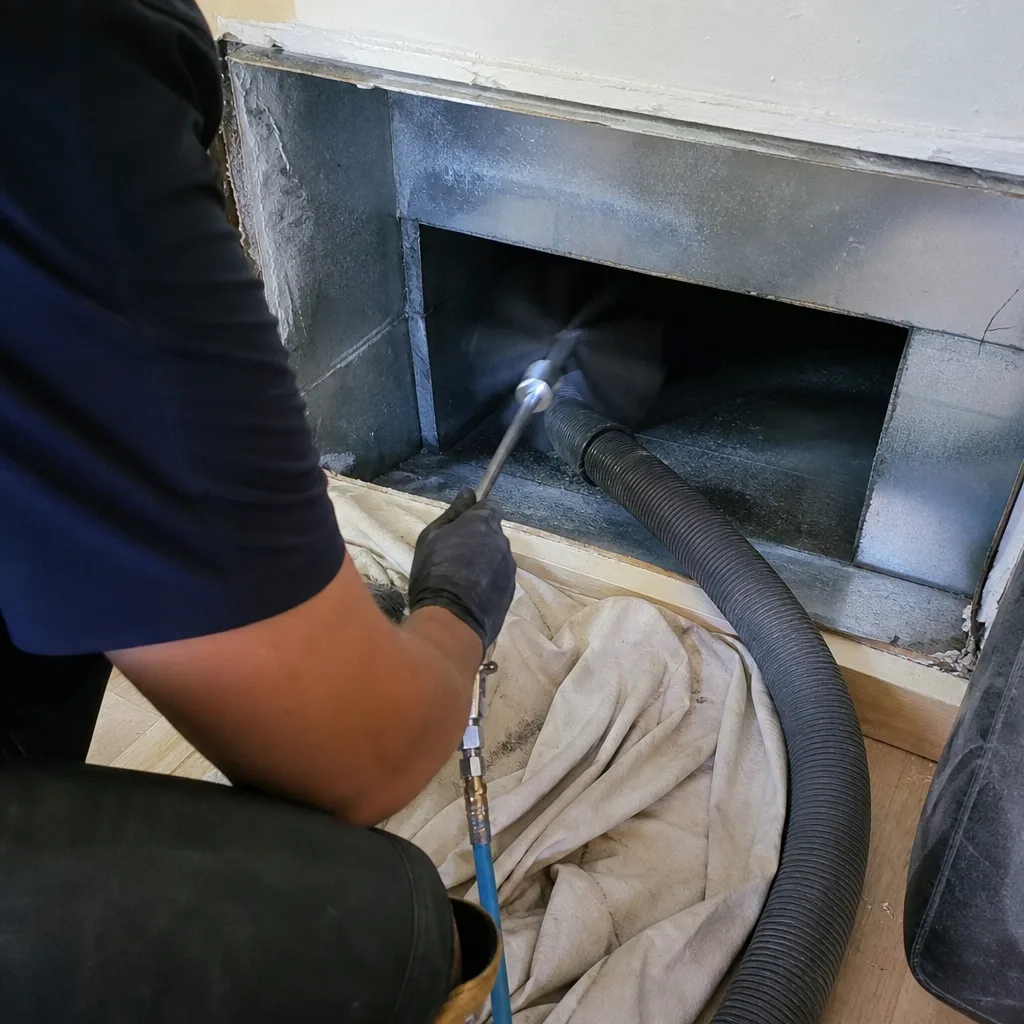
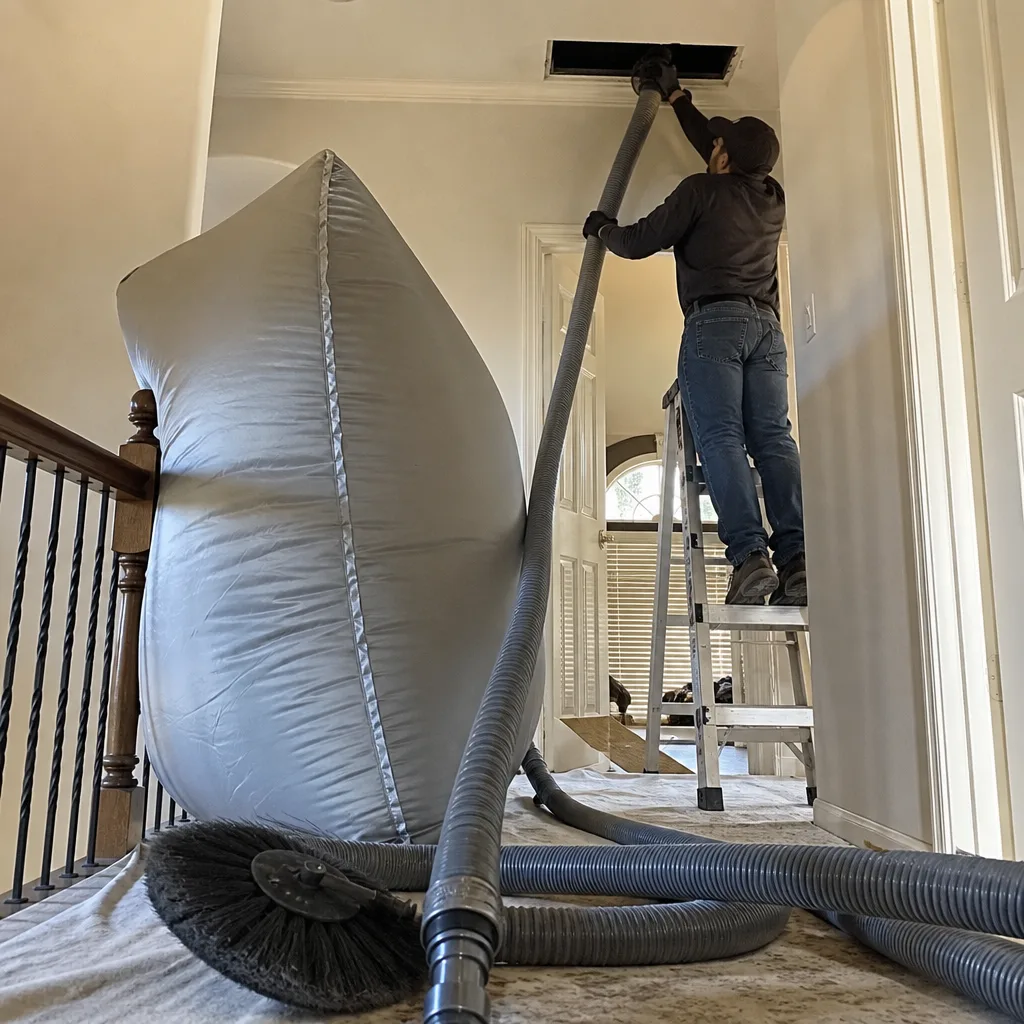
Truck-mounted systems use a gasoline-powered vacuum engine mounted in the service vehicle, connected to the duct system through a large-diameter hose. These systems generate significantly higher airflow (measured in cubic feet per minute, or CFM) and stronger negative pressure than portable units. The debris travels directly to the truck’s collection chamber, and the filtration is typically HEPA-rated.
Portable systems are electric units carried into the home. Quality portables from manufacturers like Nikro and Abatement Technologies can achieve adequate suction for residential systems, but their CFM ratings are lower, and their collection capacity is limited. In a two-story Plano home with a long trunk line, a portable unit may struggle to maintain negative pressure at the far registers.
The critical question isn’t “which is better?” but “which is appropriate for this specific system?” A truck-mounted unit is generally preferable for larger homes and longer runs. A high-quality portable, properly specified, can perform adequately for smaller systems with shorter duct paths. The red flag is a contractor who cannot explain their equipment choice in terms of your home’s square footage, duct layout, and static pressure requirements.
We specify equipment by job. For larger homes in west Plano subdivisions with extended trunk lines, we typically deploy truck-mounted negative-pressure extraction. For compact systems or homes with limited exterior access, we use professional-grade portable equipment from Nikro and Abatement Technologies, with CFM ratings matched to the system size. In either case, the customer knows what will be used before the work begins, and the equipment is named in the written scope.
What matters most is whether the contractor can state the CFM rating of their equipment, explain how it matches your system, and show you the filtration standard. A technician who describes the vacuum as “commercial-grade” without specifications is describing marketing language, not equipment.
Red Flags That Appear During the Sales Call
Certain phrases and patterns predict a bad outcome with high reliability. We’ve compiled these from twelve years of customer reports and second-opinion visits across Plano.
- “We have a crew in your area tomorrow.” This is urgency theatre, designed to compress your decision timeline. Legitimate duct cleaning is scheduled, not dispatched. The “crew in your area” is almost always available because it’s a lead-generation fiction.
- “The price is $79, but we won’t know the full scope until we see it.” This is the coupon model in plain language. The $79 covers a visual inspection and possibly a register wipe. Everything else is additional, and the additional charges are disclosed after arrival.
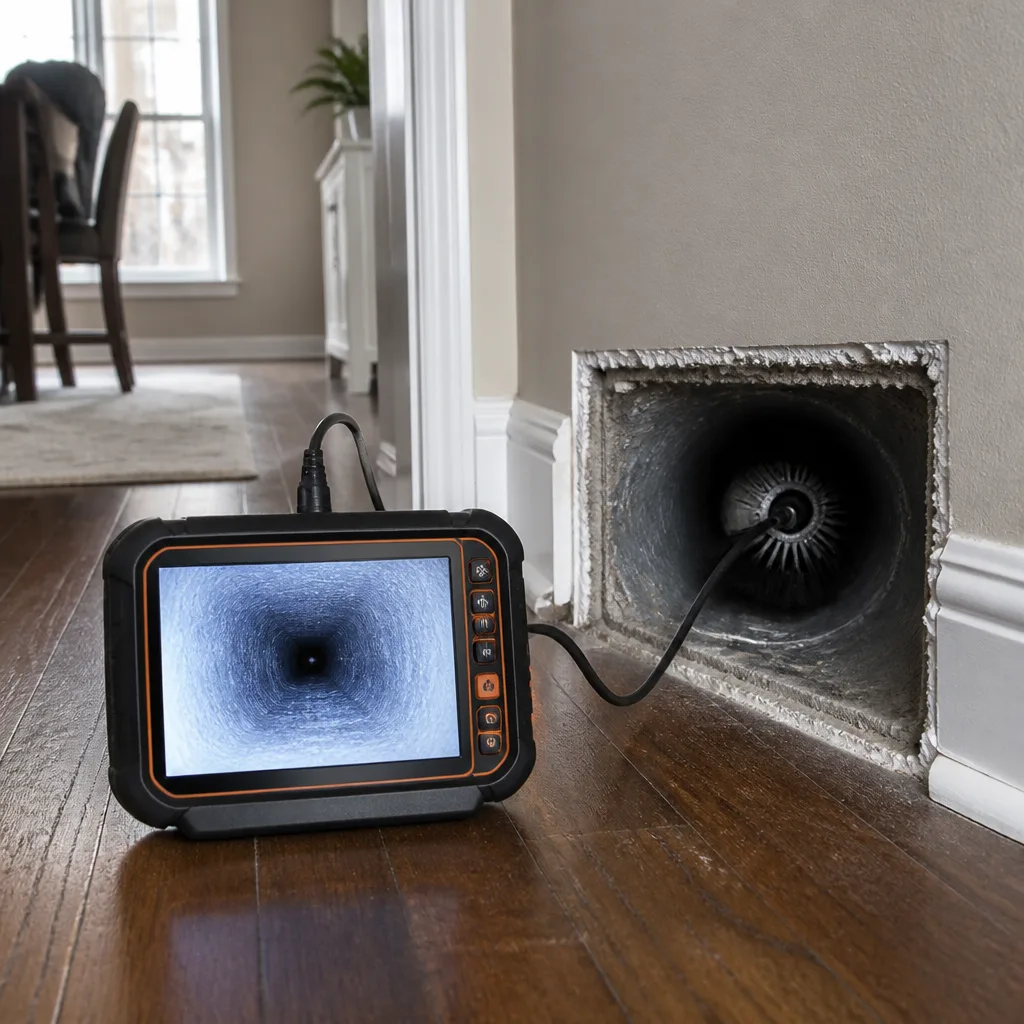
- “We don’t take photos - our technicians are very thorough, and you’ll smell the difference.” Smell is not documentation. Thoroughness without verification is a claim, not a deliverable. Every legitimate contractor can photograph the interior of a duct run with an inspection camera.
- “We’re NADCA certified” without specifying technician-level or company-level certification. See the certification section above. Vague certification claims are often technically true and practically meaningless.
- Unwillingness to email or text the scope and price before the appointment. If a contractor can state a price verbally but not put it in writing, the verbal price is not the real price. Haven Standard Clause 1 exists because this evasion is so common.
- No published license number, no named owner, no physical address. These are basic business transparency standards. Their absence suggests a dispatch network or shell operation, not a local contractor with accountability.
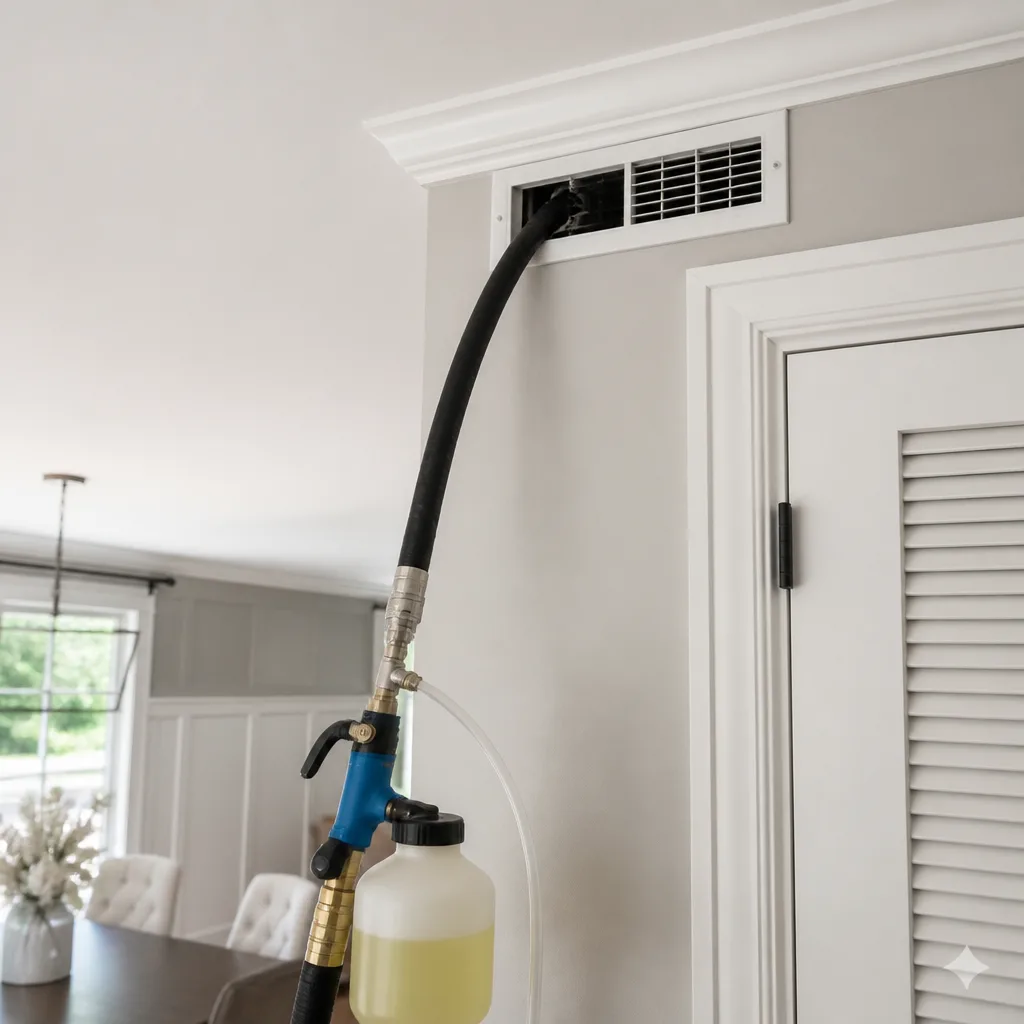
- Pressure to add services not mentioned in the initial quote. Mold treatment, sanitizing, coil cleaning - these may be legitimate services, but their introduction during the job, with the technician already in your home, is a sales tactic, not a diagnostic finding.
The pattern across these red flags is consistent: they all reduce your ability to verify, compare, or hold the contractor accountable. A legitimate operation welcomes scrutiny because its prices and processes hold up to examination.
Using Photography as a Contractual Accountability Mechanism
Before-and-after photography is the single most effective tool for verifying that duct cleaning occurred, and it should be treated as a contractual requirement, not a courtesy. Here’s how to use it.
Request it in writing before work begins. Include language in your agreement or email confirmation: “Contractor will photograph the interior surface of every supply and return duct run before and after cleaning, and will deliver these images to the customer as part of the standard job record.” This transforms photography from a voluntary practice into a binding obligation.
Specify what the photos must show. A photo of a register grille is not a photo of a duct interior. The image should show the internal surface of the duct run, with sufficient lighting and focus to distinguish debris from clean metal or flex. Ask the contractor to confirm they use inspection cameras with LED lighting, not phone cameras pointed into dark openings.
Require timestamp or sequential documentation. A photo set without metadata can be reused across jobs. The images should correspond to specific rooms, specific runs, and specific times. At CleanRun, our Documented Photo Record includes each run labeled by location, with before and after images in sequence, delivered as a standard job record.
Use the photo record as warranty support. If debris returns or airflow problems persist, the before-and-after record establishes the condition of the system at the time of service. This is particularly relevant for our 365-Day Done Right Promise: if the work is not right, we make it right, and the photo record is the baseline for determining what “right” means.
We’ve encountered competitors in Plano who claim to document their work but deliver three or four photos of the most accessible registers, with no interior duct images at all. This is not documentation. It’s theater. The customer who requests specific language in writing before the job avoids this outcome entirely.
Common Mistakes to Avoid
- Booking based on coupon price without verifying the full scope. The $79 offer is almost never the final price, and the scope it covers is typically limited to visible register surfaces. In Plano’s competitive market, the lowest advertised price correlates strongly with the highest final invoice.
- Assuming NADCA certification guarantees quality. Certification verifies training and insurance. It does not verify pricing transparency, documentation standards, or job-site execution. Treat it as one data point among several.
- Accepting verbal estimates for a scheduled service. Duct cleaning is not an emergency. You have time to receive, review, and compare written quotes. A contractor who pressures you to book without a written scope is a contractor planning to adjust the price after arrival.
- Neglecting to verify insurance and crew verification. Texas does not require state licensing for air duct cleaning as a standalone trade, but general liability and workers’ compensation are standard for legitimate operations. Ask for proof, and verify that the policy is current.
- Ignoring the equipment specification. “Commercial-grade vacuum” is not a specification. CFM rating, filtration standard, and manufacturer name are specifications. Equipment from recognized manufacturers like Rotobrush, Nikro, Abatement Technologies, Honeywell, Aprilaire, and Guardsman can be independently verified.
- Failing to request photo documentation in the initial agreement. Photography added as an afterthought is photography that may not happen. Build it into the contract language from the first interaction.
- Choosing based on speed of availability rather than documentation standards. The contractor who can arrive tomorrow may be available because their pricing model depends on volume and upsell, not on documented, accountable work.
When to Call a Professional
Certain conditions indicate that duct cleaning should be performed by a qualified contractor rather than deferred or attempted as maintenance. Visible mold growth inside hard-surface ducts, confirmed rodent or insect infestation, debris release from supply registers during system operation, and persistent airflow imbalance between rooms despite filter changes all warrant professional evaluation.
In Plano, the combination of high summer cooling loads and spring pollen peaks means that systems with significant buildup work harder and longer to maintain temperature. If your energy bills have increased without rate changes or if rooms distant from the air handler never reach set temperature, restricted ductwork may be a contributing factor.
CleanRun Air Duct Cleaning Plano offers free estimates in Plano. Every estimate includes a written scope and fixed price before any work begins, under Haven Standard Clause 1. Call (469) 452-7766 to schedule, or bring a competitor’s written quote for a free second opinion.
Frequently Asked Questions
Whole-system Air Duct Cleaning services in Plano typically range from $400 to $900 for a standard residential system, depending on home size, duct accessibility, and whether the scope includes trunk lines and plenum. The $79 coupon offers that circulate in Collin County almost always exclude trunk lines, second-floor runs, or the return side of the system. Call (469) 452-7766 for an exact quote - estimates are free, and the price is written before work starts.
The price gap usually reflects a gap in scope, not a gap in market efficiency. A low quote may cover only supply registers, skip the return system, exclude trunk lines, or use equipment with insufficient suction to contact interior duct surfaces. The cheapest quote often becomes the most expensive job once the technician arrives and “discovers” the components that were always part of the system. Always compare line items, not headlines.
Require before-and-after photography of every duct run as a standard deliverable, not an optional add-on. The images should show interior duct surfaces with sufficient lighting and focus to verify debris removal. At CleanRun, the Documented Photo Record is included on every visit as a standard job record, delivered to the customer before the crew leaves. No photo record means no verifiable proof.
The NADCA guideline is every three to five years for typical residential systems, with shorter intervals for homes with pets, recent renovations, or occupants with respiratory sensitivities. In Plano, the combination of pollen-heavy springs and extended cooling seasons means systems work harder and longer than in milder climates. We recommend inspection every three years, with cleaning frequency based on what the inspection shows, not on a fixed calendar.
Air duct cleaning addresses the distribution network: supply and return ducts, trunk lines, and plenum. HVAC cleaning in Plano addresses the mechanical components: evaporator coils, blower assembly, and cabinet interior. Some contractors conflate the two, offering “duct cleaning” that touches only registers while ignoring the air handler. A complete scope should specify which components are included, and the quote should itemize them separately.
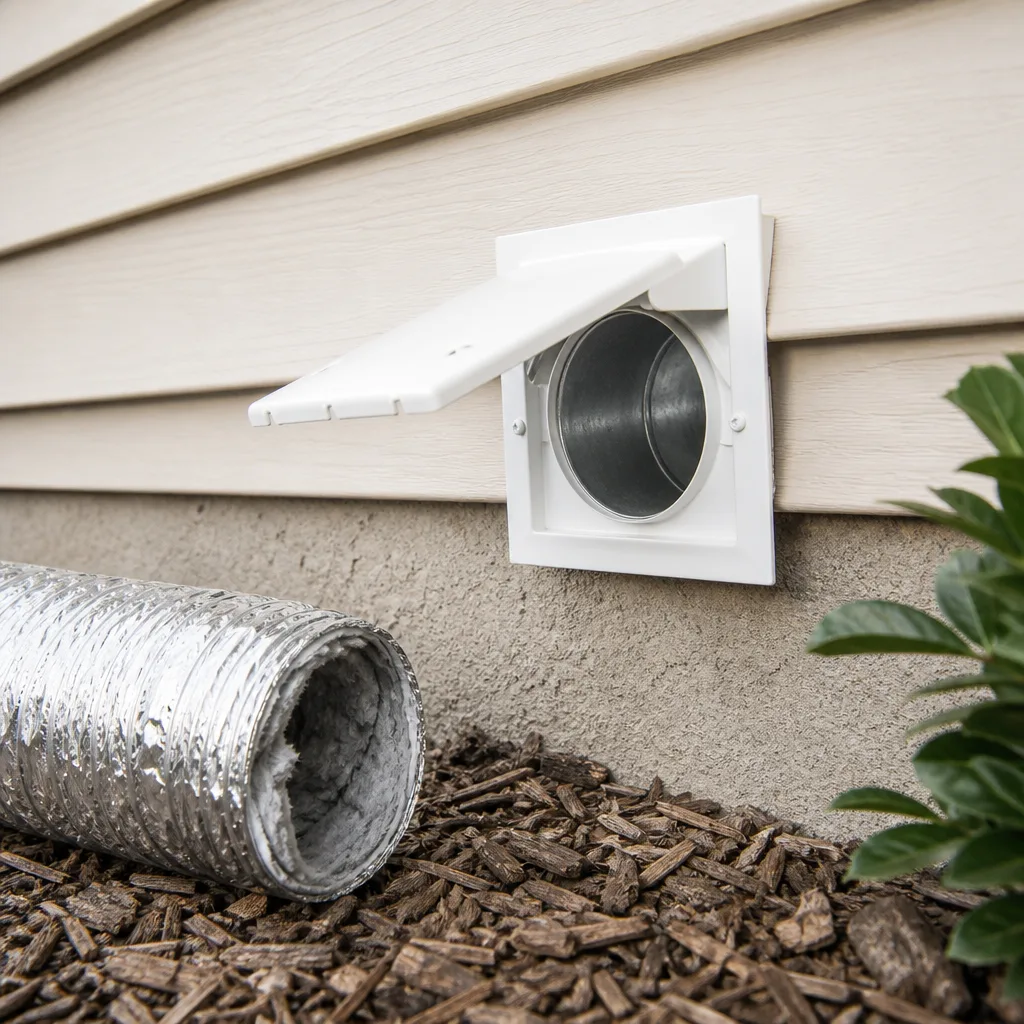
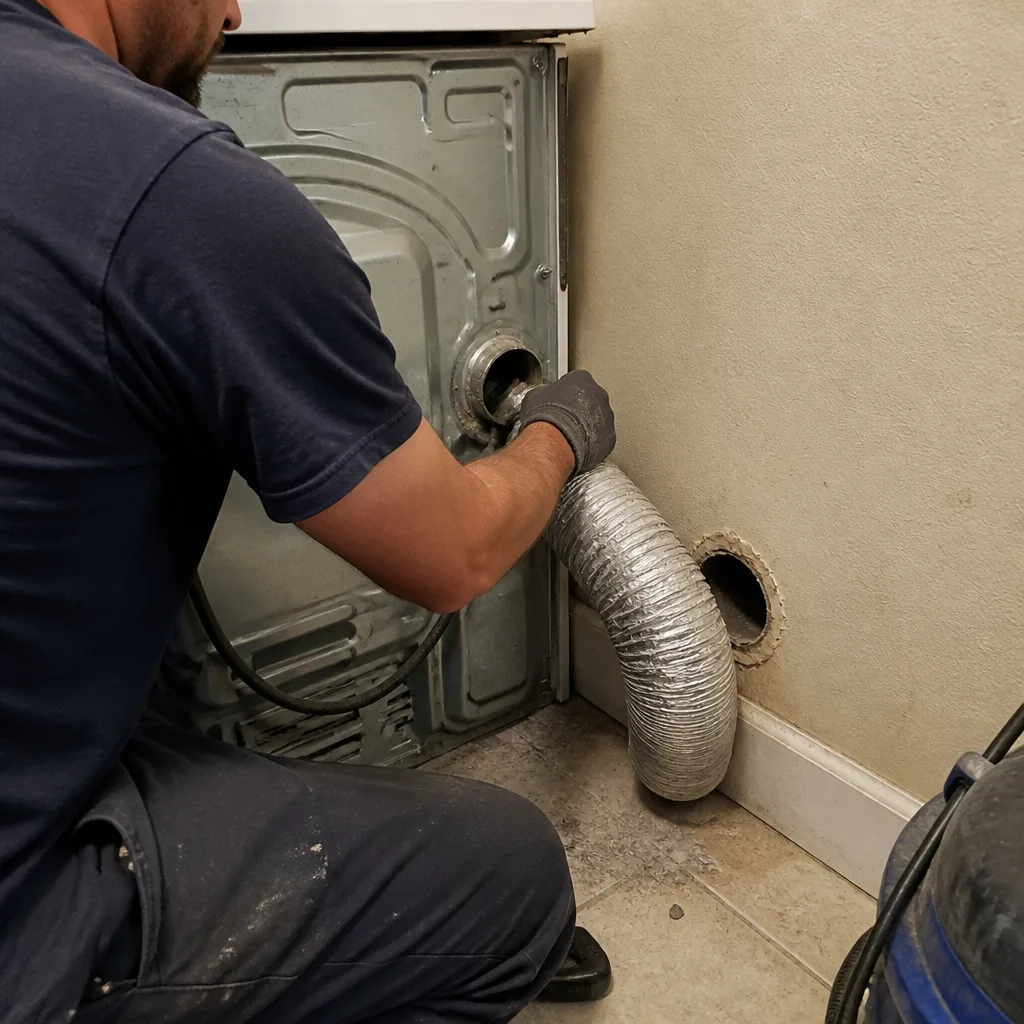
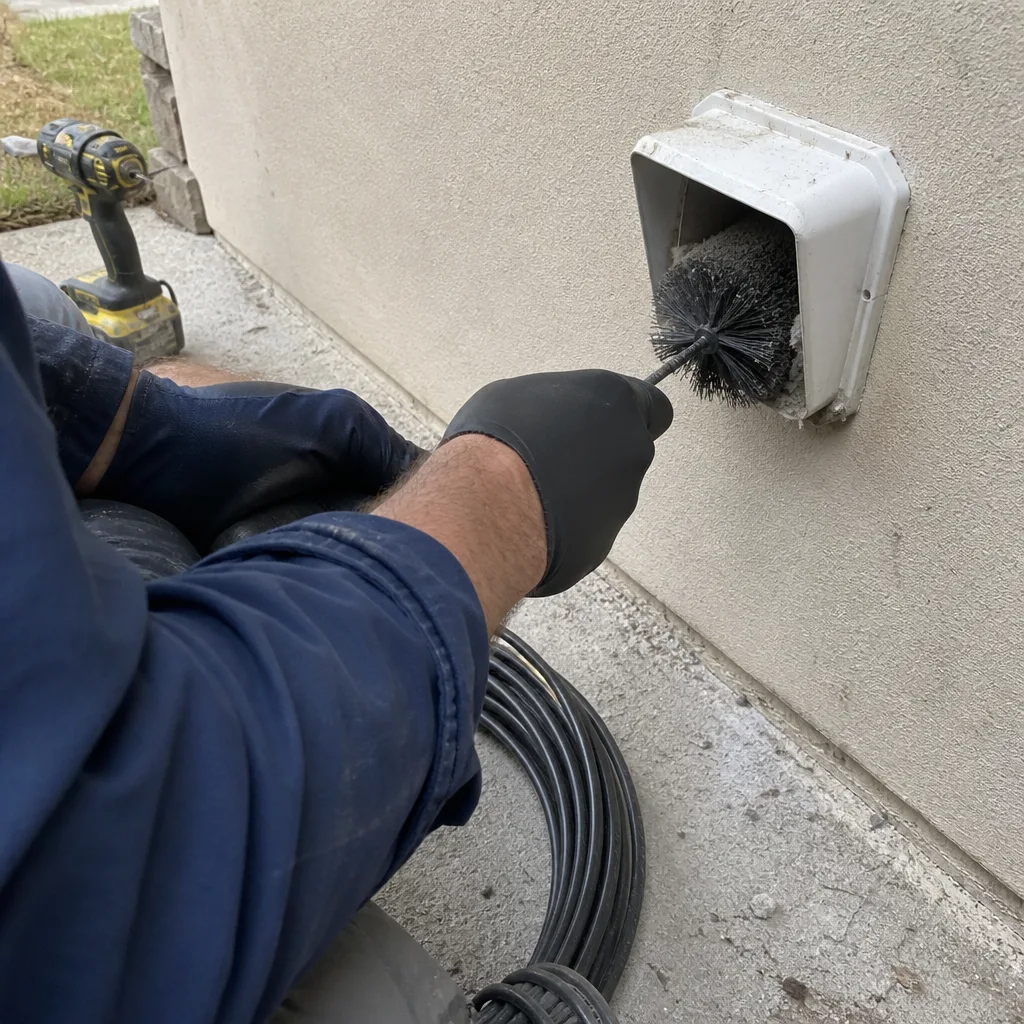
Dryer vent cleaning is a separate service with a separate safety rationale. Lint accumulation in dryer vents is a leading cause of residential fires, and the vent path from dryer to exterior termination requires different equipment than duct cleaning. If your dryer vent hasn’t been inspected in the past year, scheduling dryer vent cleaning in Plano alongside duct cleaning is efficient, but it should be quoted as a distinct scope with its own line items and price.
Every CleanRun job is backed by the 365-Day Done Right Promise: if the work is not right, we make it right, backed in writing on every job. This is not a policy subject to manager approval. It’s a written guarantee delivered as part of the standard job record, alongside the photo documentation and itemized scope.
The Bottom Line
Hiring an air duct cleaning contractor in Plano comes down to documentation and verification. The legitimate contractor puts the scope and price in writing before arriving, itemizes every vent and trunk line, specifies the equipment by manufacturer and rating, and delivers photographic proof of every duct run cleaned. The coupon operator does none of these things because their model depends on ambiguity, urgency, and decision fatigue.
The six questions in this guide, the line-item quote structure, and the photography requirement are not elaborate precautions. They’re standard practices for any trade that produces verifiable results. The fact that they screen out most competitors in the Plano market says more about the market than about the questions.
We built CleanRun on the principle that documented evidence outperforms persuasive language. Twelve years and 52,000 homes later, that principle still governs every estimate we write and every job we complete.
CleanRun Air Duct Cleaning Plano serves homeowners throughout Plano and Collin County with air duct cleaning, dryer vent cleaning, HVAC cleaning, duct repair and sealing, and air quality services. Every estimate is free, every price is written before work begins, and every job concludes with a Documented Photo Record. Call (469) 452-7766 to schedule, or bring a competitor’s written quote for a free second opinion.
Written by Tomas Reyes, Owner at CleanRun Air Duct Cleaning Plano, serving Plano since 2013.