
Last updated September 23, 2026
Whole-system duct and dryer vent check with before-and-after photos - you see exactly what came out of your vents
That "$99 whole-house special" is a bait ad - the real number appears once they are in your hallway, or the "clean" is a shop-vac at the register. We photograph the inside of your ducts before and after instead.
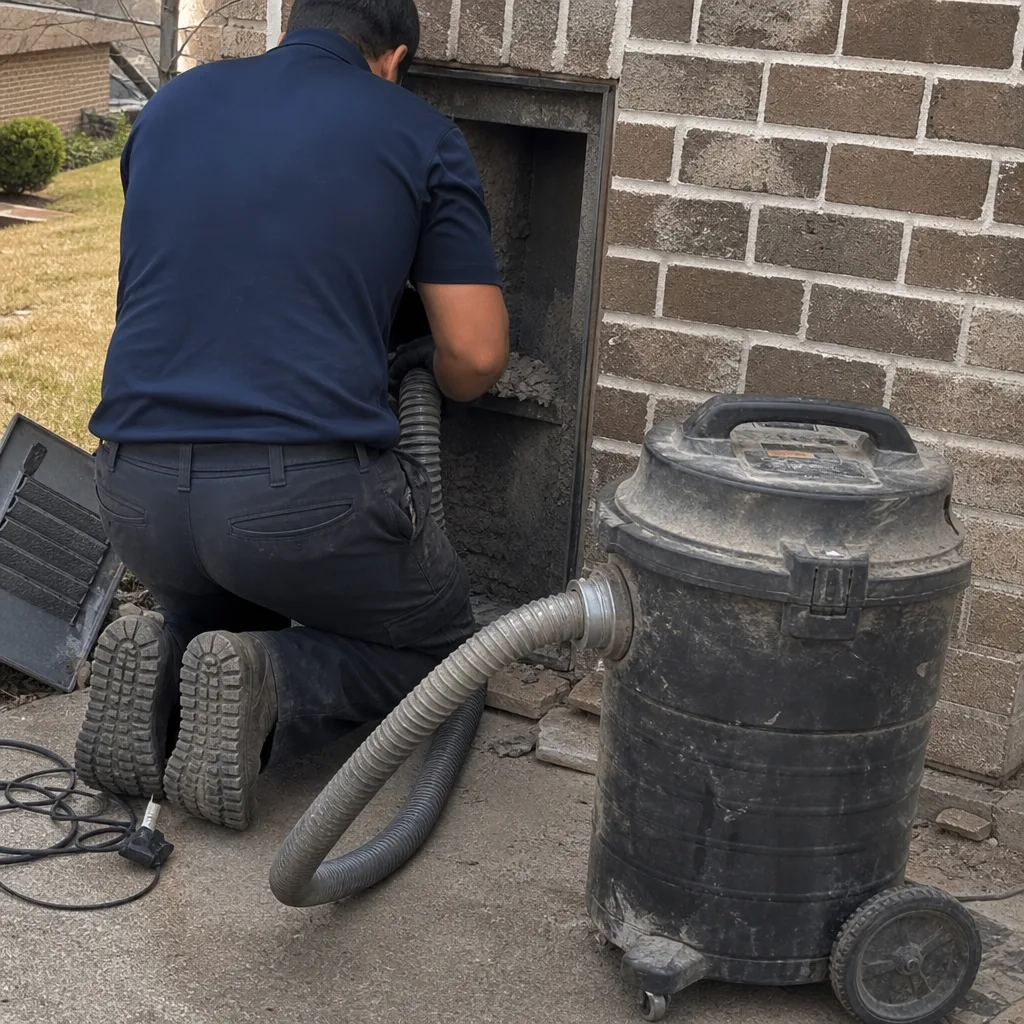 Before
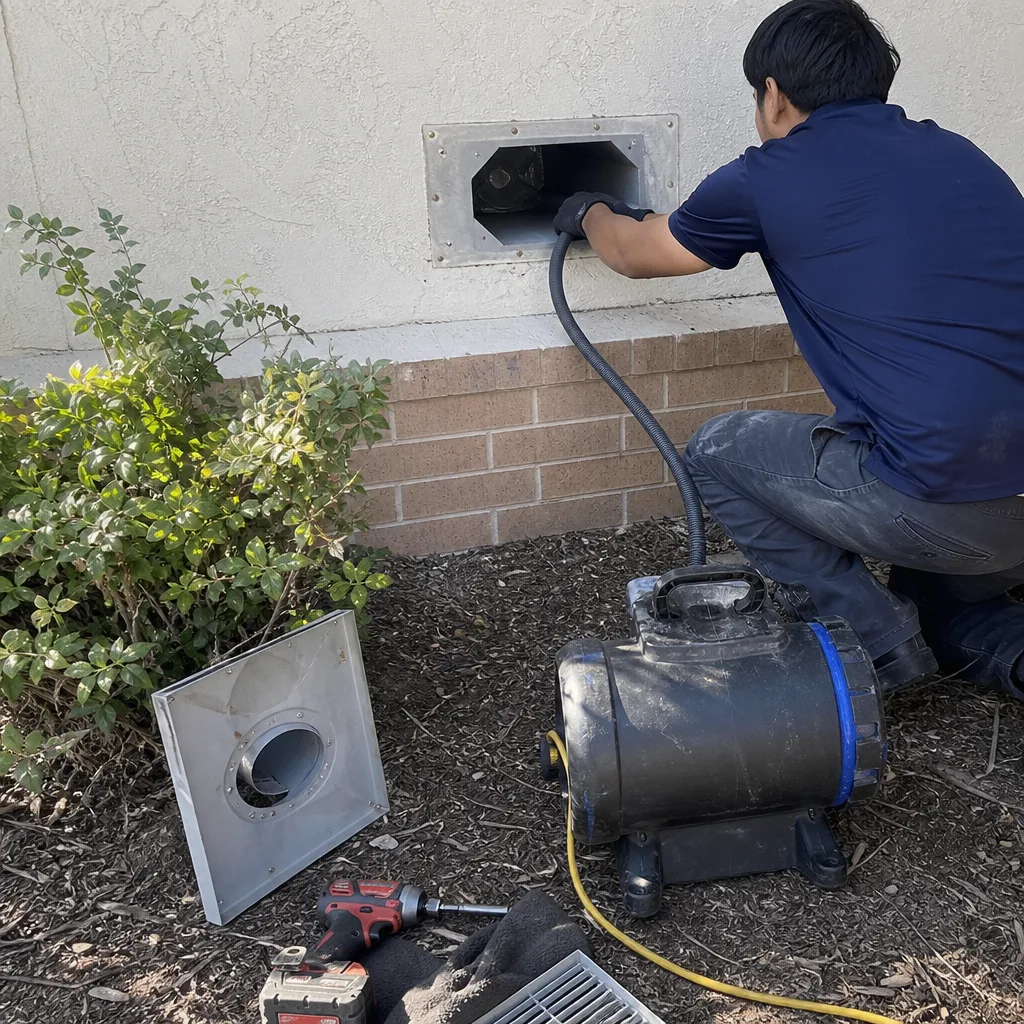 After
After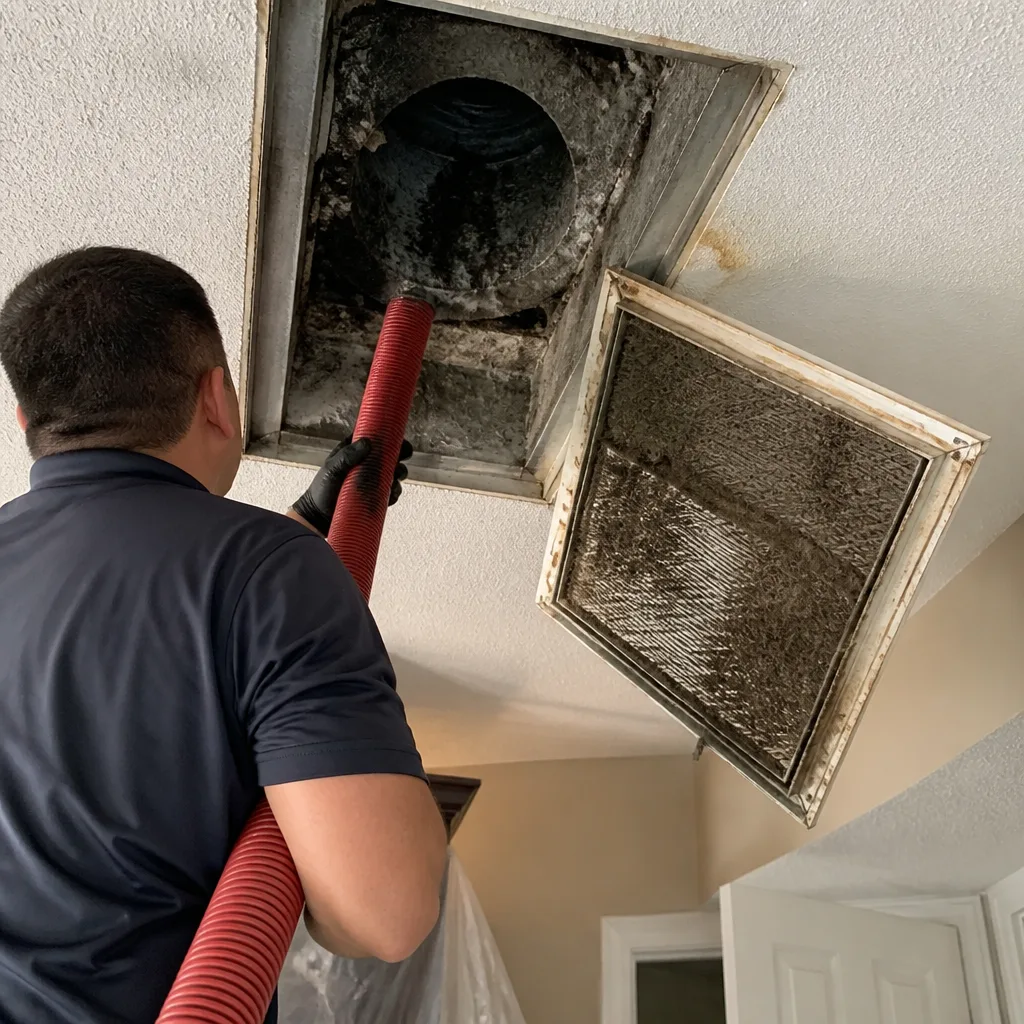 Before
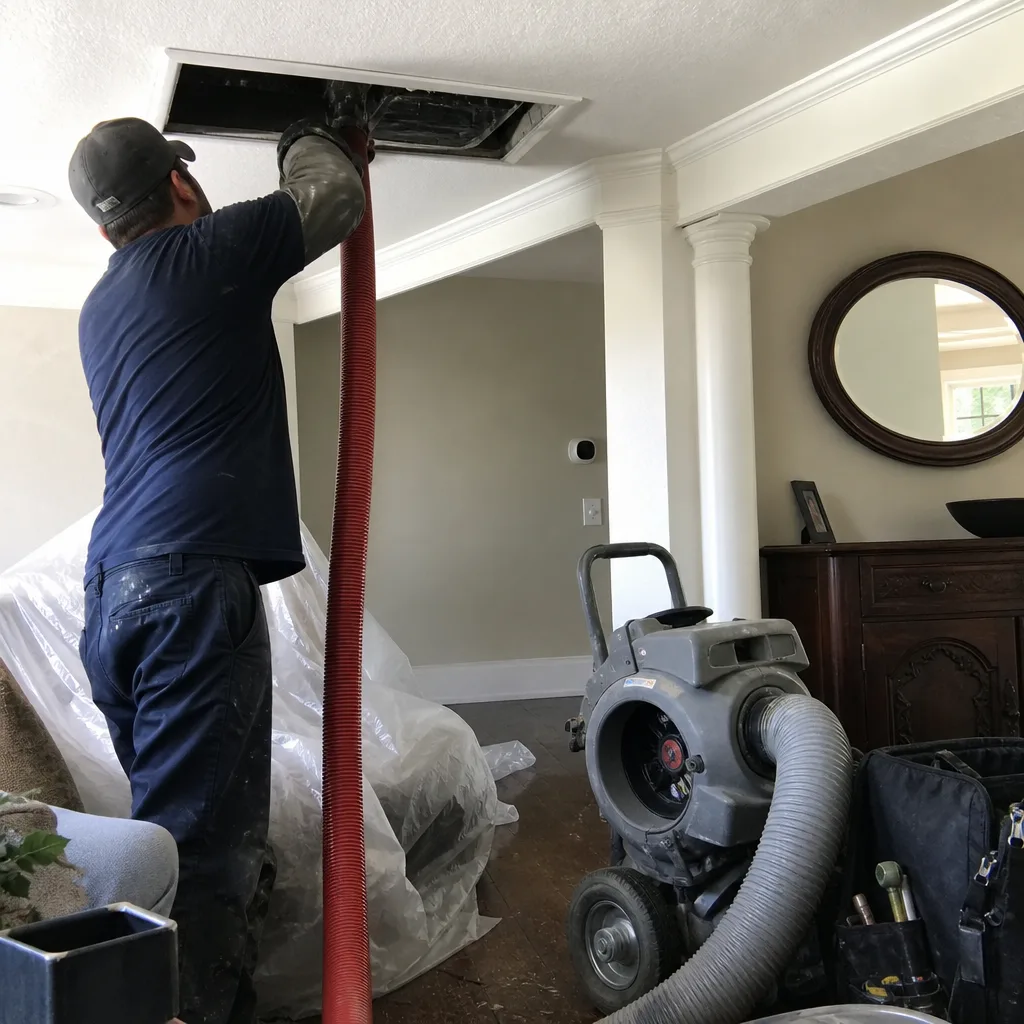 After
After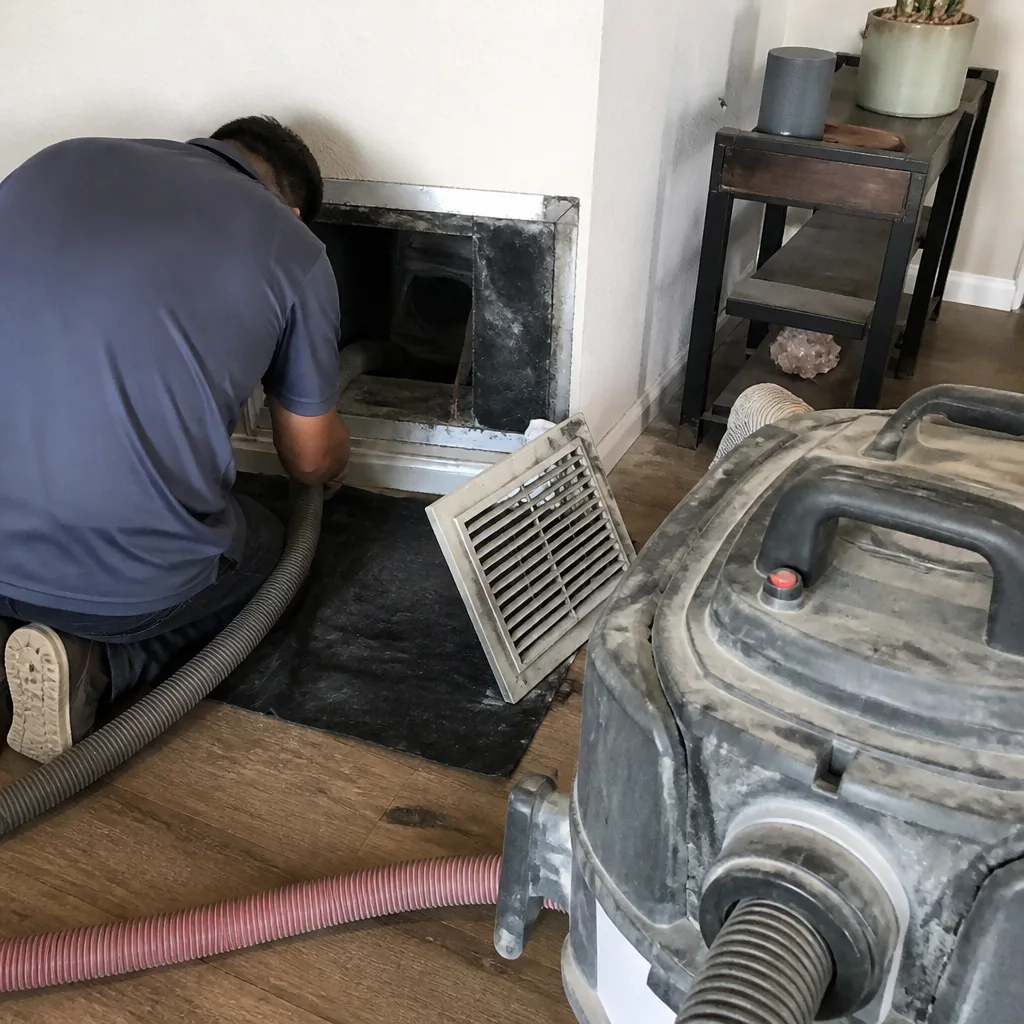 Before
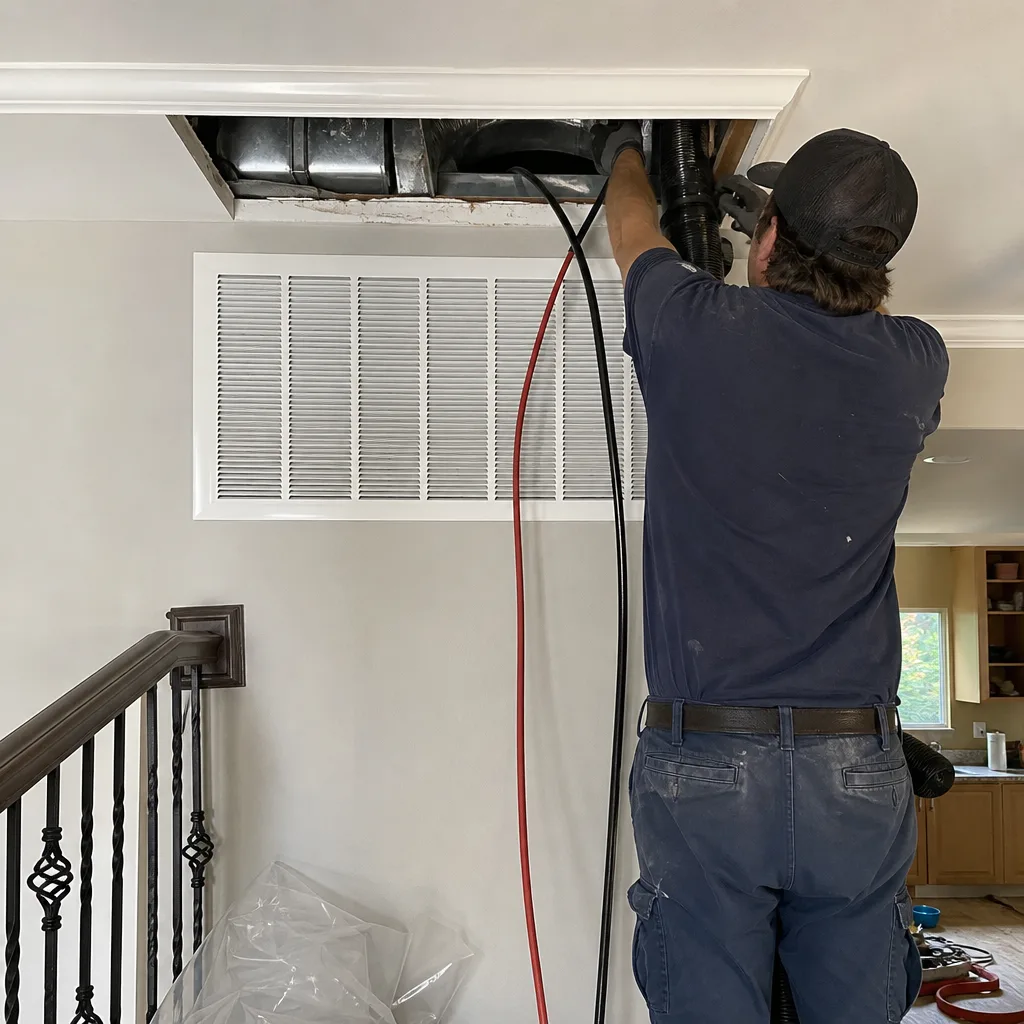 After
AfterDIY vs Professional Air Duct Cleaning: The Plano Homeowner’s Decision Guide
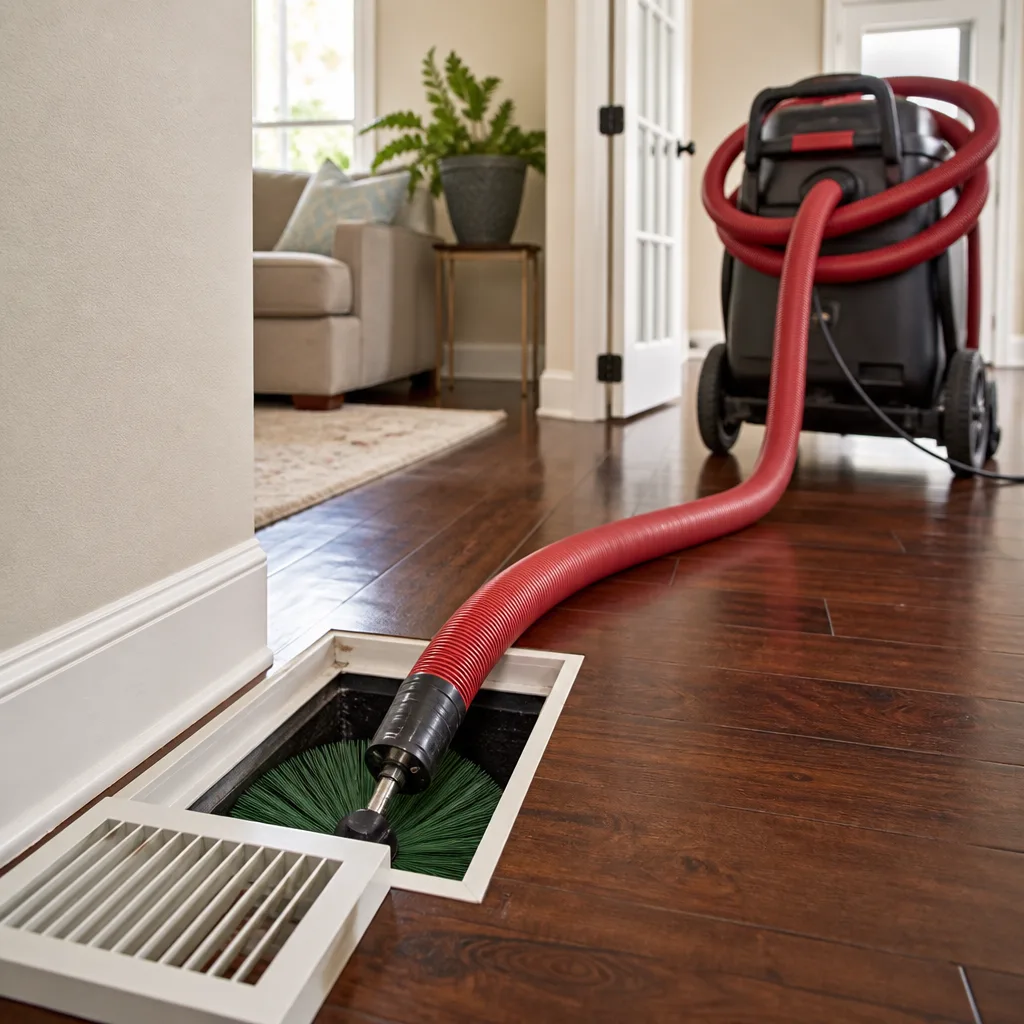
A shop vac and a dryer vent brush - the standard DIY duct cleaning kit - generate roughly 90 CFM of suction. A truck-mounted vacuum system generates 12,000 to 16,000 CFM. Those aren’t the same tool sold at different prices; they reach fundamentally different parts of the system. In Plano, where summer humidity pushes 85% and winter dust storms blow through from the west, debris doesn’t sit politely near your registers. It accumulates in the trunk lines and plenum, places a homeowner’s equipment literally cannot reach. This guide shows you exactly which parts of your duct system you can clean yourself, which require our Air Duct Cleaning services with professional negative-pressure extraction, and how to inspect your own ducts with a phone camera before deciding which path makes sense.
Quick Answer
DIY duct cleaning can handle light surface debris at registers and the first 18 inches of visible ductwork in newer Plano homes, but it cannot reach the trunk lines, plenum, or deep duct runs where meaningful accumulation occurs. Professional cleaning with negative-pressure equipment costs $350-$750 for a typical Plano home and includes verified documentation of every duct run cleaned. For most homeowners, DIY is a reasonable maintenance step between professional cleanings, not a replacement for them.
Table of Contents
- What DIY Equipment Actually Reaches Inside Your Duct System
- Professional Equipment: How Negative-Pressure Extraction Actually Works
- Three Scenarios Where DIY Is a Reasonable First Step
- Four Scenarios Where Professional Equipment Is the Only Effective Option
- What You Risk by Disturbing Debris Without Proper Containment
- The Real Cost Comparison: DIY Attempt vs. Professional Cleaning in Plano
- How to Inspect Your Own Ducts With a Phone Camera Before Deciding
- Common Mistakes to Avoid
- When to Call a Professional
- Frequently Asked Questions
BeforeAfterWhat DIY Equipment Actually Reaches Inside Your Duct System
Most homeowners don’t know what their duct system looks like beyond the rectangular or circular openings where heated or cooled air exits. A typical Plano home built between 1995 and 2020 has a supply plenum (the large central chamber where conditioned air collects before distribution), trunk lines (the main horizontal or vertical ducts, usually 8-14 inches in diameter), and branch duct runs (the smaller lines, typically 6 inches, that terminate at each room’s register).
DIY equipment available to consumers addresses only the terminal end of this system:
- Register and boot: The visible grille and the short vertical or horizontal connector immediately behind it. A vacuum with a brush attachment can remove dust and pet hair here. This is typically 6-12 inches of accessible space.
- First elbow or turn: In some homes with straight branch runs, a 25-foot dryer vent brush on a flexible rod can push past the boot into the first section of 6-inch duct. This reaches roughly 18-24 inches from the register opening in ideal conditions.
- Return air grille and filter housing: The return path is more accessible because the filter location creates a natural access point. A homeowner can vacuum the filter housing and the first few feet of return ducting in many Plano homes.
What DIY equipment cannot reach:
- The supply plenum, where the largest debris deposits form due to low air velocity and temperature differentials
- Trunk lines, which run through walls, attics, and crawl spaces with no access points sized for consumer tools
- The deep portion of branch runs beyond the first turn, where flexible ductwork or rigid pipe with multiple elbows blocks brush passage
- The HVAC cabinet itself, including the evaporator coil and blower assembly
At CleanRun Air Duct Cleaning Plano home, we’ve photographed the interior of thousands of Plano duct systems since 2013. The debris pattern is consistent: the first 24 inches from each register shows light dust coating, while the plenum and trunk lines contain the compacted accumulation that restricts airflow and harbors microbial growth. A homeowner with a shop vac is cleaning the equivalent of a sidewalk while the highway remains clogged.
Professional Equipment: How Negative-Pressure Extraction Actually Works
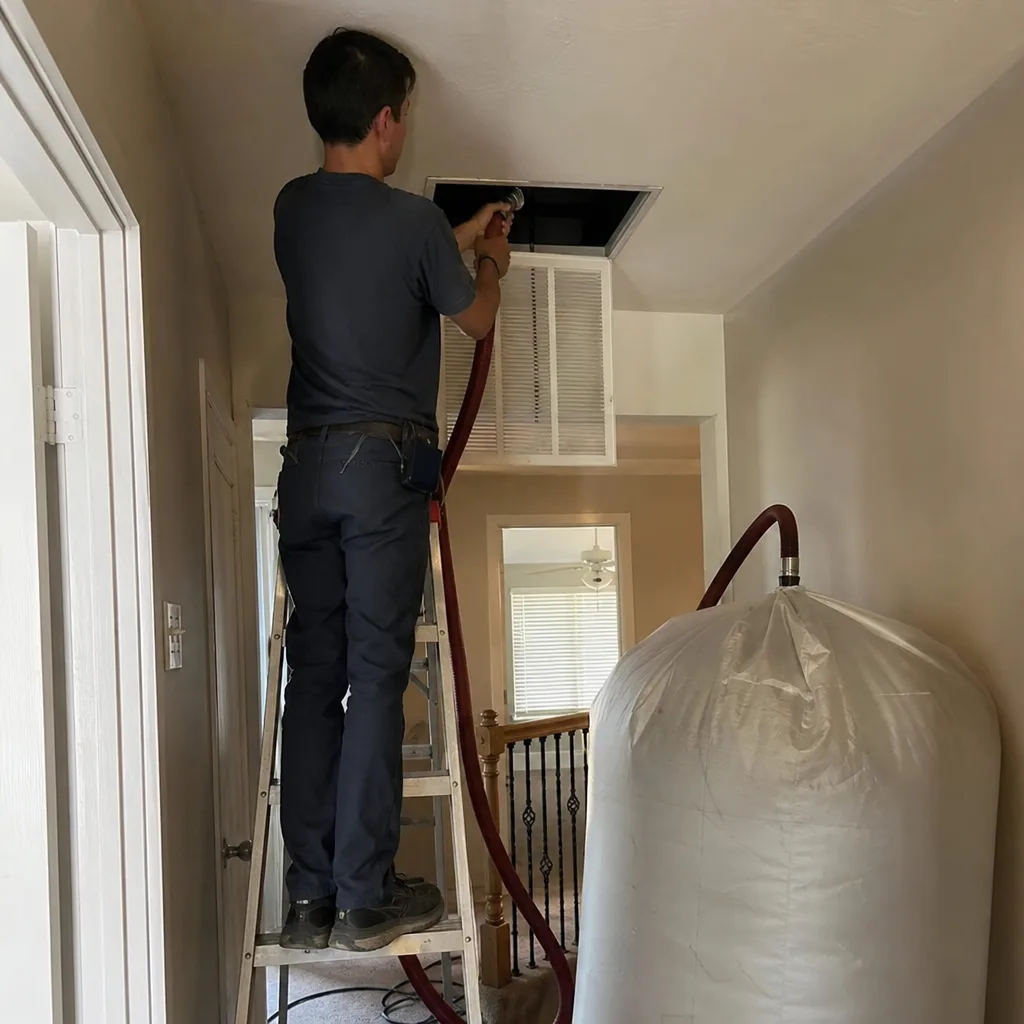
Professional duct cleaning operates on a different physical principle than vacuuming. Negative-pressure extraction doesn’t push a brush through debris; it creates a controlled vacuum environment that draws particulate out of the entire system simultaneously.
Here’s how the process works on a typical Plano home:
- System isolation: Technicians seal all registers and the HVAC unit, creating a closed loop with one access point for the vacuum hose.
- Negative pressure establishment: A truck-mounted or portable vacuum unit, typically from manufacturers like Nikro or Abatement Technologies, draws 12,000-16,000 CFM through the sealed system. This creates suction strong enough to pull debris from the plenum through trunk lines and out of branch ducts.
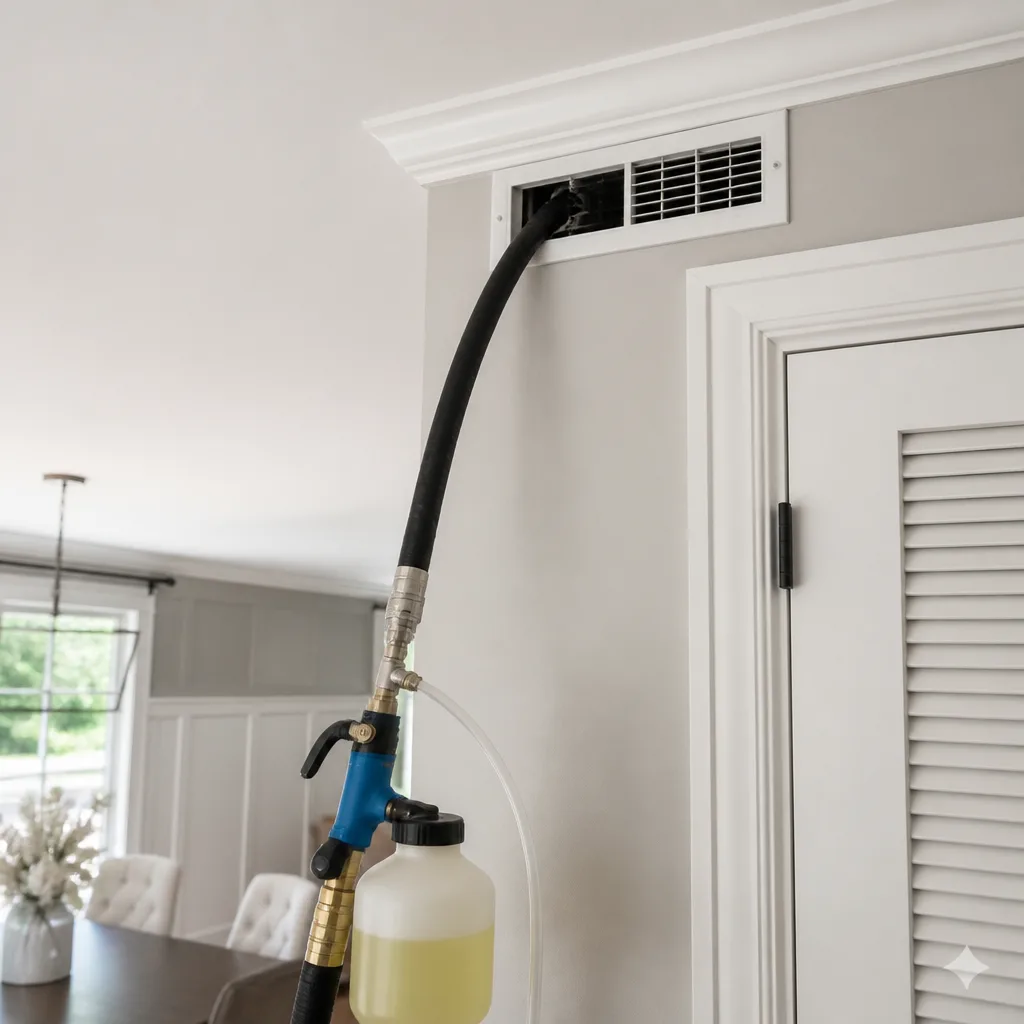
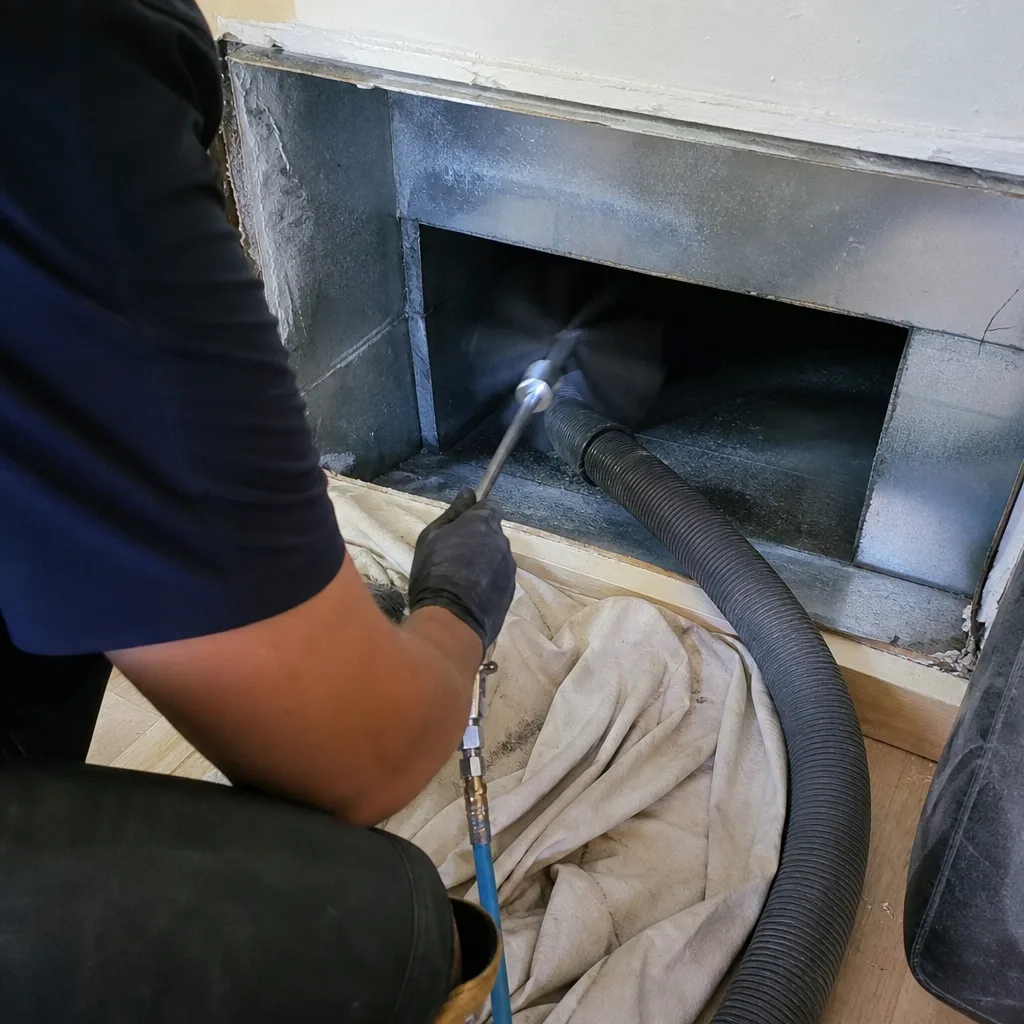
- Agitation: Compressed-air whips or rotary brushes are inserted at strategic access points to dislodge compacted debris without pushing it deeper into the system. The continuous negative pressure captures dislodged material before it can redistribute.
- Component cleaning: The evaporator coil, blower assembly, and filter housing are cleaned with specialized tools, not the same equipment used for duct runs.
- Verification: The system is photographed before and after, with images delivered to the homeowner as part of the job record.
The critical distinction: negative-pressure extraction cleans the entire connected volume of the duct system. DIY methods clean only the portions physically reachable by the tool inserted. In a 2,400-square-foot Plano home with a standard split system, the reachable volume is approximately 3-5% of the total duct interior.
CleanRun uses equipment from Rotobrush, Nikro, and Abatement Technologies - brands that publish specifications customers can verify independently. Haven Standard Clause 1 requires a written price before any work starts, so the equipment roster and scope are documented before a single panel comes off your system.
Three Scenarios Where DIY Is a Reasonable First Step
DIY duct cleaning isn’t without value. In specific circumstances, it’s a sensible maintenance action that can extend the interval between professional cleanings.
Scenario 1: Light surface debris at registers in a home under three years old
New construction in Plano’s newer developments - Willow Bend, Kings Ridge, or the Legacy West corridor - typically has duct systems with minimal internal accumulation. If you’re seeing dust accumulation on register grilles and a thin coating visible just inside the boot, a vacuum with a brush attachment and a microfiber cloth on a flexible rod will remove this material effectively. The key indicator: shine a flashlight into the duct and see bare metal beyond the first few inches. If you see bare metal, there’s no significant accumulation to address.
Scenario 2: Post-renovation surface cleaning after proper containment
If your contractor used proper HVAC protection during remodeling - sealed registers, negative air machines in work zones - the debris entering your ducts may be limited to fine dust that settled on accessible surfaces. DIY cleaning of registers, boots, and filter housings, followed by a filter change, can address this residual material. The critical caveat: if registers were not sealed during renovation, assume debris reached the trunk lines and schedule professional inspection.
Scenario 3: Maintenance between professional cleanings with documented baseline
If you have a professional photo record showing clean ductwork from a prior service, DIY register maintenance every 12-18 months can preserve that condition. Without the baseline documentation, you’re guessing whether your DIY efforts are sufficient. This is why CleanRun includes the Documented Photo Record as a standard deliverable - it gives homeowners an objective reference point for future maintenance decisions.
Four Scenarios Where Professional Equipment Is the Only Effective Option
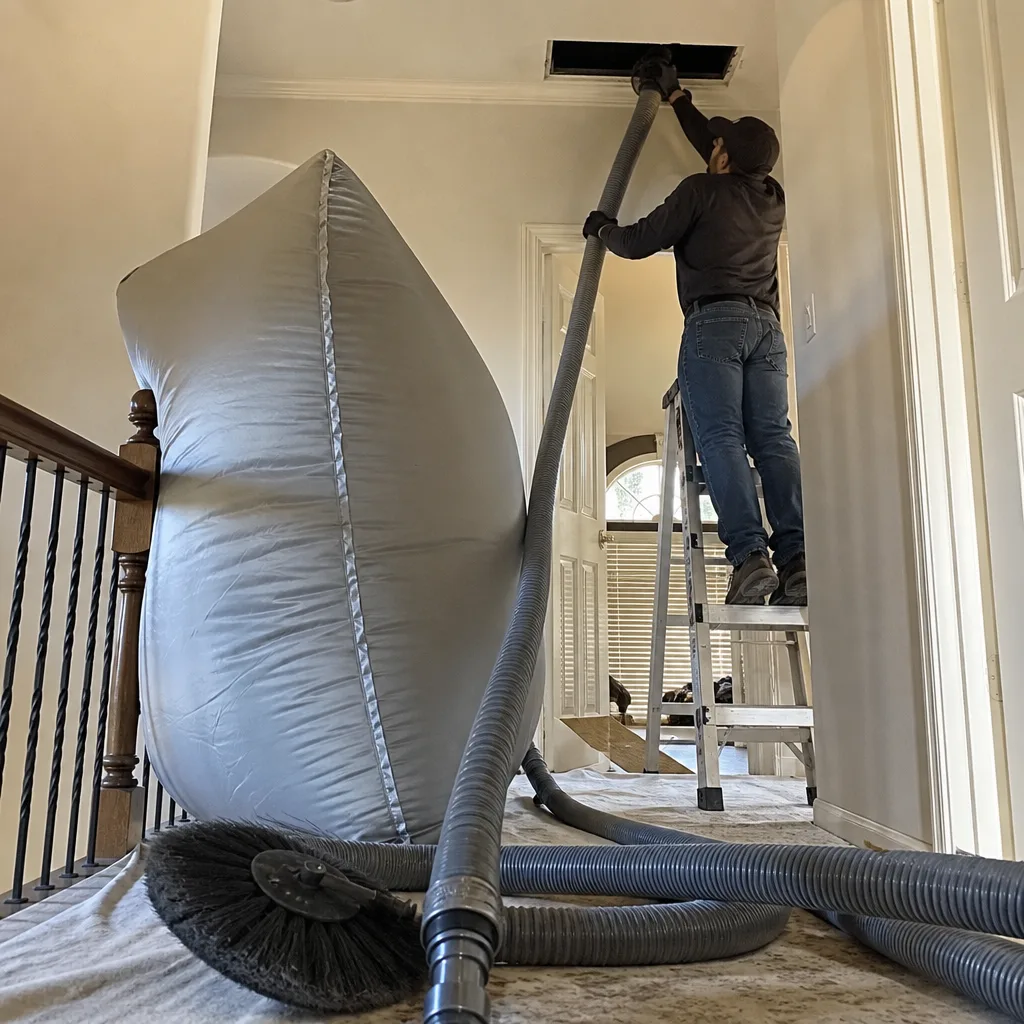
Certain conditions in Plano homes make DIY duct cleaning not merely insufficient but potentially counterproductive.
Scenario 1: Visible debris beyond the first elbow or any obstruction in the duct run
When a flashlight inspection shows debris accumulation deeper than 24 inches from the register, or when the duct run makes a turn that blocks brush passage, consumer tools cannot reach the material. Attempting to force a brush through an elbow risks lodging it in the duct or damaging flexible ductwork. In Plano’s older neighborhoods like Old Towne or Haggard Park, where homes may have been retrofitted with flexible ductwork in crawl spaces, this damage risk is significant.
Scenario 2: Musty odor or signs of microbial growth
Plano’s humidity, particularly from May through October, creates conditions for microbial growth in duct systems with poor drainage or insulation failures. If you smell mustiness when the system cycles, or if you see dark staining on register surfaces that returns after cleaning, the source is almost certainly in the plenum or trunk lines where condensation collects. Surface cleaning of registers will not address this, and disturbing the material without containment can spread spores through the living space.
Scenario 3: Post-pest infestation
Rodents and insects in attics and crawl spaces frequently enter duct systems through gaps in trunk line connections. The debris they leave - nesting material, droppings, carcasses - requires HEPA-contained extraction and often duct repair to seal entry points. This is not a cleaning task; it’s a remediation requiring proper PPE, containment, and disposal protocols under Texas health regulations.
Scenario 4: System performance decline with no visible register debris
If rooms are heating or cooling unevenly, if your energy bills have increased without rate changes, or if your HVAC technician has noted restricted airflow - but your registers look clean - the restriction is in the trunk lines or plenum. This is the most common scenario we encounter in Plano homes: the visible system looks fine while the hidden system is compromised. Only negative-pressure extraction can diagnose and address this.
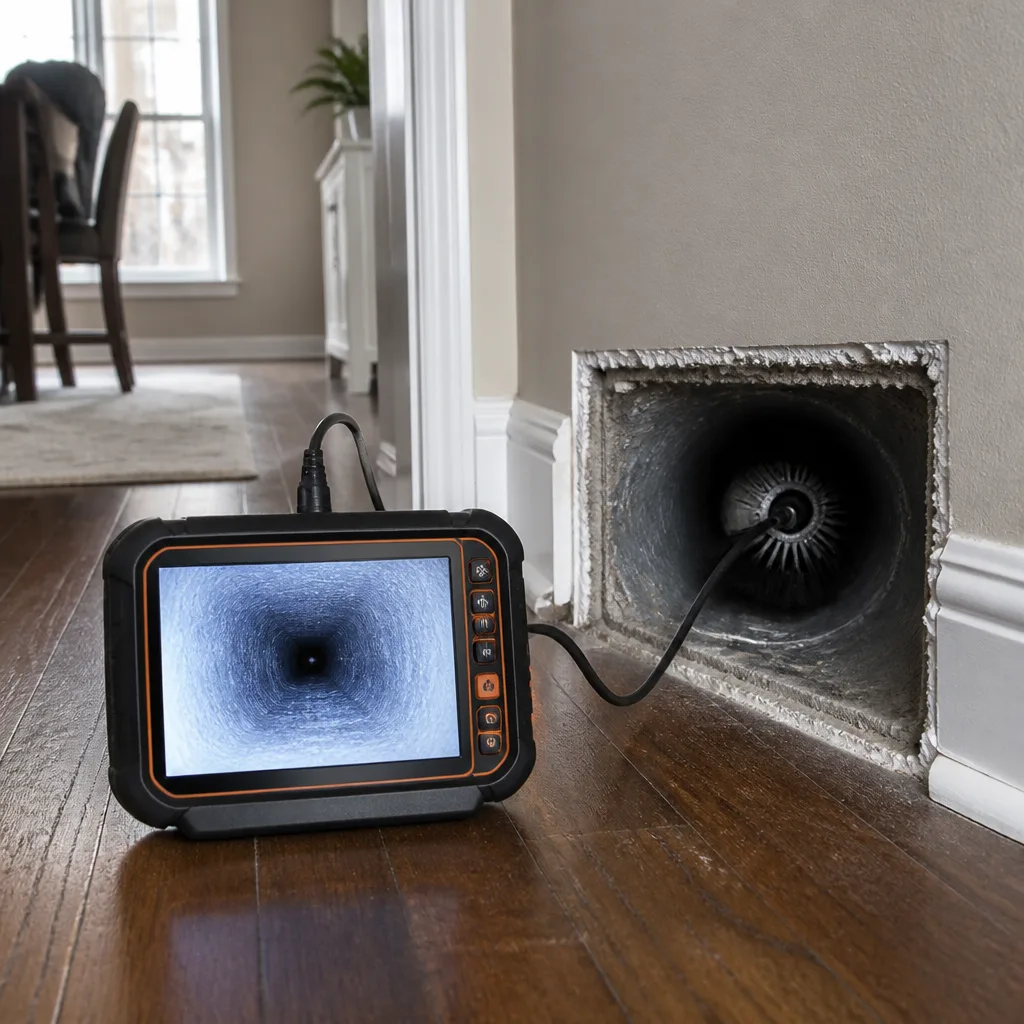
Air Duct Cleaning in Plano by CleanRun includes full-system inspection with camera verification, so homeowners know whether their ducts need cleaning before committing to the service.
What You Risk by Disturbing Debris Without Proper Containment
The most underappreciated risk of DIY duct cleaning is not ineffectiveness; it’s re-distribution. When you insert a brush or vacuum into a duct without sealing the system and establishing negative pressure, you don’t remove debris - you mobilize it.
Here’s the specific mechanism:
- A brush dislodges compacted material from duct walls.
- Without continuous extraction, this material becomes airborne within the duct.
- The HVAC system’s natural pressure dynamics, even when powered off, create air movement through stack effect and thermal gradients.
- Dislodged particulate migrates through open registers into living spaces, or through leaks in the return path into wall cavities and insulation.
- Particles that resettle often do so in locations less accessible than their original position - deeper in branch runs, or in the evaporator coil where they restrict heat transfer and provide a substrate for microbial growth.
In Plano’s climate, this re-distribution pattern has a specific seasonal risk. During summer months, when attic temperatures exceed 130°F, dislodged organic debris in trunk lines can accelerate off-gassing and odor issues. During winter, when heating cycles are longer and more frequent, redistributed particulate has more opportunities to enter occupied spaces.
Professional negative-pressure extraction prevents this by maintaining continuous suction throughout the cleaning process. Dislodged material is captured at the point of disturbance, not allowed to migrate. The system remains sealed until verification photography confirms acceptable post-cleaning conditions.
CleanRun’s Documented Photo Record on Every Visit, a practice we’ve held since 2013, provides objective evidence that re-distribution did not occur. Homeowners receive before-and-after images of every duct run, dated and labeled, as part of their standard job record.
The Real Cost Comparison: DIY Attempt vs. Professional Cleaning in Plano
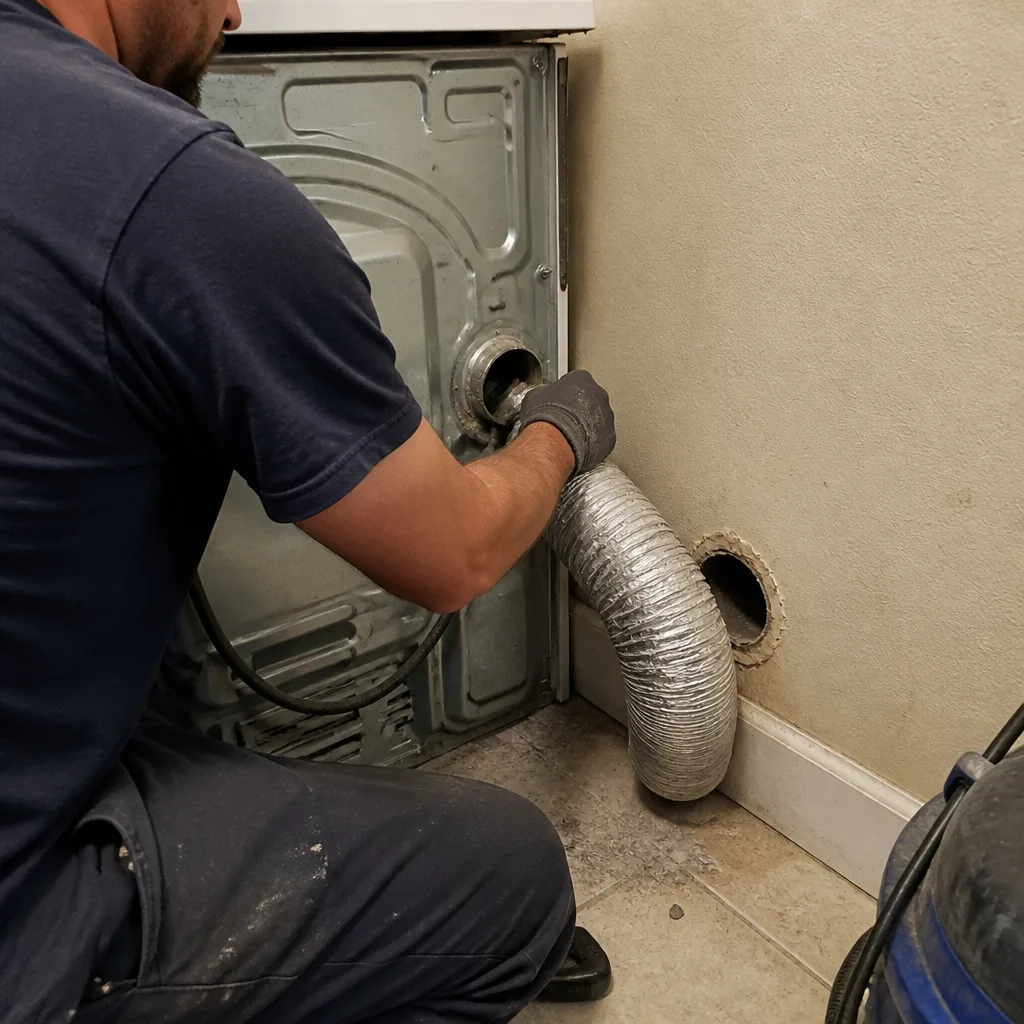
Cost decisions require honest accounting of all expenditures, including those that don’t appear on a receipt.
DIY duct cleaning costs:
- Shop vac with HEPA filter: $150-$400 (or $0 if owned)
- Dryer vent brush kit with extension rods: $25-$60
- Microfiber cleaning tools and replacement filters: $30-$50
- Register removal tools (if screws are painted over or corroded): $15-$30
- Time investment: 4-8 hours for a typical Plano home, including setup, execution, and cleanup
Total out-of-pocket for a homeowner who owns a shop vac: $70-$140. Total with time valued at modest hourly rate: $250-$500.
Professional air duct cleaning in Plano:
| Home Size / System Type | Price Range | What’s Included |
|---|---|---|
| Under 2,000 sq ft, single system | $350-$450 | Full supply and return cleaning, plenum, trunk lines, 8-12 duct runs, photo documentation |
| 2,000-3,500 sq ft, single system | $450-$650 | Full system cleaning, 12-20 duct runs, component cleaning, photo documentation |
| 3,500+ sq ft or dual-zone system | $650-$750 | Multi-system cleaning, 20+ duct runs, full component service, photo documentation |
| Dryer vent cleaning (add-on or standalone) | $120-$180 | Full vent run from appliance to exterior termination |
The meaningful comparison isn’t $100 DIY versus $500 professional. It’s $250-$500 of your time for 3-5% system coverage versus $350-$750 for 100% coverage with documented verification. Haven Standard Clause 1 requires a written price before any work starts, so Plano homeowners know their exact cost before committing - no “call for a quote” ambiguity.
CleanRun also offers a Free Second Opinion on any written estimate. Bring a competitor’s quote; we’ll put our number next to it in writing. This matters in Plano’s competitive market, where $79 coupon offers frequently escalate to $600+ invoices once the technician is in the home.
How to Inspect Your Own Ducts With a Phone Camera Before Deciding
A 10-minute inspection with your phone camera can tell you whether DIY cleaning is worth attempting or whether you’re looking at a professional job. This method creates a useful record regardless of which path you choose.
What you’ll need:
- Smartphone with flashlight function
- Selfie stick or telescoping pole with phone mount (extends reach to 3-4 feet)
- Register removal tool or flathead screwdriver
- Duct tape or masking tape (to secure phone angle if needed)
Step-by-step inspection process:
- Turn off your HVAC system at the thermostat. You want still air for accurate photography and no risk of the system cycling during inspection.
- Remove the register. Most lift out; some have screws. In Plano homes with painted-over screws (common in 1980s-1990s construction), gentle pressure with a flathead screwdriver usually frees them. Work carefully to avoid damaging the ceiling or wall surface.
- Attach your phone to the selfie stick with the camera facing outward and flashlight on. The selfie stick gives you 3-4 feet of reach into the duct run - enough to photograph past the boot and into the first section of branch duct.
- Slowly insert the phone, photographing continuously or recording video. Move at approximately 6 inches per second. The continuous record lets you review frame-by-frame rather than relying on a single shot.
- Document what you see at these checkpoints:
- The boot (the sheet metal or plastic connector behind the register): note dust depth, any staining, visible mold or moisture
- The first elbow or turn: note whether debris accumulation increases or decreases beyond the boot
- The duct walls: note whether you see bare metal, light dust coating, or visible debris build-up
- Label your photos by room and register location. “Master bedroom, east wall register, 3-inch debris at first elbow” is a useful record. “Duct photo 1” is not.
What the images tell you:
- Bare metal visible beyond the boot: DIY register cleaning is likely sufficient. Schedule professional service only if you have performance concerns or it’s been more than 5 years since last cleaning.
- Light dust coating on duct walls, no visible accumulation: DIY cleaning may help, but consider professional service if the home is over 5 years old or has pets.
- Debris build-up of 1/2 inch or more, or any dark staining/moisture: Professional cleaning required. The accumulation is beyond DIY reach or indicates conditions that need professional assessment.
- Debris increases past the first elbow: Professional cleaning required. The pattern indicates trunk line or plenum contamination feeding backward into branch runs.
Save these photos regardless of your decision. If you choose professional service, they help technicians assess scope. If you DIY, they’re your baseline for future comparison. CleanRun technicians review customer photos during scheduling when provided, and we incorporate them into the job record alongside our own documentation.
Common Mistakes to Avoid
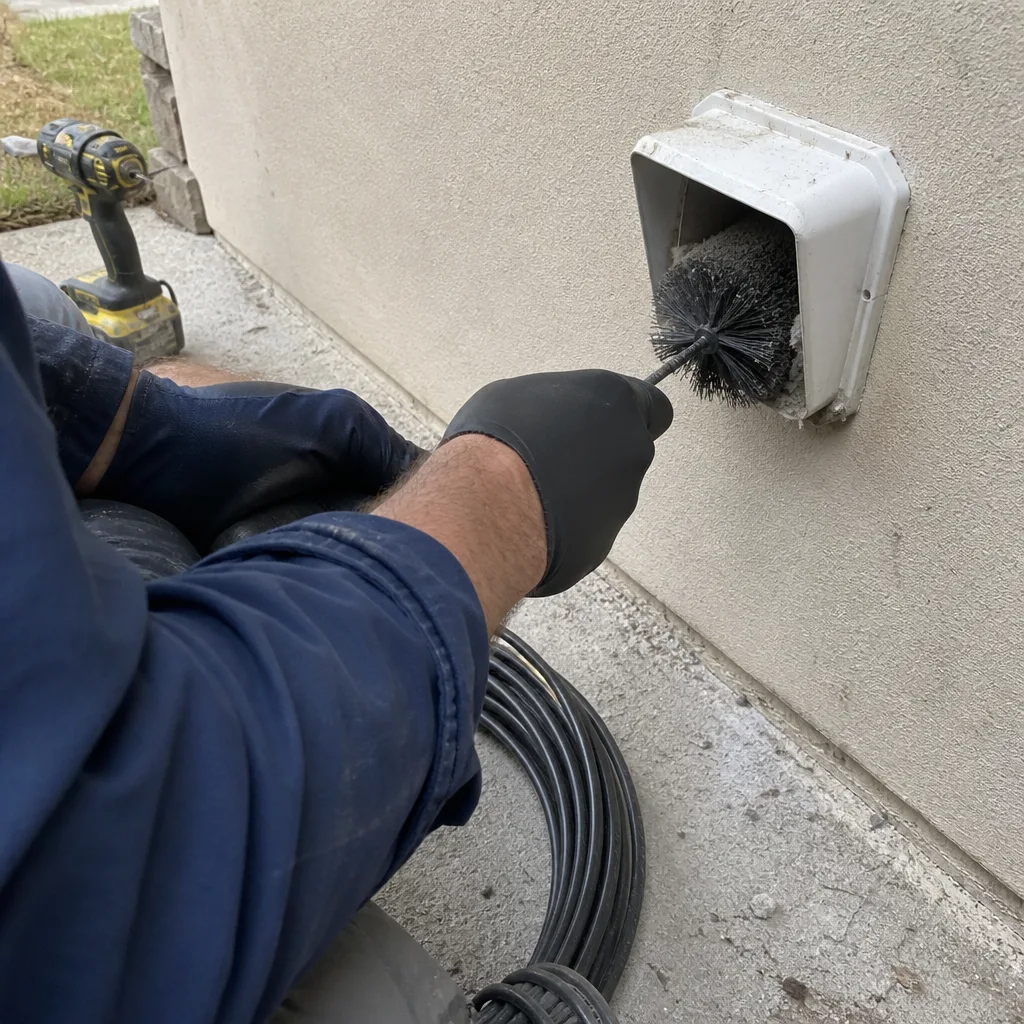
- Using a standard vacuum without HEPA filtration. Standard vacuums exhaust fine particulate through the motor housing. In Plano’s hard-water-mineral environment, this reintroduces calcium and silica dust into your air. Only HEPA-sealed vacuums should be used for duct work.
- Brushing flexible ductwork with rigid rods. Many Plano homes, especially those built 1975-1995, have flexible duct in attics. A rigid dryer vent brush can puncture the inner liner or disconnect the duct from the collar, creating leaks that reduce system efficiency until repaired.
- Cleaning registers without checking the filter first. A clogged filter is often the actual cause of register dust. Replace your filter, run the system for 48 hours, then inspect registers again. You may find the problem resolved without duct cleaning.
- Ignoring the return side. The return path pulls air from your home back to the HVAC unit. It’s typically the dirtiest portion of the system because it has no filter protection between the grille and the filter housing. DIY efforts often focus entirely on supply registers.
- Cleaning ducts after a rodent issue without sealing entry points. In Plano’s established neighborhoods with mature trees, roof rats and squirrels access attics regularly. Cleaning without exclusion is temporary; the problem returns within one season. Professional service includes entry point identification and repair recommendations.
- Assuming clean registers mean clean ducts. This is the most expensive mistake. Homeowners see clean registers, conclude their ducts are fine, and miss developing restrictions in trunk lines that gradually degrade system performance and increase energy costs.
When to Call a Professional
Call a professional when your inspection shows debris beyond DIY reach, when you have performance concerns without visible cause, or when it’s been more than five years since your last documented cleaning - see our guide on How to Hire a Air Duct Cleaning Contractor in Plano: A Step-by-Step Guide for help choosing the right provider. In Plano’s climate, with its combination of high summer humidity, spring pollen loads, and occasional dust storm intrusion, the five-year interval is a maximum, not a recommendation.
CleanRun Air Duct Cleaning Plano offers free estimates in Plano - call (469) 452-7766. Every estimate includes a written price before work starts, under Haven Standard Clause 1. Our technicians are background-checked and uniformed, identified by name before arrival under Haven Standard Clause 3: Verified Crews. The 365-Day Done Right Promise backs every job in writing.
HVAC Cleaning in Plano and Dryer Vent Cleaning in Plano are also available as standalone services or combined with full duct cleaning for comprehensive system maintenance.
Frequently Asked Questions
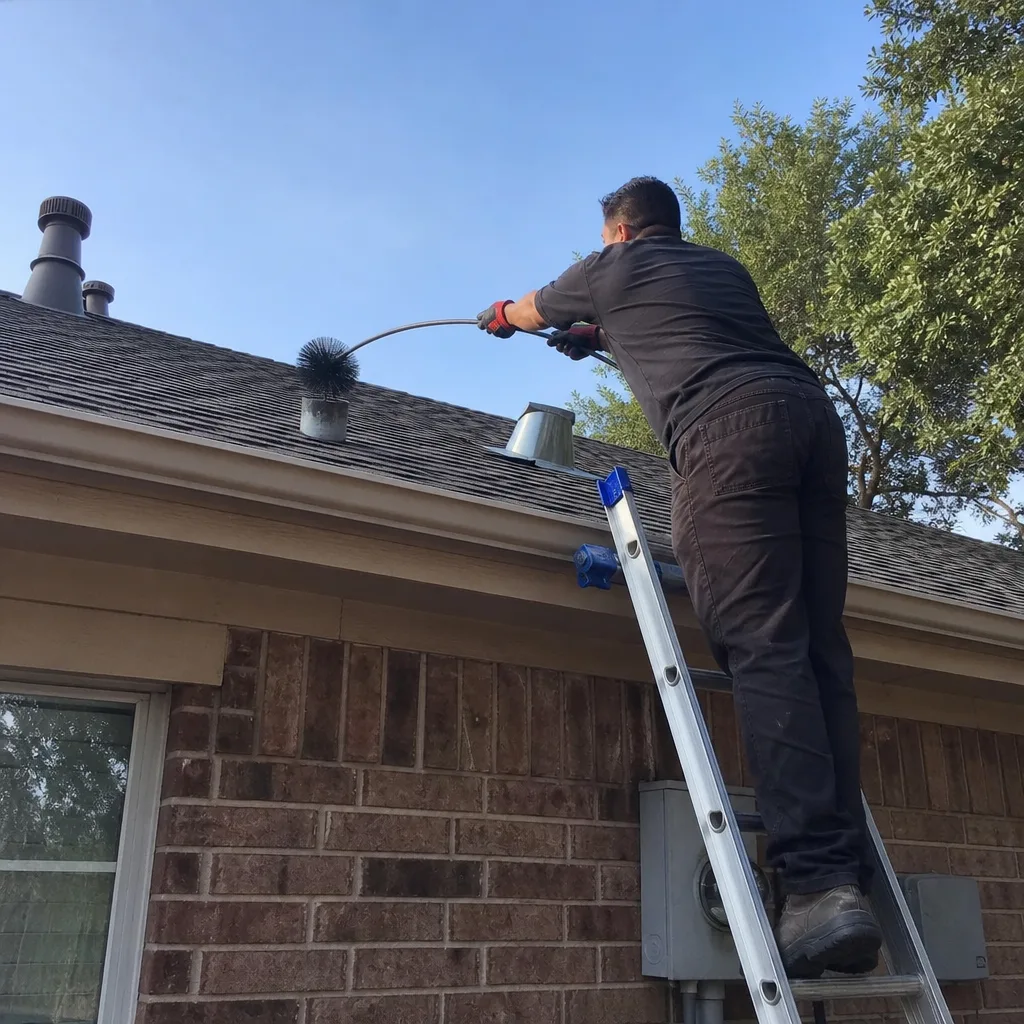
Professional air duct cleaning in Plano typically costs $350-$750 for a complete residential system, depending on home size and number of HVAC zones. A single-system home under 2,000 square feet generally falls at the lower end; larger homes in Plano’s premium neighborhoods like Willow Bend or Avignon Windhaven, or homes with dual-zone systems, fall at the higher end. CleanRun provides a written price before any work starts - no exceptions. Call (469) 452-7766 for an exact quote; estimates are free.
The $79-$149 coupon offers common in Plano typically cover only register vacuuming and a brief duct brushing, not full-system cleaning with negative-pressure extraction. Once the technician is in your home, the scope expands: “You need sanitizing,” “the trunk lines are extra,” “this is per vent, not per system.” The final invoice often exceeds $500. A legitimate full-system quote from established companies using equipment from manufacturers like Abatement Technologies or Nikro will reflect actual labor and equipment costs. Ask for a written scope specifying which components are included, and whether the price is per system or per vent. CleanRun’s written price under Haven Standard Clause 1 is for the complete system, with no per-vent add-ons.
Demand photographic documentation of every duct run, before and after, with timestamps. CleanRun has provided this as a standard deliverable since 2013. The photo record should show the interior of the duct, not just the register surface. If a company cannot or will not provide this, you have no verification that trunk lines and plenum were cleaned. The 365-Day Done Right Promise also provides recourse if performance issues suggest incomplete work.
For most Plano homes, every 3-5 years with a documented photo record to verify conditions. Homes with pets, recent renovations, or occupants with respiratory sensitivities may need more frequent service. Plano’s specific factors - high spring pollen, summer humidity promoting microbial growth, and periodic dust storm deposition - argue toward the shorter end of that interval. The inspection method described in this guide lets homeowners check their own ducts annually and schedule professional service based on observed conditions rather than calendar alone. For timing guidance, read our Seasonal Air Duct Cleaning Care for Plano: Year-Round Homeowner’s Guide.
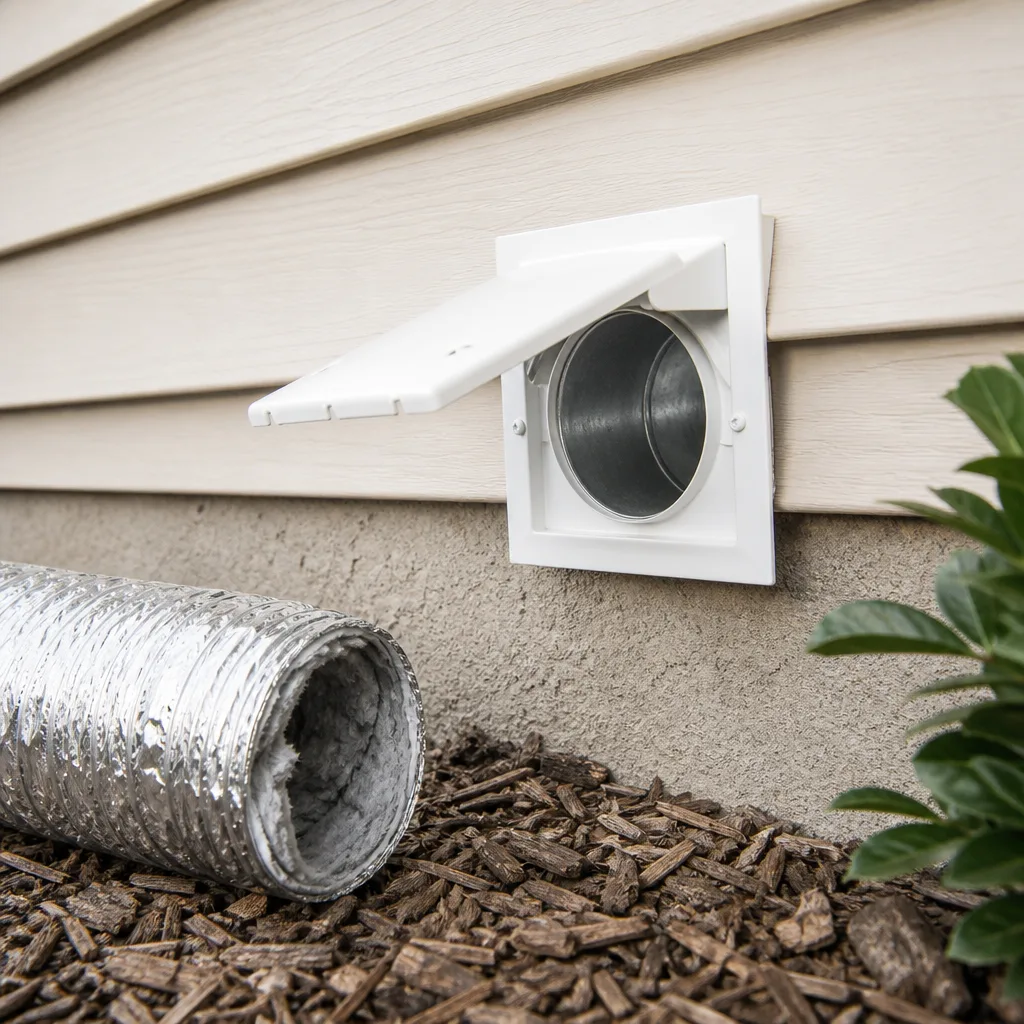
Dryer vents are more accessible than HVAC ductwork and some homeowners successfully clean short, straight vent runs themselves. However, Plano’s 2006 and later building codes require metal ducting with limited flexible sections, and many homes have vent runs of 15-25 feet with multiple elbows that exceed the reach of consumer tools. Additionally, dryer vent cleaning requires roof or exterior wall access that involves ladder work at height. If your dryer shows extended drying times, if the exterior vent flap doesn’t open fully during operation, or if the vent run exceeds 10 feet or has more than one turn, professional cleaning with rotary brush equipment and proper vent inspection is the safer choice. Dryer Vent Cleaning in Plano by CleanRun includes full run inspection and airflow verification.
Duct cleaning addresses the distribution network: supply and return ducts, plenum, and registers. HVAC cleaning addresses the mechanical components: evaporator coil, blower assembly, heat exchanger, and filter housing. The two services complement each other; cleaning ducts without addressing a contaminated coil reintroduces debris into clean distribution paths. CleanRun offers both services, with scope clearly separated in written proposals so homeowners understand what each price covers.
The Bottom Line
DIY duct cleaning has a limited but legitimate role: maintaining register surfaces and the first accessible inches of ductwork in newer homes with documented clean systems. It cannot replace professional negative-pressure extraction for trunk lines, plenum, or any significant accumulation. The cost difference, when honestly calculated including time and coverage, is narrower than coupon marketing suggests. The decisive factor is documentation: without photographs of the full system interior, you’re guessing at conditions and guessing at results. For more guides & resources on maintaining your home’s air quality, explore our blog. Professional service with verified photo records provides accountability that DIY cannot replicate. In Plano’s climate, with its specific stressors on HVAC systems, that accountability matters for both air quality and equipment longevity.
Written by Tomas Reyes, Owner at CleanRun Air Duct Cleaning Plano, serving Plano since 2013.